


So, the last day of the year and here, just in time, is my top ten of 2018 – but first I am able to raise my shortlist of 17, as detailed in my last blog, to a top 20 for the year, thanks to three worthy additions I have watched in the last two weeks (one of them only available for the past three days, but that one not only completes my top 20, but also makes it into the top ten, so it was well worth waiting!).
Chuck Lorre’s The Kominsky Method (Netflix) is a highly enjoyable, old-fashioned comedy starring Michael Douglas and Alan Arkin, both on top form, as ageing friends. It deals with some issues I am sadly familiar with, such as the effects of an enlarged prostate and the side-effects of the drugs used to treat it. It also reminded me in several  aspects of my all-time favourite American comedy series, Curb Your Enthusiasm: the central relationship of a performer and his agent; their bemusement at the ways of the modern world; the showbiz milieu, with guest stars playing either characters (Danny de Vito, Ann-Margret) or themselves (Jay Leno, Elliot Gould); the strong Jewish humour. It’s not earth-shattering, but it has its moments of reflection and is extremely watchable.
Kidding (Showtime/Sky Atlantic), written by Dave Holstein, starring Jim Carrey and (mostly) directed by Michel Gondry, arrived here too late to make many “best of year” 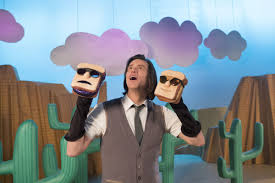 lists, as it probably should have. It is visually striking (full of bold colours), with an occasionally unnerving narrative, which veers from comedy to tragedy in the blink of an eye and centres on a group of people involved in the production of a Sesame Street-like children’s TV show, while at the same time dealing with personal loss and life challenges. Carrey is perfectly cast as the insecure star, Mr Pickles, constantly wanting to introduce themes of death into his character’s show. It was a slow starter and took some getting used to, but the later episodes were very memorable and I will certainly be returning to it.
Black Mirror arrives too late every year (since it went to Netflix) to make it onto any lists, even though every season has been consistently outstanding. This year, only one episode has arrived so far, but it is something of such significance and brilliance that it is an automatic must for my top ten. I have always thought that interactivity in drama, though much touted by broadcasters for many years as a likely future development, was a non-starter simply because the whole point of drama is to be told a story, whether you like how it develops or not. But Bandersnatch succeeds because it is actually about the possibilities and implications of interactivity (and therefore a perfect fit for the Black Mirror ethos), as well as because the delivery technology has become so sophisticated that a genius like Charlie Brooker can put it to positive creative use. I think it is a big moment for television.

And it is about much more than interactivity, with themes of personal choice versus control, of the mysteries of creativity and of the impact of chance on our lives. On this last point, there are echoes of Krzysztof Kieslowski’s 1981 film Blind Chance and I imagine the fact that part of the plot hinges on a missed train was a nod in its direction. There are also references to “wrong” choices throughout – Betamax tapes, the newsagent chain John Menzies (though our hero wisely shops at W.H.Smith). I should, however, add that any description of sequences from Bandersnatch I may give you applies only to the version I watched, and, the way the interactivity works, with regular choices of alternatives, that version was one of over a trillion possibilities, which I guess probably makes it my very own version. The “ending” (at least the one I saw, or think I saw) is excellent but after it you get even more choices and the chance to go back on the ones you made until you have had enough and press the “escape to credits” option. By that time, Netflix itself has become part of the story and its familiar interface, suggesting the BlackMirror episode Be Right Back as your next choice (again, maybe only in the version I saw) is implicated too. After all that, I’m not sure there is any need to watch it again, though something tells me I will, maybe in the company of somebody else making the choices. I’ve already told my wife she needs to see it and I can imagine it may have caused battles for the remote in many households.

Anyway, to get back to my top ten of 2018, Black Mirror:Bandersnatch (Netflix) has crashed unstoppably into it at the very last minute, which caused me a bit of painful reassessment. The other nine, in rough order of appearance only, are as follows:
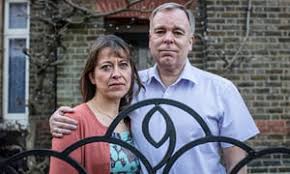
Inside No.9(BBC2): a brilliant fourth season, in which every episode was a corker, plus the wonderful live Halloween special.

Save Me(Sky Atlantic): the first truly outstanding drama series Sky has made, courtesy of a wonderful script and characters created by Lennie James.

Damned(Channel 4): a stunning second season which confirms Jo Brand as the best female writer/performer we have just now.
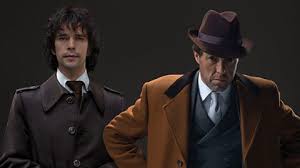
A Very English Scandal(BBC1): Russell T.Davies’ brilliantly witty, yet totally appropriate take on the Jeremy Thorpe affair, with Hugh Grant a revelation.

American Vandal 2(Netflix): yes, shit is funny, but it has never been quite this funny, while, at the same time containing moral lessons for our times.
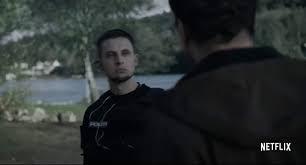
22 July(Netflix): Paul Greengrass at his best in conveying the full horror, impact and implications of the Norwegian massacres carried out by Anders Behring Breivik.

There She Goes(BBC4): a devastatingly accurate “comedy” about the travails of the parents of a learning-disabled daughter.

Black Earth Rising(BBC2): a complex, intelligent and highly resonant series from Hugo Blick, centred on the Rwandan genocide.

Homecoming(Amazon): a brilliant mystery, based on a podcast but transformed into a superb piece of TV by the direction of Sam Esmail.
A last few thoughts on my list: if Bandersnatch had not arrived so decisively (and so late), I would have included Doctor Who: Rosa in my top ten and am disappointed that I had to leave it out. I’m also disappointed not to have included any factual pieces in my list, but nothing could compete, in my mind, with the strength of these ten titles. I had a couple of doubts which I dispelled to my own satisfaction: firstly, is 22 July really a piece of TV or is it a film? – I decided to include it because of the TV pedigree of the director and because it “felt” like a single television drama, and, by the same criteria, I excluded The Ballad of Buster Scruggs (also Netflix), which I loved, because of the cinematic pedigree of the Coens and because it “felt” like a film, despite its episodic nature; secondly, I have already admitted in an earlier blog that my reaction to There She Goes is completely informed by personal experience, but I still feel it is a very important piece and one which I am in a position to judge in terms of authenticity as well as its intrinsic qualities as comedy/drama.
So, all that remains is to wish everybody a Happy New Year and good viewing in it. The building of the 2019 shortlist starts tomorrow, with some potential candidates already on the radar for the coming days, though last night’s impressive opening episode of Les Miserables means it may already be underway.

 good, if not even better than season one (though you can never replicate that first feeing of excitement about something truly original). Firstly, it is, as before, very much more than just a parody – once again you get involved with the characters as if it was a straight drama, and this time round there are many more of them, all brilliantly written and portrayed. Secondly, there are more issues being explored, particularly around class and race, and more documentary styles being invoked than just the crime investigation genre, which remains the basis – I could find echoes of such pieces as Mea Maxima Culpa, O.J.: Made in America and Catfish, as well as numerous pieces investigating the background to school shootings. The series even reaches a somewhat sobering and entirely serious conclusion about the lives of adolescents in the era of social media.
 indulgent fun with this. And, while the genres used – gangsters, sci-fi, medieval fantasy and so on – were clearly signposted, I was also aware of too many other styles and tropes employed in recent series: a bit of Mr Robot here, a bit of Fargo there and a bit of The Leftovers everywhere (the series was created by Leftovers writer Patrick Somerville, which was one of the main things that drew me to it in the first place). The main problem was one of balance: while episode one provided an intriguing and involving opening and episode 10 gave us a moving and satisfying conclusion, everything in between was devoted to the drugs trials and fantasy sequences. It was entertaining enough to keep me watching to the end, but I finished up wondering why.
 Sunday (2002) and United 93 (2006), he has now completed a trilogy of drama-documentaries about horrific events of such magnitude that they are known by the day or date on which they occurred. His cast of Norwegian actors, all speaking English, is quite remarkable – I don’t know how it has gone down in Norway, but it is testament to the power of the direction that this anomaly simply does not register.
 TV for Keeps