

I’ve always intended to start blogging lists of my top titles in various genres, which will be a useful thing to return to in quieter periods, and I am inspired to start now by the list of Top 20 British Sitcoms in the current issue of Radio Times. I enjoy lists and, much as with awards, usually manage to find something to annoy or even enrage me in them. Of course, it’s all opinion (especially when it comes to comedy!) and I would hope my own lists may cause rage in others – that’s part of the fun. The latest Radio Times list is actually pretty good overall and the reason for that is not hard to find: the list of 42 practitioners who voted on it contains many estimable names, including the likes of  Clement and La Frenais, Linehan and Matthews, and Barry Cryer. However, there is a glaring omission – even these luminaries have somehow managed to produce a top twenty sitcoms list containing nothing by the generally acknowledged masters of the genre – Galton and Simpson. This is not just an oversight – this is mind-bogglingly wrong.
The Radio Times list has some other faults, too – there is nothing earlier than 1968, when Dad’s Army started, so nothing made only in black and white – even Whatever Happened to the Likely Lads? is specifically included without its monochrome predecessor, The Likely Lads. It’s usually the case that things which get regularly repeated stand a better chance of inclusion and the original Likely Lads is not only not in colour – much of it is missing. The biggest problem I find with so many lists is the lack of historical perspective – the most recent material usually predominates and, looking back on the roster of contributors to the Radio Times list, it is clear that those who would remember the earliest material are in a small minority.
There is one thing I need to get clear before setting out my own list and that is to define the parameters of the genre under consideration. In his inaugural 2017 Ronnie Barker 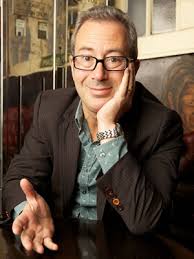 Comedy Lecture, Ben Elton made the case for the traditional sitcom, recorded in a television studio in front of a live audience, and argued that it is a classic genre which is nowadays looked down upon by devotees of newer forms of comedy, made on location without a laughter track. Now, I am probably one of those Elton is thinking about – most of my favourite TV of the past two decades (both British and American) has been half-hour shows which are ostensibly comedy, but which have a serious edge (sometimes a very serious edge). Some of them are made primarily for laughs, but some are not – some are closer to drama than comedy (and never mind the duration). Another thing that sets them apart is narrative development across episodes, whereas a traditional sitcom usually has self-contained episodes which could be shown in any order. There could certainly be a separate list of half-hour comedy-dramas, but it would contain mostly recent material. Perhaps that is one for the future, or perhaps some of the titles may belong on drama lists, but for the present I am going to include both traditional studio and modern single-camera sitcoms on my list, as did the Radio Times, because I can’t think of any better way to do it.
One more consideration before I start – I am not including any titles which are currently still being made, though I may mention them, and some of the titles included here may yet return. Lists are always for future revision.
So, my top ten is:
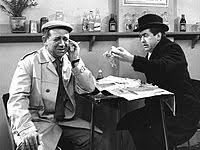
- Steptoe & Son (BBC, 1962-65, 1970-74)

Galton and Simpson’s masterpiece – a traditionally made studio sitcom which broke with tradition by casting straight actors in the lead roles and included moments of heartbreaking pathos amongst the laughs. These were real characters with real hopes and disappointments and, when it got serious, you could sense the audience’s uncomfortable reaction, which, of course, released itself in an even bigger guffaw when the laugh line eventually arrived. Four seasons were made between 1962 and 1965, then a further four from 1970 to 1974, when it returned in colour. I was proud to have played my part in recovering a dozen or so missing episodes in the nineties – Ray and Alan knew their worth and had kept them on an early and obsolete home video format.
- Fawlty Towers (BBC, 1975, 1979)

Often a poll-topper (not only the Radio Times one, but the BFI’s TV100 in 2000) and for good reason: the highest laugh quotient of any sitcom ever; terrific characters, not all of them particularly empathetic, but all very human; brilliantly constructed plots; memorable quotes – “duck’s off”. It was traditionally made but its impact was revolutionary.
- The Royle Family (BBC, 1998-2012)
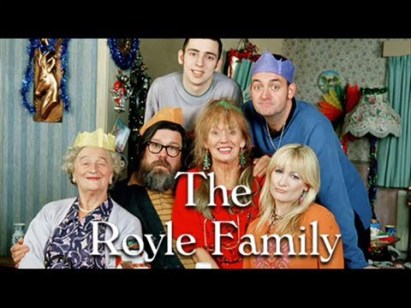
The key title in the transition from the “traditional” to the “modern” sitcom, thanks to the vision of Caroline Aherne: filmed mostly on a single set, but without an audience, it’s stately pace and minimalist narrative contained a wealth of insight, character, warmth and unspoken humour. Laughter track my arse!
- Getting On (BBC, 2009-12)

Certainly one which falls into the category of laughs not being the primary concern, nevertheless there were plenty of them and they hit home. With brilliant characters created and written by the three actresses performing them, and sensitive direction (in the first two series) by Peter Capaldi it literally laughed in the face of death. The final episode said more about life and death than almost anything else I can think of in any genre. The idea was so strong that the American version (made by HBO) was also excellent and Jo Brand has gone on to create more memorable work in a similar vein, Damned (Channel 4) being particularly outstanding amongst current sitcoms.
- Him and Her (BBC, 2010-13)

Another minimalist piece, this time not just restricted to a single set, but each episode shot in real time, allowing us to take in the acutely observed characteristics of the sympathetic, though lethargic, central pair and their relatives and friends, who range from the inept to the hateful. When the “action” moves outside the bedsit for the climactic wedding specials, it is apocalyptic. Writer Stefan Golaszewski has since repeated the trick with the beautiful Mum, the resolution of which is eagerly anticipated.
- The Likely Lads/Whatever Happened to the Likely Lads? (BBC, 1964-66, 1973-74)

Another sixties sitcom which was revived in the early seventies for colour TV, this could not simply replicate the previous format (as Steptoe did) but had to acknowledge that the lead actors had aged, thus introducing a narrative progression which became the series’ key strength. It became about the passage of time, about nostalgia and life progression and about social change in the north of England. It was also brilliantly funny (Clement and La Frenais) and perfectly performed by James Bolam and Rodney Bewes.
- The Office (BBC, 2001-3)

Ricky Gervais and Stephen Merchant not only dispensed with a laughter track, they made a sitcom in the style of an observational documentary, which was a stroke of genius, but an extremely difficult thing to sustain convincingly as the plot became more complex. They pulled it off totally and their inspiration was responsible for so many iconic comedy moments.
- The Fall and Rise of Reginald Perrin (BBC, 1976-79)

A trailblazing narrative sitcom in three distinct seasons, linked by memorable characters, all with their own catchphrases, and with Leonard Rossiter’s towering performance at the centre. The repetitive nature of the dialogue (“17 minutes late…”; ”I didn’t get where I am today,,,”; “cock up on the….front”; “I’m not a…..person” etc), creates an oppressive but secure world which simply cannot be escaped.
- Blackadder (BBC, 1983-89)

Following Rowan Atkinson’s Edmund Blackadder and his familiar associates down through the centuries was a joy and the format allowed for constant renewal. Much of the humour came from anachronism, a very special trick which Ben Elton continues to show himself the master of in Upstart Crow (BBC), the best thing he has done since Blackadder. Difficult to choose a favourite season, but if pushed I would probably go for Blackadder the Third.
- The League of Gentlemen (BBC, 1999-2017)
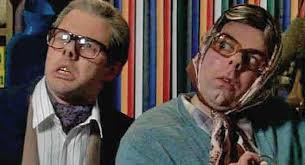
Of all my choices, this is the one I think is most arguably not a sitcom – you could say that, with three performers taking all the parts, it is more a series of sketches linked by a fictional location, though with narrative continuity for each set of characters. But, having included it, a top 10 spot was assured. Its triumphant return at Christmas 2017 was testament to the strength of the format and the characters created for it.
I intended my lists to be top tens, but the Radio Times sitcom list is a top 20 and, for purposes of comparison, if I were to continue in the same vein, these would be my next ten choices:
- I’m Alan Partridge (BBC, 1997-2002)
- Father Ted (Channel 4, 1995-98)
- Till Death Us Do Part (BBC, 1965-75, ITV, 1981)
- House of Fools (BBC, 2014-15)
- Hancock’s Half Hour/Hancock (BBC, 1956-61)
- Red Dwarf (BBC, 1988-99, Dave 2009-17)
- The Thick of It (BBC, 2005-12)
- Peep Show (Channel 4, 2003-15)
- Detectorists (BBC, 2014-17)
- Fleabag (BBC, 2016-19)

Some of these choices require little further justification, but others demand comment: it is hard to overestimate the importance of Till Death in its sixties heyday – the searing impact of the writing and performances – but unfortunately the inevitable focus on its treatment of race makes it difficult to assess in a modern context; in House of Fools, Vic and Bob were not only conquering yet another genre, having produced their own surreal versions of the variety show, the sketch show and the comedy quiz show, but, by using the traditional sitcom model (70s style), subverting it still further; Detectorists drew you in with its relaxed pace, but the shows just flew by – on so many occasions I was astonished to find it finishing when I thought I had only been watching for ten minutes or so (great direction by Mackenzie Crook) – and I’m really enjoying Toby Jones’ own creation, Don’t Forget the Driver, on BBC2 at the moment; and Fleabag has only just finished, though we are assured it is over, so it qualifies for inclusion and I have put it at 20 simply because it feels too soon to proclaim it an instant classic to rank alongside the others here – ask me again in a year’s time and I expect it to be in my top ten.
Last thoughts: having made such a fuss about the difference between “traditional” and “modern” sitcoms, I have (not deliberately) managed to come up with a list of 20 which contains 10 of each, evenly spread through the list. I’ve also included 11 of the 20 titles chosen by the Radio Times panel and regret not finding room for The Young Ones (and I suspect One Foot in the Grave is hovering just outside the 20 in both cases). So, I guess I must be reasonably in line with the consensus, but I’m sure there are plenty of things about my list which will make somebody angry – I do hope so!

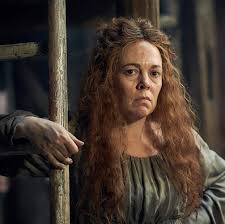 And it was great to see an uncharacteristically unsympathetic performance from (surely soon to be Dame) Olivia Colman, though it is not the only thing on my shortlisted programmes from the first quarter to contain such a thing, as you will discover. An aside on Les Miserables: I was, unfortunately, unable to avoid a spoiler broadcast on BBC2’s quiz Only Connect (of which I am a devotee) just a week before the final episode aired. This came in the form of a question in which the teams were asked to find the connection between four names, of which Inspector Javert was one – the answer being that they were all fictional characters who committed suicide. Don’t they check these things?
 campaign in the 2016 referendum. It contained eye-catching, though slightly caricatured portrayals of most of the well-known political figures involved in the debate, which is why Cumberbatch could convince so well as the unknown central figure. It was a timely reminder of how we got into the current mess, though the continuing coverage of the most recent political machinations has rendered it somewhat less remarkable.
 in its own right and well told using a classic mix of interviews and archive, but the subsequent revelations that they were part of a cruel and secretive psychological experiment leave you simultaneously shocked and intrigued by the contribution of the results to the nature vs nurture debate.
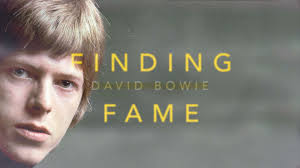 enough material for four hours of air time. Much better was David Bowie: Finding Fame (BBC2), the third part of Francis Whately’s outstanding trilogy about Bowie, this time looking at his rise to prominence and featuring excellent archival materials. It was a great watch and I am reluctant to leave it off the shortlist, but it is the trilogy that is the really impressive achievement, rather than this particular part.
 90s, that is not the case today. His decline and fall has been brilliantly chronicled in I’m Alan Partridge (BBC, 1997-2002) and Mid-Morning Matters (Sky Atlantic, 2012-16), plus a few occasional specials, but this latest development has stretched things too far in striving for familiar comic effects – he truly belongs on North Norfolk Digital, where the humour comes from subtle exchanges. By contrast, the final series of Sharon Horgan and Rob Delaney’s Catastrophe (Channel 4) was well judged and the ending was perfect, but the season as a whole was no advance on the previous ones, which still makes it pretty damn good, but, without the impact it made on its first appearance, not quite shortlist material any more.
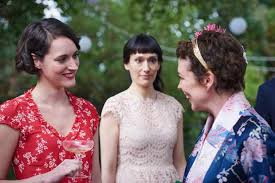
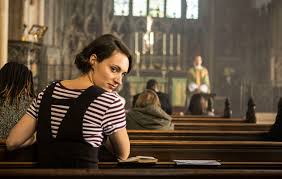 Thomas and a marvellous scene in which Andrew Scott’s priest challenged Fleabag’s fourth-wall-breaking asides to the audience, which indicated that she had at last found somebody who understood her, but maybe even put us, the audience, in the same position for her as his God is for the priest. All that and even a variant on the classic fart-in-a-lift joke – wonderful writing. The supporting cast is magnificent, with Sian Clifford outstanding as Fleabag’s sister Claire and, of course, Olivia Colman as the villain of the piece.
 the Phoebe Waller-Bridge connection. Both are series in half hour episodes which mix a comedic approach with startling developments to exhilarating effect and both feature women in all the leading roles. So, here are my reasons why Fleabag is better than Killing Eve:
 TV for Keeps