


Well, it’s been a while since my last blog and I’m now in self-isolation with my media and I haven’t yet begun my shortlist for 2020, but none of those things is what the title of this blog refers to. What I want to address is the seemingly endless stream of returning series which struggle hard to justify their continuing existing, as well as a few which have come back refreshed after some time away.
Let’s start with Doctor Who (BBC One). After the first three episodes of the latest series, I was about to give up on it. The storylines were getting repetitive and well trusted ways of  getting out of problems, like going back in time and changing things were being deployed. I had nothing against Jodie Whitaker’s doctor, but talk of who would come after her was already beginning to surface – it seems that any actor in this role needs to indicate they are leaving only just after they start, probably as a way of insuring that they are still considered for other roles. Indeed, I did give up watching, only to be lured back by the revelation about another Doctor and I did find the concluding Cybermen episodes highly engaging.
But the whole experience did prompt me to wonder if it may be time for the show to take another lengthy break and, in turn, to think about which other long-running (and specifically BBC) programmes this may apply to. In terms of Doctor Who, I’m not sure it needs to be away for as long as it was during the 1989-2005 hiatus, but that was a very fortunate circumstance as it gave people who were essentially fans of the show the time to establish themselves as TV writers and to re-invent the show as something fresh and vital. But that is viewing it with hindsight and I’m far from sure whether such a repeat scenario could be deliberately attempted, but it is certainly worth considering calling a halt after Whitaker’s third (and probably final) season. I do also worry that the idea that there may be so many other “unknown” Doctors around will be simply become over-used as another fallback plot device in future.

Part of the function of the BBC is to represent the nation to itself and continuity is an important aspect to this. Certain calendar appointments seem set for as long as the Corporation exists and are part of our national fabric: Trooping the Colour, the Royal British Legion Festival of Remembrance, The Last Night of the Proms, Carols from Kings, Jools Holland’s Hootenanny. I’ve long thought that they could play tapes from earlier years for any of these and nobody would notice. Being a devotee of the Proms, I would probably spot the wrong Last Night, but I honestly don’t think I would be able to do so in the other cases.
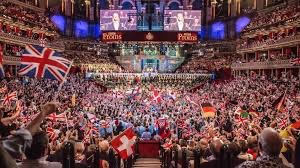
Regularly returning series also give us a feeling of comfort and security as the seasons change and underpin national togetherness (though much less now than they did when there were fewer channels and platforms) and the early months of the new year has seen the return of a number of overly familiar series. Soap operas are designed to be there forever as an accompaniment to (and a distraction from) our own lives – the plot possibilities are very wide, but their inevitable repetition simply mirrors the repetitiveness of life itself. Returning series, however, need constant refreshment and, if they become too repetitive, they risk overstaying their welcome or, even worse if they are dramas, becoming soap operas. They also take up valuable broadcast slots which could be occupied by more innovative material, which is still a major consideration for a public service broadcaster.
So, the BBC needs to be aware of what is becoming stale and throw it out – though not necessarily for ever. Here are my top current candidates for the axe:
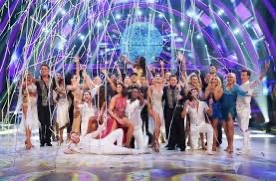
Strictly Come Dancing: It has become something of a mantra for the BBC, especially in times when its function and funding model are challenged, to point to Strictly as a great example of how a public service broadcaster can innovate in the area of popular entertainment formats. And, of course, the argument is absolutely correct – but unfortunately, it is now almost two decades out of date. Like all great successes, it has just gone on for far too long and, by continuing to occupy key Saturday and Sunday night slots, is actually denying the possibility of the next great entertainment innovation emerging.

Casualty/Call the Midwife (for which read any one of the eternally returning familiars like Silent Witness, Last Tango in Halifax etc etc). Casualty long since became a regular returning series and morphed into a full-blown soap. Of all the current crop, Call the Midwife, despite its historic setting, seems the most likely to follow suit. Time to call a halt before it does.

Question Time – formerly a vital part of our democratic process, it became, especially during Brexit, a shouting match with virtually no intellectual debate at all. This was because the BBC required a politically balanced audience as well as panel and the only way to get participants was from party organisations themselves, who packed it with loyal claques. As a result, all debate was reduced to slogans, cheered by half the audience and booed by the other half. It was unwatchable and was heading for oblivion until coronavirus arrived, which both got rid of the audience and seemed to impose a more restrained approach on the panellists, who actually began to think about their answers. How it responds when this crisis is over will be key. Any attempt to return to the old ways should be resisted and, if it does, then it should go.
Of course, it’s not just the BBC. Cold Feet was back on ITV – I tuned into new series just in case (or out of habit). I had guessed the next line twice before the first ad break. When that happens, it means you have got so far inside the writer’s head that he cannot come up with anything new to surprise you – familiarity has well and truly bred contempt. Having already taken a break between 2003 and 2016 and returned refreshed, it looks like time is now up.

This problem applies to genres, as well. Deadwood Fell didn’t look like a drama which should be on Channel 4 on a Friday night. It had ITV on a Monday written all over it and had confirmed it within the first half hour. Spotting what to give up early has become an essential survival trick in the overstuffed world of modern TV drama. If the broadcasters won’t give you a break, you just have to take one for yourself.
So, have I actually seen anything so far this year, now three months old, which I have liked? Is there anything yet on the shortlist?
Well, there is certainly one emphatic “yes” in answer to that question and, appropriately enough, it is something returning triumphantly after a substantial layoff, much as Doctor Who did in 2005. It is also from the “other” most famous TV sci-fi franchise. Star Trek: 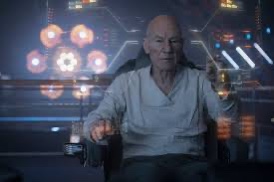 Picard, just finished on Amazon, was a brilliant re-boot of The Next Generation, presented as a ten-part story (in other words, like an extended movie rather than the classic series format). Production values matched the latest big-budget sci-fi potential, while the story gripped from first to last and the performances were impeccable. Nostalgia was given its space but did not get in the way of the developing narrative. And, philosophically, it had much more to say about artificial intelligence and humanity than any number of seasons of Westworld. The final scene between Picard and Data was just beautiful.

Also returning to its very best after a few years off has been Larry David’s Curb Your Enthusiasm (Sky Comedy) – always a major favourite of mine (indeed, my number 1 US sitcom on the list I made a few months back), this season, its 10th, has seen a return to the basics which made it so in the first place. Which, I guess, doesn’t really make it qualify for shortlist status, but does mean I have had a fantastic number of laughs out of it.
Also, as always, worth mentioning is Inside no 9 (BBC2), back for its fifth series, though 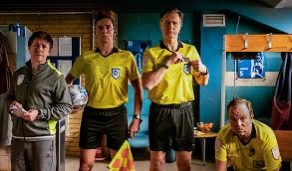 not quite as impactfully as it was the same time last year with its fourth. It seems curmudgeonly to criticise something which delivers so regularly, and there were three Number 9 classics in this year’s bunch (The Referee’s a Wanker, Love’s Great Adventure and Thinking Out Loud) but, having included it in last year’s top ten, it would have had to improve on that season (almost impossible) to get in again this year.
Home (Channel 4), on the other hand, was only on its second season and impressed me enough to warrant a shortlist place. The genius of Rufus Jones’ sitcom is that the obvious  central situation – the travails of a Syrian asylum-seeker in Britain – does not overwhelm the narrative. Indeed, in this season it became just a part of a traditional-seeming family sitcom, in which every character is rounded and has an engaging story. It can be very moving, but also devastatingly funny, and moves effortlessly beween those two states.
Anything else? Well, the Trip to Greece (Sky One) has been a predictably enjoyable continuation of Steve Coogan and Rob Brydon’s jaunts. Armando Iannucci’s Avenue 5 (Sky Atlantic) is clever and impressively made, but the laughs come at a rate of about two per episode and it really should have been a movie rather than a series.

OK, I think that brings me up-to-date. Just two for the shortlist in the first quarter of the year! Good grief, how I miss football!






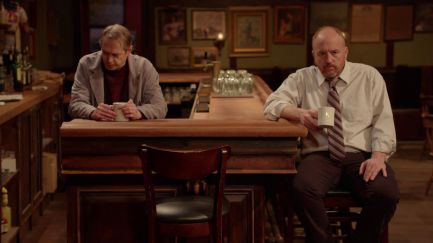




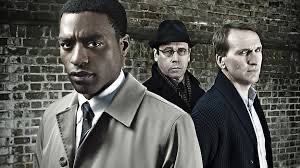

 aspects of my all-time favourite American comedy series, Curb Your Enthusiasm: the central relationship of a performer and his agent; their bemusement at the ways of the modern world; the showbiz milieu, with guest stars playing either characters (Danny de Vito, Ann-Margret) or themselves (Jay Leno, Elliot Gould); the strong Jewish humour. It’s not earth-shattering, but it has its moments of reflection and is extremely watchable.
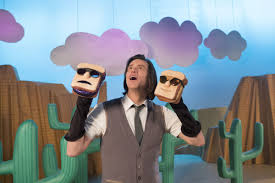 lists, as it probably should have. It is visually striking (full of bold colours), with an occasionally unnerving narrative, which veers from comedy to tragedy in the blink of an eye and centres on a group of people involved in the production of a Sesame Street-like children’s TV show, while at the same time dealing with personal loss and life challenges. Carrey is perfectly cast as the insecure star, Mr Pickles, constantly wanting to introduce themes of death into his character’s show. It was a slow starter and took some getting used to, but the later episodes were very memorable and I will certainly be returning to it.

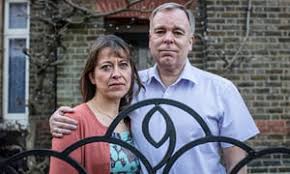







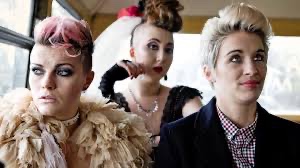
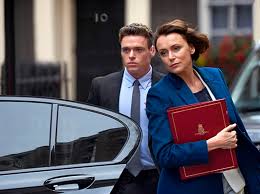 after four episodes – after a very promising start, it seemed to be drawing the story out to intolerable lengths: maybe I’ll give the Ridley Scott movie a go instead. Bodyguard gripped to the end but was ultimately just too improbable and manipulative for my taste (and how was the dead man’s button ever a problem when his hand was taped to the device?). No Offence was its usual wonderful self, but I don’t think the third season represented any kind of advance on the previous two, so it doesn’t make it to the shortlist for that reason.
 the standard of some of the later episodes did not reach her level. Also, it settled into a regular, episodic and repetitive game of cat-and-mouse, which would have been fine if it had come up with a satisfactory ending but leaving things open for a second season was precisely not what I wanted (in that respect it reminded me of The Fall). I won’t be following it further.
 maybe that is just because his style is established and no longer such a revelation. Nevertheless, it still resonates with me and definitely needs to be revisited. It was also remarkable for treating a period of recent African history at length and with little concession to western ignorance, while at the same time providing a lot of great roles to black acting talent.
 shifted it from an interesting and engaging comedy-drama about sex and relationships to something with considerably more depth, so it is there. Once Bodyguard was over, I carried on watching whatever drama tuned up in the BBC1 Sunday night 21.00 slot – The Cry was highly involving and well-constructed over 4 episodes, but The Little Drummer Girl fell between two stools of Le Carre adaptations, with neither the Bond-ish glamour of The Night Manager or the claustrophobic intensity of the Smiley series, and I gave up after two episodes (I like to think I’m getting good at spotting the duds early and subsequent feedback seems to confirm a wise choice in this case).
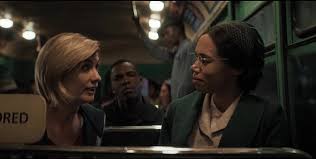 made it so seamless. Even the move to Sunday night has worked better than I predicted, but I still prefer stories which take more than one episode and miss both the cliff-hangers and the pre-credit sequences, which seem to have been dispensed with. The most significant thing about Chibnall’s approach for me, though, is how it looks back to Sydney Newman’s original 1963 conception of the series as a vehicle for historical education (before Verity Lambert introduced the Daleks in the second story and set it firmly on the sci-fi path). In particular, the episode about Rosa Parks has to be the purest manifestation of Newman’s original vision the series has achieved in its 55-year history. The episode did have sci-fi elements, including an agent sent from the future to alter history, but programmed not to kill (nods to both Terminator 1 and 2 there!), but it did not flinch from a fine examination of the historical context of the civil rights movement, which was a great lesson for the character of Ryan as well as the young Doctor Who audience of today. I am thus including that particular episode in my shortlist for the best of the year.
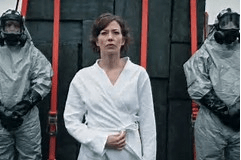
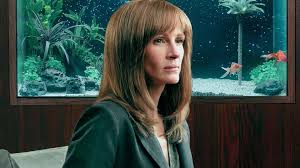 what had happened and the crisis point is approached gradually from both directions. The future scenes are shot in a restrictive, claustrophobic frame, while the full-frame scenes include split screen sequences and, together, the shooting styles represent a very clever way of advancing the narrative. The series contains what has to be my “TV moment of the year” (big spoiler alert here, if you haven’t seen it!): at the moment when the future Heidi realises the truth of what happened the restricted screen expands into full widescreen – which sounds trite when I write about it but is a stunning effect when you watch it. The ending of Homecoming is also very satisfying but is not the ending – you have to sit through the entire and lengthy end credits (which I always do) to get to an extra scene which sets up a second season. Very neat! (makers of Killing Eve etc. take note!). It’s the best thing on Amazon since…well, since Mr Robot, and a must for the shortlist.


 plot twists in the same story, while the plot shift in To Have and To Hold was amongst the most disturbing things the duo have given us (in a story which was already pretty bleak!). Maybe And the Winner Is… was comparatively lightweight following the outstanding impact of the first four, but it still contained plenty of laughs and showbiz barbs, and the series finished strongly with a new and very “Number 9” take on a familiar horror trope in Tempting Fate.
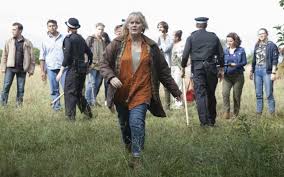 of an embattled social worker did not dominate the series, which examined the effects of the murder of a black child, fostered with a white family, on a wide range of individuals and was essentially about attitudes to race, spoken and unspoken, in modern Britain. Lia Williams as the white foster mother, Lucian Msamati as the girl’s grandfather, Wunmi Mosaku as the investigating police officer and young Finn Bennett as the foster family’s natural son also shone, and the piece was strikingly directed by Euros Lyn, but it was basically the work of writer Jack Thorne which was the key element.
 TV for Keeps