


So far this year, I have rather neglected my running shortlist for best of the year, so it’s time to take stock. In my last blog but one, I identified True Detective season 3 as one for the list and the programme I blogged about last time out, Moon and Me, should be there, too. But what else?
Going right back to the beginning of year (indeed, to the very end of last year, as its first part was transmitted on December 30th), Les Miserables (BBC1) surpassed the BBC’s War and Peace in terms of presenting a sprawling 19thcentury classic in 6 gripping episodes, thanks to the even greater brilliance of Andrew Davies’ adaptation this time around. It also concentrated less than its predecessor on sumptuous visuals, which allowed the outstanding acting performances from Dominic West et al to carry it higher. 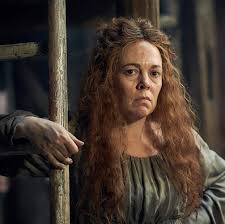 And it was great to see an uncharacteristically unsympathetic performance from (surely soon to be Dame) Olivia Colman, though it is not the only thing on my shortlisted programmes from the first quarter to contain such a thing, as you will discover. An aside on Les Miserables: I was, unfortunately, unable to avoid a spoiler broadcast on BBC2’s quiz Only Connect (of which I am a devotee) just a week before the final episode aired. This came in the form of a question in which the teams were asked to find the connection between four names, of which Inspector Javert was one – the answer being that they were all fictional characters who committed suicide. Don’t they check these things?
Two other dramas from the first three months of the year are worth mentioning, though neither quite has the special quality required to join Les Miserables and True Detective on the shortlist. Manhunt (ITV) was an unsensational but very involving look at the police work which went into catching the serial killer in the Milly Dowler case, with Martin Clunes highly convincing as the detective involved. Brexit: the Uncivil War (Channel 4) starred Benedict Cumberbatch as the mastermind behind the Vote Leave  campaign in the 2016 referendum. It contained eye-catching, though slightly caricatured portrayals of most of the well-known political figures involved in the debate, which is why Cumberbatch could convince so well as the unknown central figure. It was a timely reminder of how we got into the current mess, though the continuing coverage of the most recent political machinations has rendered it somewhat less remarkable.
Britain’s relationship with Europe was also the subject of the first of a new three-part documentary series from Norma Percy – Inside Europe: 10 Years of Turmoil (BBC2). It is Percy and her colleagues at Brook Lapping who have given us a host of wonderful “instant history” series from The Second Russian Revolution (1991) and The Death of Yugoslavia (1995) to the Peabody-winning Putin, Russia and the West (2012). They always seem to get most of the key players involved to give frank interviews about events and this was no exception, though David “it’s all your fault” Cameron was notable by his absence from the first programme (other than in archive footage). But that was far from the best of the series and the other two parts (on the Greek debt crisis and the migrant crisis respectively) surpassed it. Major leaders like Nicolas Sarkozy and Francois Hollande took part, though they are, of course, now off the scene and able to talk, whereas Angela Merkel’s part had to be explained by her former colleagues and advisors. A definite for the shortlist.

Also for the shortlist is Channel 4’s Three Identical Strangers, which I include by virtue of its recent transmission on that channel and its production by Raw TV, even though it was first seen on the festival circuit last year. The story of the American triplets separated at birth and re-united in the 1980s in a blaze of media attention is fascinating  in its own right and well told using a classic mix of interviews and archive, but the subsequent revelations that they were part of a cruel and secretive psychological experiment leave you simultaneously shocked and intrigued by the contribution of the results to the nature vs nurture debate.
Two lengthy documentaries on musical icons are also worth mentioning. Leaving Neverland (Channel 4) certainly contained harrowing testimony concerning allegations of child sex abuse against Michael Jackson, but for me it was its excessive length rather than any doubts about the allegations that made it problematic. It was almost as though the producers (and commissioners) thought they had something so important on their hands that it demanded it be treated at great length, whereas there was nowhere near 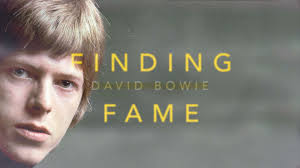 enough material for four hours of air time. Much better was David Bowie: Finding Fame (BBC2), the third part of Francis Whately’s outstanding trilogy about Bowie, this time looking at his rise to prominence and featuring excellent archival materials. It was a great watch and I am reluctant to leave it off the shortlist, but it is the trilogy that is the really impressive achievement, rather than this particular part.
Which leaves comedy and four highly anticipated arrivals/revivals. The much trumpeted “return to television” of Alan Partridge (Steve Coogan) in This Time (BBC1) has contained some glorious moments, but overall has not lived up to my high expectations. I think this is a question of credibility, which is important in this context – while it was perfectly possible to believe Partridge would still have been a TV presence in the early  90s, that is not the case today. His decline and fall has been brilliantly chronicled in I’m Alan Partridge (BBC, 1997-2002) and Mid-Morning Matters (Sky Atlantic, 2012-16), plus a few occasional specials, but this latest development has stretched things too far in striving for familiar comic effects – he truly belongs on North Norfolk Digital, where the humour comes from subtle exchanges. By contrast, the final series of Sharon Horgan and Rob Delaney’s Catastrophe (Channel 4) was well judged and the ending was perfect, but the season as a whole was no advance on the previous ones, which still makes it pretty damn good, but, without the impact it made on its first appearance, not quite shortlist material any more.

I would say that Ricky Gervais’ After Life (Netflix) certainly did live up to my high expectations and I enjoyed it very much (and will certainly be back for more when it returns). However, it also had a bit too much of a ring of familiarity about it – all of Gervais’ prime concerns were aired and the cast contained a number of previous collaborators (Kerry Godliman, Ashley Jensen, David Earl) as well as some excellent performers in minor roles, some of whom (Penelope Wilton, Roisin Conaty) made the most of their cameos, while others (Diane Morgan, Joe Wilkinson, Paul Kaye) were largely wasted in underwritten parts. I had the good fortune recently to see Ricky Gervais at a local theatre, trying out material for his upcoming stand-up tour and Netflix special and it was a great evening, but even a devoted fan like me has to admit that his facility for saying what I agree with and making it funny has become a little too easy to him. He needs to be extended and After Life does not do that, even though it is him at his best, so I reluctantly leave it off the shortlist. Another aside, though: at the end of the end credits is a line giving “special thanks to the British Film Institute and the people of the United Kingdom” – I’ve no idea what this means, but I guess it’s a sentiment I can relate to.
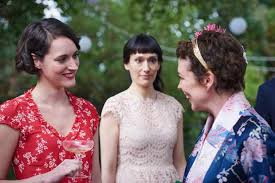
So, with none of these eagerly awaited comedies making the shortlist, it is a relief to say that the final one of the four most emphatically does make it, and, indeed, is the best thing of the year so far for me. Phoebe Waller-Bridge’s Fleabag (BBC1) reached the end of its second (and final, we understand) season last night. After an engaging first season which was fairly whimsical until a late revelation which upended all our assumptions, the second season has been consistently brilliant at alternating great comedy with psychological insight and even religious and philosophical musing. The third episode was a corker – a hilarious business reception, a brilliant cameo from Kristin Scott-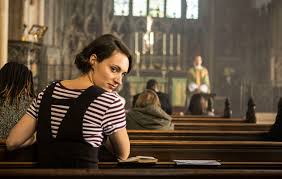 Thomas and a marvellous scene in which Andrew Scott’s priest challenged Fleabag’s fourth-wall-breaking asides to the audience, which indicated that she had at last found somebody who understood her, but maybe even put us, the audience, in the same position for her as his God is for the priest. All that and even a variant on the classic fart-in-a-lift joke – wonderful writing. The supporting cast is magnificent, with Sian Clifford outstanding as Fleabag’s sister Claire and, of course, Olivia Colman as the villain of the piece.
All of which makes me wonder why I find Fleabag so vastly superior to Killing Eve, which everybody else seems to think is the best thing since whatever. You may think making such a comparison is pointless, but I think their similarities go further than just 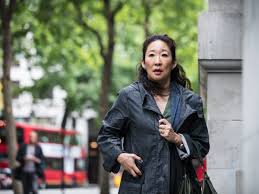 the Phoebe Waller-Bridge connection. Both are series in half hour episodes which mix a comedic approach with startling developments to exhilarating effect and both feature women in all the leading roles. So, here are my reasons why Fleabag is better than Killing Eve:
- Obviously, Phoebe Waller-Bridge is actually in Fleabag, giving a wonderful dramatic and comedic performance, and:
- She wrote all of Fleabag, so it is more consistently brilliant than Killing Eve, as well as having a more defined narrative arc (indeed, she will not be writing any of Killing Eve season two, which is another reason I won’t be watching it). Furthermore:
- Fleabag knows where it is going. Killing Eve just wants to keep going
- Fleabag is a personal project – Killing Eve is an adaptation of a series of novels
- The main leads all being female feels totally natural in Fleabag – in Killing Eve it feels like a gimmick
- The startling developments are more startling (and thus more impactful) in something which is primarily a comedy than primarily a thriller
- Fleabag knows when to end (and last night’s ending was so affecting, the BBC even gave it the rare honour of not allowing the continuity announcer to speak over the end credits). Killing Eve should have ended at the end of the first season and its failure to do so was the main reason I gave up on it
Actually, all that says much more about Fleabag and why it is so good than it does about Killing Eve.

Just one more comedy to mention, but not one in line for shortlisting, alas. I have been waiting years to catch up with Pamela Adlon’s Better Things, which won a 2016 Peabody, but hasn’t been available anywhere here until the outstanding first season arrived on BBC2 over the past couple of months. I hope they can catch up with the rest of it soon. In the meantime the latest Peabody list is imminent, so I’m looking forward to some more reliable recommendations.

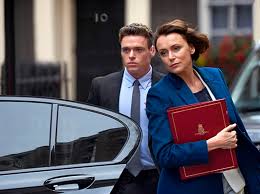 after four episodes – after a very promising start, it seemed to be drawing the story out to intolerable lengths: maybe I’ll give the Ridley Scott movie a go instead. Bodyguard gripped to the end but was ultimately just too improbable and manipulative for my taste (and how was the dead man’s button ever a problem when his hand was taped to the device?). No Offence was its usual wonderful self, but I don’t think the third season represented any kind of advance on the previous two, so it doesn’t make it to the shortlist for that reason.
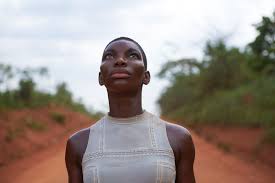 maybe that is just because his style is established and no longer such a revelation. Nevertheless, it still resonates with me and definitely needs to be revisited. It was also remarkable for treating a period of recent African history at length and with little concession to western ignorance, while at the same time providing a lot of great roles to black acting talent.
 shifted it from an interesting and engaging comedy-drama about sex and relationships to something with considerably more depth, so it is there. Once Bodyguard was over, I carried on watching whatever drama tuned up in the BBC1 Sunday night 21.00 slot – The Cry was highly involving and well-constructed over 4 episodes, but The Little Drummer Girl fell between two stools of Le Carre adaptations, with neither the Bond-ish glamour of The Night Manager or the claustrophobic intensity of the Smiley series, and I gave up after two episodes (I like to think I’m getting good at spotting the duds early and subsequent feedback seems to confirm a wise choice in this case).
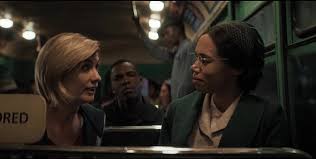 made it so seamless. Even the move to Sunday night has worked better than I predicted, but I still prefer stories which take more than one episode and miss both the cliff-hangers and the pre-credit sequences, which seem to have been dispensed with. The most significant thing about Chibnall’s approach for me, though, is how it looks back to Sydney Newman’s original 1963 conception of the series as a vehicle for historical education (before Verity Lambert introduced the Daleks in the second story and set it firmly on the sci-fi path). In particular, the episode about Rosa Parks has to be the purest manifestation of Newman’s original vision the series has achieved in its 55-year history. The episode did have sci-fi elements, including an agent sent from the future to alter history, but programmed not to kill (nods to both Terminator 1 and 2 there!), but it did not flinch from a fine examination of the historical context of the civil rights movement, which was a great lesson for the character of Ryan as well as the young Doctor Who audience of today. I am thus including that particular episode in my shortlist for the best of the year.
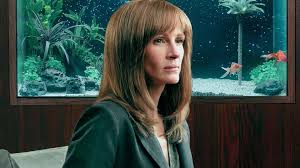 what had happened and the crisis point is approached gradually from both directions. The future scenes are shot in a restrictive, claustrophobic frame, while the full-frame scenes include split screen sequences and, together, the shooting styles represent a very clever way of advancing the narrative. The series contains what has to be my “TV moment of the year” (big spoiler alert here, if you haven’t seen it!): at the moment when the future Heidi realises the truth of what happened the restricted screen expands into full widescreen – which sounds trite when I write about it but is a stunning effect when you watch it. The ending of Homecoming is also very satisfying but is not the ending – you have to sit through the entire and lengthy end credits (which I always do) to get to an extra scene which sets up a second season. Very neat! (makers of Killing Eve etc. take note!). It’s the best thing on Amazon since…well, since Mr Robot, and a must for the shortlist.


 unfussy visuals; characters whose opinions and motivations evolve gradually; subtle yet powerful acting performances (Anna Maxwell-Martin, Daniel Mays, Vicky McClure). It ensured that all voices from the era of the Troubles were heard and understood, much as the Vanessa Engle documentary I highlighted from earlier in the year, The Funeral Murders, did. Indeed, the two pieces form a valuable diptych and, though they address issues from 25 and 30 years ago, have a similar contemporary resonance in reinforcing why the Irish border is the most important aspect of the Brexit process. Mother’s Day becomes the 9thprogramme on my running shortlist for the best of 2018.
 to any that do at that point. First to arrive, and now nearing completion, was Jed Mercurio’s Bodyguard (BBC1, Sundays), an accomplished thriller (as one would expect from that source) which has been a big success and even had the confidence to kill off one of its lead characters halfway through and thus wrong-foot the audience, as it seemed to have been developing a compelling conflict-of-loyalty theme which is now redundant. It is manipulative and at times stretches credibility, but I’m hooked on it.
 performances and the direction. The expansion of the narrative into the relationships of other characters (the couple’s friends, colleagues and children; Joy’s clients in her work as a therapist) is also highly engaging, but I did start to worry that it is beginning to stray into Cold Feet territory, potentially replicating the longevity and eventual repetitiveness of that series, so I’m not sure of the need to stay with it, but I probably will because: a) it’s as easy to watch as Cold Feet; and b) I’m still watching Cold Feet!
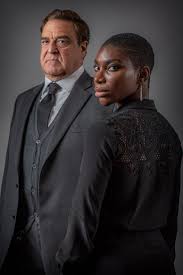 since it was announced some three years ago) arrived on BBC2 last Monday. Black Earth Rising is the latest piece from my favourite television auteur, Hugo Blick (actually there aren’t many writer/director/producers around – Poliakoff is another, but they are few on the ground). If it turns out to be anywhere near as good as The Shadow Line (2011) or The Honourable Woman (2014), and early indications are that it will, then it will be an automatic choice for my top 10, but I will return to it later. So far it has contained Blick’s trademark expository scene-setting and has certain similarities to The Honourable Woman, but neither of these are particular drawbacks for me – it’s just great to be back in his intelligent and stylish world.
 Sunday evening. Moving it away from its traditional Saturday home has been tried before and it failed miserably, though maybe in the era of catch-up services it will not matter so much. I worry that the bold experiment of a female Doctor, already tied to the success or otherwise of a new and potentially uncertain show-runner, will be fatally compromised by this blunder – or maybe it is a way of giving the traditionalists something else to focus on, rather than the gender of the lead actor, thus diverting attention from the biggest change and providing something easily rectified. We shall see.
 TV for Keeps