


In my last blog, I added two new titles to my 2023 shortlist, but have missed out naming four more, transmitted between February and June. Basically, this blog has been in preparation all that time, but a fatal combination of being both overly busy and somewhat lazy delayed it beyond the point at which I wanted to publish my thoughts on the most recent stuff. Anyway, it is now time to go back a bit and tie up my viewing for the year so far at the half-way stage.

I’m not sure I have named a reality show amongst my best of the year before, but Channel 4 came up with a superb new format, which produced a remarkable finale that was both very moving and extremely enjoyable. The Piano showcased outstanding amateur performances on pianos set up in some of Britain’s main railway stations, which were being secretly watched by internationally famous judges Lang-Lang and Mika. The astonishing Lucy, a blind and learning-disabled 13-year-old girl who found a way to express herself by playing the piano, was always going to win the Festival Hall concert final, but all the other finalists had moving stories too and deserved the opportunity to display their talent. It was one of the most life-affirming series of recent years.
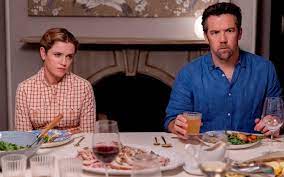
Colin From Accounts (BBC2) is an Australian comedy which lives up to the best of what you might expect from that country’s particular sense of humour and then goes some distance further. It is written and performed by the married couple Harriet Dyer and Patrick Brammall (although they take individual writing credits for alternate episodes) and reminded me a lot of Sharon Horgan and Rob Delaney’s Catastrophe, not least because of the striking physical and character similarities of the leads: he tall, unshaven and sardonic; she blonde, sassy and forthright. It also has its share of some wonderfully embarrassing scenes, especially an awkward and hilarious birthday dinner party in episode six.

Three years ago, the documentary series Once Upon a Time in Iraq featured in my year’s top ten and the team behind it were back with Once Upon a Time in Northern Ireland (BBC2), which was even better. Dealing with the Troubles from the late sixties to the mid-nineties, it benefitted from greater hindsight, although the participants were only now able to speak about their experiences and some of them did so very cautiously. The interviews were conducted using archive news reports to initiate memories and the results were riveting, moving, sometimes revelatory and presented in a non-judgemental fashion. Everybody here was the victim of an impossible and intractable situation, to which we can only hope there is never a return. The subtitle of the final episode is Who Wants to Live Like That?, a quote from one of the interviews, but the fear of a reversion to the unthinkable horrors of the past was not fully dissipated, which adds to the value of the series.

Having spent much of last year supporting my wife through extensive treatments for lung cancer (chemotherapy and radiotherapy) which were ultimately successful (fingers firmly crossed) we approached the Norwegian series Afterglow (BBC4) as yet another drama series likely to reflect our own lives back at us. To an extent it did, especially at first, but the cancer diagnosis received by the lead character, Ester, turned out to be the starting point for what is really a comedy drama about a circle of friends and their relationships which reminded me of Cold Feet (ITV, 1997-2020) at its best. I would expect it to continue in this vein for a number of further series, until it similarly runs out of steam, but the characters and the cast are extremely strong and it is very watchable, so why not?
So, I have managed to add a reality show, a comedy, a documentary and a drama series to the shortlist, which makes a total of ten halfway through the year. Looks like I will have choices to make this time round.
Not making the cut, though very enjoyable, were the third and final season of Star Trek: Picard (Amazon), which was a spectacular and satisfying conclusion to the best iteration of the franchise since the original series, and Shane Meadows’ The Gallows Pole (Channel 4), a striking series set in the 18th century which was surprisingly funny and very much recognisable as a Meadows project, if ultimately a little aimless. Definitely not for inclusion were the latest series of Inside No.9 (BBC2) which I now watch out of loyalty, but which these days only rarely shows flashes of how brilliant it once was, and Ten Pound Poms (BBC1), which eschewed a number of potentially interesting dramatic possibilities in favour of soapy melodrama and (presumably) the hope of further series. Same old Aussies…….

Now that I’m up-to-date on current TV, I’ll return to music in my next blog.

 getting out of problems, like going back in time and changing things were being deployed. I had nothing against Jodie Whitaker’s doctor, but talk of who would come after her was already beginning to surface – it seems that any actor in this role needs to indicate they are leaving only just after they start, probably as a way of insuring that they are still considered for other roles. Indeed, I did give up watching, only to be lured back by the revelation about another Doctor and I did find the concluding Cybermen episodes highly engaging.




 Picard, just finished on Amazon, was a brilliant re-boot of The Next Generation, presented as a ten-part story (in other words, like an extended movie rather than the classic series format). Production values matched the latest big-budget sci-fi potential, while the story gripped from first to last and the performances were impeccable. Nostalgia was given its space but did not get in the way of the developing narrative. And, philosophically, it had much more to say about artificial intelligence and humanity than any number of seasons of Westworld. The final scene between Picard and Data was just beautiful.
 not quite as impactfully as it was the same time last year with its fourth. It seems curmudgeonly to criticise something which delivers so regularly, and there were three Number 9 classics in this year’s bunch (The Referee’s a Wanker, Love’s Great Adventure and Thinking Out Loud) but, having included it in last year’s top ten, it would have had to improve on that season (almost impossible) to get in again this year.
 central situation – the travails of a Syrian asylum-seeker in Britain – does not overwhelm the narrative. Indeed, in this season it became just a part of a traditional-seeming family sitcom, in which every character is rounded and has an engaging story. It can be very moving, but also devastatingly funny, and moves effortlessly beween those two states.
 TV for Keeps