

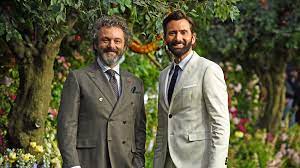
Is there any more complexly self-referential TV show than Staged? Back for its third, and last series, Michael Sheen and David Tennant’s lockdown vehicle spent much of its time debating whether or not there should be (or have been) a third series and incorporating a “making of” documentary into the plot. Already pretty meta, this was its most meta incarnation yet, but its scheduling made it seem even more so. Previously released on Britbox late last year, it received its BBC TV premier last month at the same time as both its stars could be seen in separate outstanding dramatic projects playing the fathers of disabled daughters, and being one of those myself, this was all a bit too much at the same time. Enjoyable though it was, Staged will not be troubling my growing shortlist of the year’s best, but those other two pieces most certainly will.
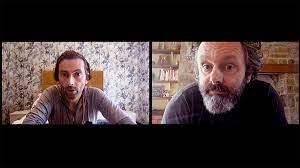
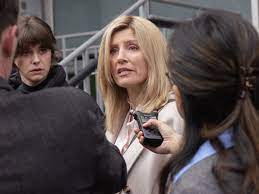
Best Interests (BBC1), another phenomenal 4-parter by the king of the format, Jack Thorne, is simply the best thing of the year so far. Michael Sheen and Sharon Horgan were both brilliant and moving as the parents of a girl with a rare form of muscular dystrophy who face the agony of the decisions to be taken when she falls into a comatose state. All the issues about the decision to withdraw life-support are covered from the ethical, medical, legal and sociological standpoints, but ultimately it was about the family involved (mother, father and sister most prominently) and their different ways of coping with the situation. Indeed, I felt that the real subject was their different ways of passing through the inevitable departure of a dearly loved one and ultimately letting go. Marnie’s life expectancy was always going to be limited (indeed, it is mentioned at one point that she had exceeded expectations) but they all needed to go through an inevitable ritual. For Horgan’s character, this took the form of the legal fight for treatment to continue, but it was the personal reactions which resonated most and brought out the best in the actors. The scene in which Marnie’s life-support systems were turned off was wrenching in the extreme but was followed by a serene coda which hinted at reconciliation – both with the sense of loss and with each other.

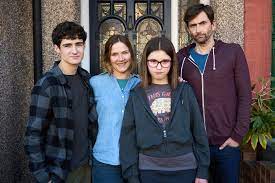
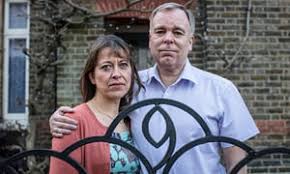
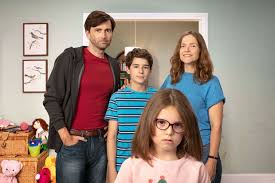
There She Goes (BBC2) followed the evening after the conclusion of Best Interests.Following two outstanding series (covered in my blogs of November 2018 and October 2020), this was an hour-long special which continue the story of learning-disabled Rosie (Miley Locke) and her family (David Tennant, Jessica Hynes and Edan Hayhurst), possibly also bringing it to a conclusion. It remained uncannily like our own lives, though, unlike us, the family finally received a diagnosis of Rosie’s condition, which put them in touch with other families in the same situation. This led to a very neat (and very meta) ending in which they met up with the real-life family whose experiences are the basis of the series – writer Shaun Pye, his wife Sarah Crawford and their daughter Joey. The captions at the end informed us of the background to the special and it has since been trailed, for the first time, as “based on a true story”. So, fiction met reality and seems to have come full circle, but there are still plenty of issues to explore around the experience of parenting and learning disability and I hope this is not the end of it.
Scheduling There She Goes directly after Best Interests would seem to be a bit of a mistake in normal circumstances, but having Staged in there as well gave it a little more coherence (on a meta level) in terms of the presence of Sheen and Tennant and maybe that was part of the thinking.
I referred above to my growing 2023 shortlist but will need to go back a bit in my next blog to expand on that. I have virtually written it already, but I wanted to get my thoughts on the programmes mentioned in this blog down first, so things are a bit out of order. In fact, I actually have two other blogs almost ready, but haven’t yet finished them due to a combination of being both busy and lazy, if that makes sense. Anyway, I’ll be back soon.

 aspects of my all-time favourite American comedy series, Curb Your Enthusiasm: the central relationship of a performer and his agent; their bemusement at the ways of the modern world; the showbiz milieu, with guest stars playing either characters (Danny de Vito, Ann-Margret) or themselves (Jay Leno, Elliot Gould); the strong Jewish humour. It’s not earth-shattering, but it has its moments of reflection and is extremely watchable.
 lists, as it probably should have. It is visually striking (full of bold colours), with an occasionally unnerving narrative, which veers from comedy to tragedy in the blink of an eye and centres on a group of people involved in the production of a Sesame Street-like children’s TV show, while at the same time dealing with personal loss and life challenges. Carrey is perfectly cast as the insecure star, Mr Pickles, constantly wanting to introduce themes of death into his character’s show. It was a slow starter and took some getting used to, but the later episodes were very memorable and I will certainly be returning to it.



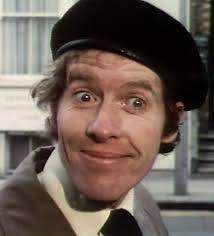 Comedy has regularly used the adult “simpleton” as a staple character and a source of (often cheap) laughs. Some performers created comic personas which can only be understood as adults with (usually mild) learning disabilities – Jerry Lewis and Norman Wisdom spring to mind. The character of Frank Spencer in Some Mothers Do ‘Ave ‘Em (BBC, 1973-78) falls into this tradition and even the person I regard as the greatest comic genius of the 20thcentury, Stan Laurel, is not entirely immune from inclusion in this list. The only comedy character I can recall whose learning disability was acknowledged was Dennis Dunstable in LWT’s Please, Sir (1968-72). However, I should also mention in this context Caroline Aherne and Craig Cash’s wonderful Mrs Merton and Malcolm (BBC, 1999) in which Malcolm’s learning disability was not acknowledged, even though that is the only credible explanation for the character. Described by Time Out (!) as “possibly the most disturbing show on television”, it only ran for one much misunderstood series.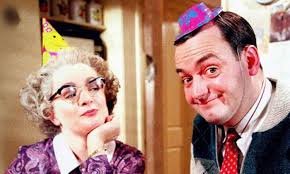

 generally conclude that Derek is the one who has things figured out, because he is always so cheerful. That helped me to change my own feelings about Hanna’s condition from one of regret that she will never have a “normal” life to one of acceptance and even gladness that her constantly happy attitude will persist. When you have no concept of what your life could have been, you will have little experience of disappointment, so it should not be a cause for regret. It is possible that this attitude of mine is something of a cop-out for my own peace of mind, but it works for me: besides which, ensuring that she continues to have the appropriate secure environment is enough to keep me occupied. As for Derek, it is also a good example of the sort of series I referred to at the start of this blog – one for which my enthusiasm is engendered by personal connection but is out of step with the general critical consensus.
 satisfactory independent life for her disabled daughter – a problem she remarkably solved by outliving her. One of my favourite recent documentaries is How to Dance in Ohio (HBO, 2015) which was about the organisation of a formal prom for a group of autistic youngsters – it was emotional and inspirational, and I certainly recognised my own life in it from accompanying Hanna to the school and college proms and discos which she loves.
 stage play which had both film and television adaptations. It has a similar dark humour to There She Goes and was also based on the writer’s own experiences, but it dates from an era when disability was more a private affair and the girl’s disability is severe cerebral palsy. There She Goes is pretty much contemporary to our own experiences and also features a child with undiagnosed disabilities similar to Hanna’s, though a little more severe and much more disruptive.
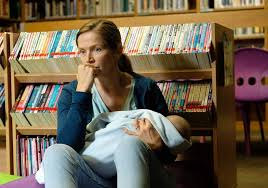 at work while she had to cope with her worries about Hanna in isolation, so it was very hard for her to watch this and Pye (a writer on Have I Got News For You – my favourite comedy panel show) wisely sought his own wife’s input for the character of Emily, which meant it was spot-on. One flashback scene struck me particularly, because it contained a piece of dialogue which came pretty much verbatim out of my own mouth back in about 2003: after a visit to our excellent consultant neurologist, who was organising all sorts of tests for Hanna, none of which produced a conclusive diagnosis, I wondered aloud whether he was partly motivated by the possibility of getting a syndrome named after himself, as does Simon.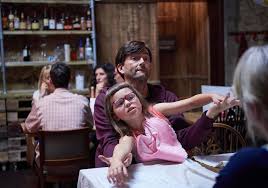
 TV for Keeps