

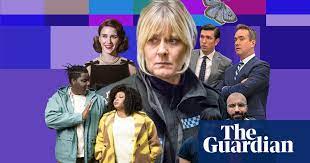
Yet again, I have left too long between blogs, so this one will serve to catch up with (some of) the TV I have watched since my last blog on the subject and complete the shortlist for my 2023 best 10 before the end of the year.

The autumn brought four dramas of significance for consideration. By a strange coincidence, Monday nights at 9pm saw simultaneous transmissions of difficult dramatisations of the crimes of two British predatory monsters of the 1970s. BBC1 had its long-awaited dramatic confrontation with the legacy of the Jimmy Savile scandal in the form of the 4-part The Reckoning. I guess this was something the Corporation felt it had to do, but I suspect many viewers tuned in to see how they negotiated the multiple pitfalls the project entailed rather than to learn anything new about the Savile scandal itself. I certainly did and that was enough to keep me watching, though ultimately I wondered what it had achieved beyond the exorcism of collective guilt. The makers clearly were desperate to avoid “humanising” Savile in any way at all and achieved that end, though at the expense of giving Steve Coogan anything really interesting to work with. His performance was excellent in the circumstances, but ultimately was as much an impression as it was acting, which is probably the reason he was chosen to do it.

Over on ITV, the seven-part The Long Shadow revisited the crimes of the Yorkshire Ripper and solved the problem of not humanising Peter Sutcliffe by barely showing him at all. Instead, he was an unseen menace and the drama concentrated on the effect of his monstrous crimes on his victims, their families and the few who survived his attacks, and on the multiple failures of the police investigation, especially how DCS George Oldfield (David Morrisey) became so obsessed with the hoax tape that vital leads which could have caught the murderer earlier were not followed up. As a result, the series worked extremely well in terms of dramatic tension and period reconstruction and negotiated the potential pitfalls of its subject matter deftly. The recreation of the feel of the 1970s was one of the most impressive I have seen in a drama and the cast was uniformly excellent. It makes my shortlist, but The Reckoning doesn’t.

Two years ago, Stephen Graham starred in Jimmy McGovern’s Time (BBC1) and the film Boiling Point. This year, he was back in the four-part TV continuation of Boiling Point, while Time was back for a second season, though this time without him. One of the key features of the film of Boiling Point was that it was shot in one continuous take, which gave it a breathless intensity. Director Philip Barantini manged to recreate that intensity for the series, though with some conventional editing this time. We also saw the characters outside the confines of the restaurant they work at and their storylines piled personal pressures on all of them to add to that of the workplace. It was mostly pretty hectic, though with some occasional still moments for welcome contrast. The hour-long episodes simply flew by, which is always a good sign, and the cast was uniformly top notch, led by Vinette Robinson, with a reduced but telling presence from Graham and a welcome appearance from Cathy Tyson.
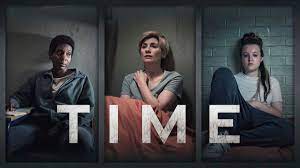
The second season of Time was written by McGovern and Helen Black and set in a women’s prison. With three main characters, each with their own complex storyline, it didn’t have quite the same impact as the first season, but was still a compelling piece of work. Ultimately, it didn’t quite have enough to make my shortlist, but Boiling Point does.
More recently I have caught up with some favourites on streaming services, most notably the final series of Top Boy, which was excellent and provided a fitting finale to an outstanding series, though without improving on what had gone before, and the fifth series of Fargo, which represents a return to previous form after the disappointment of season four, though at the time of writing the series remains unfinished, so neither qualifies for my shortlist.

The return of Doctor Who is always interesting, especially so this time with the return of David Tennant and Catherine Tate, the best Doctor/companion combination of the modern era, for three specials as an interim between the Whittaker and Gatwa eras, a development presumably designed by returning showrunner Russell T. Davies to keep the traditional fan base on board in a time of radical change for the show. The third special ended not with the expected regeneration scene, but the new twist of a “bi-generation” which left both the old and new doctor in simultaneous existence and, crucially, both with their own TARDIS. Although Tennant’s doctor was shown “in retirement” critics were not slow to wonder aloud if this device was introduced to give the option of bringing him back (again!) if Gatwa’s incarnation is not a success. I have a different concern about it: I worry that it will be a future plot device to get the Doctor out of a seemingly impossible situation by having an earlier one arrive in his/her/their own TARDIS in the nick of time. This could get very tiresome, much as the “I went back in time and made an adjustment” get-out did. Incidentally, have you noticed how often companions fret about their families waiting for them back home, but the Doctor never says “don’t worry, we’ll be going back to precisely the time when you left them when this adventure is over”. Ncuti Gatwa’s first full episode was a bit silly, especially the musical number, but it was a Christmas Day special, so not something by which the new era should be judged.
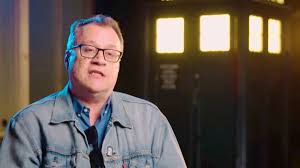
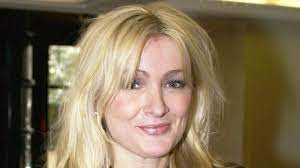
The return of the Doctor with Davies in charge was marked by an Imagine special which did a thorough job of examining and assessing Davies’ highly impressive writing and producing career to date. Over Christmas, we got two more similar documentaries, both about significant female comic talents who emerged in the 1990s. On Christmas Day, BBC2 gave us a full evening devoted to the career of the late Caroline Aherne, the centrepiece of which was an Arena special on her life and work (illustrated either side by some brilliantly chosen examples of her best shows, mostly Christmas themed). The Arena itself perfectly encapsulated why she was so significant and so well-loved by all her associates, but was also frustratingly incomplete. There was no mention of her turbulent marriage to the rock musician Peter Hook (and she was, indeed, credited as Caroline Hook in the earliest episodes of The Mrs Merton Show). More frustratingly, there was also no mention of the single series of the sitcom Mrs Merton and Malcolm, which she created with Craig Cash. I regard this as one of the great “lost” comedies of British television. Time Out described it as “possibly the most disturbing show on British television” and the general response was one of misunderstanding and rejection. But whether you like it or not, there is no getting away from its significance to the Caroline Aherne story and its omission from consideration keeps the otherwise excellent Arena special off my shortlist.

The second special, on BBC1 the day after Boxing Day, was another Imagine in which Alan Yentob considered the careers of French and Saunders, both as a double act and in their individual projects. With an extended length, this was another thorough and enjoyable trawl though a wealth of outstanding material. Watching both specials gave me a great sense of the significance of the talents under considerations. Outstanding talent gets an Imagine special on BBC1. Genius gets an Arena special on BBC2.

And so back to my shortlist for the best of 2023. Having left it late to finish compiling my list I have been able to look, as I always do, at the major listings which appear at this time of the year and see where my own favourites feature. The most significant countdown is that produced by The Guardian, which reveals the top picks of their top 50 on a daily basis in the run-up to Christmas, with links to their original reviews. A number of my picks featured at various stages of the countdown, but my very favourite thing had not turned up when we got to the top three. I was pleased it would surely feature so high, maybe even at the top, but three, two and one were revealed and it was not there! Not in the top 50 at all! What had gone wrong? I revisited the Guardian’s original review, by Lucy Mangan, who had given it five stars and described it as “masterly and profoundly moving”. For comparison, I checked a couple of other picks on my shortlist, which had featured on the Guardian list at numbers 34 and 24 and followed the links to positive, but four star reviews from Mangan and Rebecca Nicholson. Time, which I considered above, made number 23 on the Guardian list, but again only got four stars from Mangan. So how does that work? Was the Guardian’s top 50 list written by AI with a faulty algorithm? I’ve lost all respect.
Anyway, my shortlist for 2023 now stands, barring any last-minute revelations, at 12 titles:
Happy Valley
His Dark Materials
The US and the Holocaust
Three Minutes – a Lengthening
Best Interests
There She Goes
The Piano
Colin From Accounts
Once Upon a Time in Northern Ireland
Afterglow
The Long Shadow
Boiling Point
My top ten for 2023 will be revealed just before midnight on New Year’s Eve.
 TV for Keeps