It is precisely a year since my last blog post, which I guess makes this both my first and last blog of 2024. It’s not a year I will regret seeing the back of. I spent the first three months of the year caring for my wife, Dejanka, as the lung cancer which we thought she had beaten metastasised to her brain in such a virulent form that her decline was rapid and she passed away in our local hospice in April. Thankfully, our learning-disabled daughter, Hanna, was away in college at the time, but she finished her course in July and I spent the following months caring for her while arranging for her to move into supported living, which happened towards the end of September.
As a result of all this, I watched very little TV in the first two thirds of the year. It was not just that I had so much to do in terms of the administrative fallout from my wife’s death and the requirements of securing Hanna’s future (as well as the ongoing responsibility for my 98 year-old mother), but my heart was just not in it. I tended to catch just what I knew would particularly interest or distract me, while also seeking refuge in music.
However, now that I am alone and a lot of the things I had to do have been done, I have more recently returned to filling my time (and distracting myself from grief) with reading, working my way through my extensive DVD and blu-ray collections, attending concerts, theatre and football matches and, of course, watching TV and catching up on some of the things which had passed me by earlier in the year. And now I have finally returned to the blogging keypad, just in time for an end-of-year summary and list.
My lists of recent years had already been (as I have admitted) somewhat incomplete, due to the fact that there is just too much to watch and I do not subscribe to a number of streaming platforms, so this year’s is particularly sketchy. To tell the truth, I had already begun to wonder whether my selections of current TV were of any interest anymore and was on the verge of giving them up and concentrating on TV and films from the past as I go through it and re-introduce myself to much of it. I was certainly getting the feeling that I was becoming more and more out of touch with changing styles and concerns and that, while I could still recognise innovation, I was often simply not getting the references that have been so vital to understanding the subtleties of the greatest work. I have never been one to believe that things were better in the “good old days”. Things do not get either better or worse in pretty much any aspect of life, they just get different and there comes a time when it is best to recognise the fading of one’s ability (or desire) to keep up.
However, one of the books I read in the course of the year had an impact on my thinking in this regard. Peter Biskind’s Pandora’s Box: the Greed, Lust, and Lies that Broke Television (Allen Lane, 2023) is a good survey of the changes in TV styles (at least in terms of US drama) in this century, driven by the expansion of subscription services. Towards the end of the book, his narrative seemed to be running out of steam as he described the current ongoing situation without an apparent resolution but his final section, entitled Back to the Future, posited the idea that TV, including the streaming services, is returning to more linear and family-friendly programming such as the old networks used to provide. He cites shows such as Ted Lasso and the re-appearance of old-style “mystery of the week” dramas. I read this chapter just as the entertaining Ludwig arrived on BBC1, so it certainly seemed to me to be a possibility. It also fits with my own outmoded preference, to which I stubbornly adhere, for watching episodes of series at the time they are scheduled each week (or catching up on them retrospectively), rather than binging them in advance if they are made available on i-Player or whatever.
So, I’ll see how things develop over the next year and work out as I go when I want to comment on current output, while at the same time looking back and compiling the inevitable lists. In the meantime, let’s look back on the departing year and give you a tentative list of my ten favourite things, rather than a ten “best”.
I certainly watched a number of second series of things I had previously praised highly with great anticipation and found them worth watching, though not as impactful as the original. Blue Lights (BBC1) put me off from the start by (yet again!) presenting a perilous police situation which turned out to be an exercise (yawn!). It was an engaging watch, but not up to the previous series. The same went for Sherwood (BBC1), which worked as a terrific thriller, but was not as wonderfully grounded in social comment as before (as I had feared would happen when, in my previous blog on the show, I had hoped there would not be a second series because it could only lessen the impact of the original). The best thing about the second series was Monica Dolan, who had begun the year as the most sympathetic victim of the Post Office scandal and then transformed herself into an ice-cold killer. In reality TV, my favourite was still The Piano (Channel 4), which contained more moving characters and stories but nothing quite as remarkable as Lucy.
The second series of Colin from Accounts (BBC2), on the other hand, was just as wonderful as the first and then along came Wolf Hall (BBC1), undoubtedly my most anticipated thing of this (and many another) year. Picking up where it left off almost a decade ago, it was always going to be my top pick of the year however long we had waited. Was there ever any doubt that the second panel of the diptych would be the magnificent equal of the first? It’s arguably the BBC’s finest contribution to drama this century and the Corporation showed its respect for this status by granting it the rare honour of not interrupting the closing credits of the final episode (though, of course, you could only appreciate this moment if you watched the scheduled transmission).
So, my top ten favourites for 2024 are as follows:
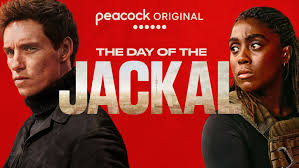
In drama, I have already signalled Wolf Hall: the Mirror and the Light (BBC1) as my top pick. Going back to the very first week of the year, before things started to get difficult, Mr Bates vs the Post Office (ITV) provided the year’s most discussed and impactful piece. I caught up with the gripping Baby Reindeer (Netflix) much later than everybody else, while I was hooked to The Day of the Jackal (Sky Atlantic) as soon as it went out. Created and written by Ronan Bennett, who gave us Top Boy, The Day of the Jackal had all of that series’ tension, action sequences, depth and moral ambiguity.
My favourite documentaries of the year were D-Day: The Unheard Tapes (BBC2), which used archived audio interviews of participants to great effect and TheZelensky Story (BBC2), which contained a wealth of fascinating and surprising visual resources as well as the key interviewees.
The second series of Colin from Accounts (BBC2) lived up to the promise of the first and will hopefully continue to keep us coming back for more in future years.
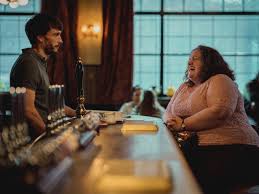
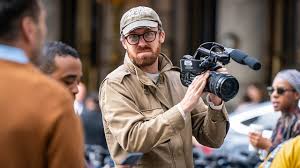
Finally, three of my very favourite series managed to wrap up their runs with wonderful final seasons, all culminating in unmissable, perfectly judged and brilliantly self-referential finales: Inside No.9 (series 9, of course: BBC2), Curb Your Enthusiasm (series 12!: HBO, Sky Comedy) and How To With John Wilson (series 3, the perfect number: HBO, BBC2).
So, that just leaves me to say Happy New Year to everybody and heartfelt thanks to those whose kindness and support saw me though this most difficult of years.
In yesterday’s blog, I shared my 12-title shortlist for my 2023 top 10, which I presented as my final reckoning “barring any last-minute revelations”. Well, guess what? At the last minute, I have another title to add to the list. It is not something I saw on TV in the last 24 hours, but a series from earlier in the year which I was catching up with on BBC i-player on a trusted friend’s recommendation and have noticed appearing in the “best of year” lists. I had already seen 4 episodes and thought it was pretty good (I was still watching, after all) but the terrific last two episodes raised it to shortlist status, so I need to start this blog with a brief reaction before giving you my top 10 of the year.
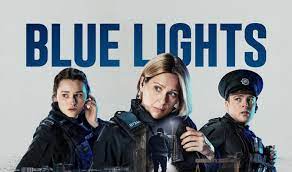
Blue Lights (BBC1) follows three new recruits to the Belfast police and features a main storyline involving intelligence agencies, a drugs gang and the legacy of the Troubles. This would make it interesting enough, but it is the general ambience of the piece which most caught my attention. British TV spent much of the 80s and 90s trying to create a cop show which could replicate the success of Hill Street Blues and failed miserably. But this reminded me most of that seminal series. It is only a six-parter, but it quickly established the camaraderie, the patrol-car teams, the briefings at base, the romances and the background air of threat which were staples of Hill Street. And, like Hill Street, it had the sudden plot-shifting potential of gun violence which had not really been possible in previous British cop series. All was very neatly set up for a second series and I suspect it will run and run.
So, with this added to yesterday’s shortlist to make 13, here are my top 10 selections for 2023:
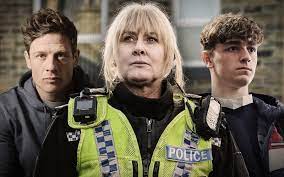
Happy Valley (BBC1)
The excellent third series wrapping up the saga and standing for the whole.
Three Minutes – a Lengthening (BBC4)
A riveting and moving forensic examination of a fragment of archival footage.
Best Interests (BBC1)
Jack Thorne’s latest phenomenal 4-parter, with Sharon Horgan and Michael Sheen on top form.
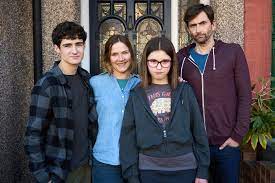
There She Goes (BBC2)
A superb and moving special to conclude Rosie’s story, though I’d still like to see it back some time.
The Piano (Channel 4)
Wonderful human stories and great musical performances in the most enjoyable reality show I have ever seen.
Colin From Accounts (BBC2)
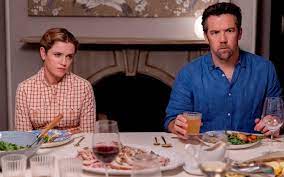
Blunt Aussie humour combined with terrific performances from the husband-and-wife team of Harriet Dyer and Patrick Brammall.
Once Upon a Time in Northern Ireland (BBC2)
Revelatory documentary series about the Troubles in Northern Ireland, with witnesses only now able to speak about it.
The Long Shadow (ITV)
Sensitive dramatic exploration of the effect of the Yorkshire Ripper’s crimes in the 1970s and the police failure to apprehend him.
Boiling Point (BBC1)
A brilliant film transformed into an even more intense 4-part series.
Blue Lights (BBC1)
See above
My choice for best thing of the year would be Best Interests, which I hinted at in yesterday’s blog, while bemoaning its complete absence from the Guardian’s top 50 of the year.
All my picks come from traditional broadcast TV this year. As before, there was plenty I missed from the streaming platforms, but what I did watch seemed to me to be becoming repetitive and unoriginal. Maybe there will be something more inspiring from them in 2024. Let’s hope so and Happy New Year.
Yet again, I have left too long between blogs, so this one will serve to catch up with (some of) the TV I have watched since my last blog on the subject and complete the shortlist for my 2023 best 10 before the end of the year.
The autumn brought four dramas of significance for consideration. By a strange coincidence, Monday nights at 9pm saw simultaneous transmissions of difficult dramatisations of the crimes of two British predatory monsters of the 1970s. BBC1 had its long-awaited dramatic confrontation with the legacy of the Jimmy Savile scandal in the form of the 4-part The Reckoning. I guess this was something the Corporation felt it had to do, but I suspect many viewers tuned in to see how they negotiated the multiple pitfalls the project entailed rather than to learn anything new about the Savile scandal itself. I certainly did and that was enough to keep me watching, though ultimately I wondered what it had achieved beyond the exorcism of collective guilt. The makers clearly were desperate to avoid “humanising” Savile in any way at all and achieved that end, though at the expense of giving Steve Coogan anything really interesting to work with. His performance was excellent in the circumstances, but ultimately was as much an impression as it was acting, which is probably the reason he was chosen to do it.
Over on ITV, the seven-part The Long Shadow revisited the crimes of the Yorkshire Ripper and solved the problem of not humanising Peter Sutcliffe by barely showing him at all. Instead, he was an unseen menace and the drama concentrated on the effect of his monstrous crimes on his victims, their families and the few who survived his attacks, and on the multiple failures of the police investigation, especially how DCS George Oldfield (David Morrisey) became so obsessed with the hoax tape that vital leads which could have caught the murderer earlier were not followed up. As a result, the series worked extremely well in terms of dramatic tension and period reconstruction and negotiated the potential pitfalls of its subject matter deftly. The recreation of the feel of the 1970s was one of the most impressive I have seen in a drama and the cast was uniformly excellent. It makes my shortlist, but The Reckoning doesn’t.
Two years ago, Stephen Graham starred in Jimmy McGovern’s Time (BBC1) and the film Boiling Point. This year, he was back in the four-part TV continuation of Boiling Point, while Time was back for a second season, though this time without him. One of the key features of the film of BoilingPoint was that it was shot in one continuous take, which gave it a breathless intensity. Director Philip Barantini manged to recreate that intensity for the series, though with some conventional editing this time. We also saw the characters outside the confines of the restaurant they work at and their storylines piled personal pressures on all of them to add to that of the workplace. It was mostly pretty hectic, though with some occasional still moments for welcome contrast. The hour-long episodes simply flew by, which is always a good sign, and the cast was uniformly top notch, led by Vinette Robinson, with a reduced but telling presence from Graham and a welcome appearance from Cathy Tyson.
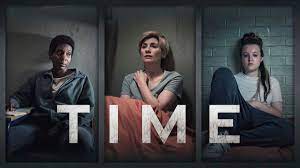
The second season of Time was written by McGovern and Helen Black and set in a women’s prison. With three main characters, each with their own complex storyline, it didn’t have quite the same impact as the first season, but was still a compelling piece of work. Ultimately, it didn’t quite have enough to make my shortlist, but Boiling Point does.
More recently I have caught up with some favourites on streaming services, most notably the final series of Top Boy, which was excellent and provided a fitting finale to an outstanding series, though without improving on what had gone before, and the fifth series of Fargo, which represents a return to previous form after the disappointment of season four, though at the time of writing the series remains unfinished, so neither qualifies for my shortlist.
The return of Doctor Who is always interesting, especially so this time with the return of David Tennant and Catherine Tate, the best Doctor/companion combination of the modern era, for three specials as an interim between the Whittaker and Gatwa eras, a development presumably designed by returning showrunner Russell T. Davies to keep the traditional fan base on board in a time of radical change for the show. The third special ended not with the expected regeneration scene, but the new twist of a “bi-generation” which left both the old and new doctor in simultaneous existence and, crucially, both with their own TARDIS. Although Tennant’s doctor was shown “in retirement” critics were not slow to wonder aloud if this device was introduced to give the option of bringing him back (again!) if Gatwa’s incarnation is not a success. I have a different concern about it: I worry that it will be a future plot device to get the Doctor out of a seemingly impossible situation by having an earlier one arrive in his/her/their own TARDIS in the nick of time. This could get very tiresome, much as the “I went back in time and made an adjustment” get-out did. Incidentally, have you noticed how often companions fret about their families waiting for them back home, but the Doctor never says “don’t worry, we’ll be going back to precisely the time when you left them when this adventure is over”. Ncuti Gatwa’s first full episode was a bit silly, especially the musical number, but it was a Christmas Day special, so not something by which the new era should be judged.
The return of the Doctor with Davies in charge was marked by an Imagine special which did a thorough job of examining and assessing Davies’ highly impressive writing and producing career to date. Over Christmas, we got two more similar documentaries, both about significant female comic talents who emerged in the 1990s. On Christmas Day, BBC2 gave us a full evening devoted to the career of the late Caroline Aherne, the centrepiece of which was an Arena special on her life and work (illustrated either side by some brilliantly chosen examples of her best shows, mostly Christmas themed). The Arena itself perfectly encapsulated why she was so significant and so well-loved by all her associates, but was also frustratingly incomplete. There was no mention of her turbulent marriage to the rock musician Peter Hook (and she was, indeed, credited as Caroline Hook in the earliest episodes of The Mrs Merton Show). More frustratingly, there was also no mention of the single series of the sitcom Mrs Merton and Malcolm, which she created with Craig Cash. I regard this as one of the great “lost” comedies of British television. Time Out described it as “possibly the most disturbing show on British television” and the general response was one of misunderstanding and rejection. But whether you like it or not, there is no getting away from its significance to the Caroline Aherne story and its omission from consideration keeps the otherwise excellent Arena special off my shortlist.
The second special, on BBC1 the day after Boxing Day, was another Imagine in which Alan Yentob considered the careers of French and Saunders, both as a double act and in their individual projects. With an extended length, this was another thorough and enjoyable trawl though a wealth of outstanding material. Watching both specials gave me a great sense of the significance of the talents under considerations. Outstanding talent gets an Imagine special on BBC1. Genius gets an Arena special on BBC2.
And so back to my shortlist for the best of 2023. Having left it late to finish compiling my list I have been able to look, as I always do, at the major listings which appear at this time of the year and see where my own favourites feature. The most significant countdown is that produced by The Guardian, which reveals the top picks of their top 50 on a daily basis in the run-up to Christmas, with links to their original reviews. A number of my picks featured at various stages of the countdown, but my very favourite thing had not turned up when we got to the top three. I was pleased it would surely feature so high, maybe even at the top, but three, two and one were revealed and it was not there! Not in the top 50 at all! What had gone wrong? I revisited the Guardian’s original review, by Lucy Mangan, who had given it five stars and described it as “masterly and profoundly moving”. For comparison, I checked a couple of other picks on my shortlist, which had featured on the Guardian list at numbers 34 and 24 and followed the links to positive, but four star reviews from Mangan and Rebecca Nicholson. Time, which I considered above, made number 23 on the Guardian list, but again only got four stars from Mangan. So how does that work? Was the Guardian’s top 50 list written by AI with a faulty algorithm? I’ve lost all respect.
Anyway, my shortlist for 2023 now stands, barring any last-minute revelations, at 12 titles:
Happy Valley
His Dark Materials
The US and the Holocaust
Three Minutes – a Lengthening
Best Interests
There She Goes
The Piano
Colin From Accounts
Once Upon a Time in Northern Ireland
Afterglow
The Long Shadow
Boiling Point
My top ten for 2023 will be revealed just before midnight on New Year’s Eve.
I’m still on my regular travels to the South coast, augmented this season by some Premier League tourism such as my trip to Anfield in January, so I’m still getting through my classical CD collection at a rate of knots. In fact, the end is now very much in sight, but the biggest single-composer marathon is now just in its early stages. When I last reported in early November, Winter was just underway and I had reached the end of the P section in my alphabetical trawl through my collection. As we emerged from the darkness, I reached the end of the V section and, as I don’t have any discs by composers whose names begin with Q (does anybody?), I will be considering the R to V guys (yes, they are all guys) in this blog.
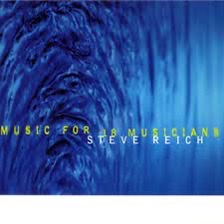
After the turn of the century (19th to 20th, that is) delights of Rachmaninov and Ravel – two very different styles, despite them being almost exact contemporaries – my R section is dominated by still-living composers. Steve Reich’s Music for 18 Musicians must be amongst the most important works of the second half of the 20thCentury – I remember seeing it performed by Reich himself and his ensemble at a late-night Prom a few years back and it was mesmerising, as it is every time I play the CD. Probably more than any of the composers who emerged from the “minimalist” movement and rescued “serious” music from the blind alley it was heading down, restoring it to something you can listen to and enjoy while managing at the same time to move it in new and interesting directions, he has remained true to its original principles. Even his most experimental pieces, like the early and seminal It’s Gonna Rain, have an addictive quality.
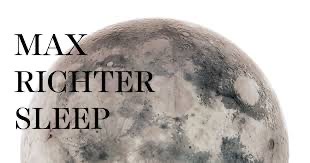
I first encountered the music of Max Richter through his soundtrack to my favourite American TV drama series of the current century – The Leftovers. I think my favourite of his albums (and he does, unusually, seem to compose “albums” rather than “pieces”) is The Blue Notebooks, but the highlight of my listening on this occasion was to go through the full 8 hours of Sleep, a relaxing and soporific work designed to be played through the night while the audience nods off. It’s possibly not the best thing to listen to while driving, but I thankfully managed to stay awake and enjoyed it all. The box set of CDs also includes a blu-ray recording with the entire work, so one night I intend to listen to it in my bedroom, as intended.
I noted in my first blog about my musical journeys (A-B CDs, July 2020) that there are often single definitive recordings of works by contemporary composers such as Adams, Glass and Reich, though that was beginning to change. However, in the case of Terry Riley, who may well have been the original minimalist, there are a number of recordings of his seminal work, In C, and they are all very different, even in terms of the instruments featured and the duration of the performance. I have two versions, including the wonderful 25th anniversary concert featuring Riley himself.
So, after back-to-back variations on minimalism from Reich, Richter and Riley, I turned to the behemoth which is the letter S (a cornucopia comparable to B and M). Starting with the gallic whimsy of Saint-Saens and Satie, it then proceeds via the high German romanticism of Schubert and Schumann to a gallery of the most important composers of the 20th century, reflecting both the musical and political upheavals of that era.
Before getting on to that, though, I need to say a few words about Schubert: one of my personal favourites (in my top three or four, for sure) and another of my largest collections. In musical terms he is the very embodiment of the phrase “less is more”. All his is best stuff is written for five performers or fewer but is so subtle and affecting that it works so much better that way. I would struggle to think of a more perfect musical work than the string quartet D804, the piano sonata D960 or the string trio D929. The other late quartets and, of course, the string quintet contain movements and sections which freeze me in my tracks (again, not great for driving). Then there are the songs: a whole universe of emotion conveyed by just one voice and a piano. The song-cycles are the summit of his achievement and Winterreise has to be my favourite. I was listening to Schubert at the end of November/beginning of December, so not in the depth of winter, but it certainly takes you there. I very much enjoyed revisiting the cycle again on TV at the end of February, when John Bridcut’s much awaited film Winter Journey was finally transmitted on BBC4. Following Schubert with Schumann was an alphabetical imperative, but very much an anticlimax. His quartets are fine, but he is very much a Schubert wannabe.
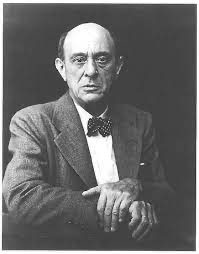
And so on to the 20th century gang. Schoenberg, of course, preceded Schubert alphabetically, but the rest of them formed a formidable and exhilarating grouping which accompanied my travels through the depths of winter. I can’t really comment too much on the significance of Schoenberg because most of his works in my collection are from his early, late-romantic period, such as Gurrelieder or TransfiguredNight, rather than his later, massively influential atonal pieces. I understand the significance of atonal music and the experiment of serialism, but I don’t get either pleasure or interest out of listening to it and this, for me, is the crux of the issue as regards the music of the middle years of the 20th Century – who is it for? Much of the most avant garde work seems to have been written for the music expert rather than a general audience and thus becomes an academic exercise rather than living art.
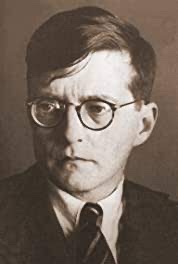
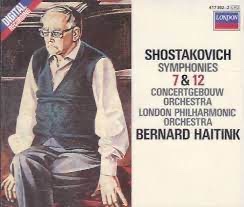
However, the works of four other composers whose names also all begin with S tell a very different story about 20th century music. Shostakovich is, for me, the greatest composer of the mid-20th century and, indeed, his creative period stretches from 1925 (he wrote his first symphony when he was 19), to his death in 1975, so he literally spans the middle years of the century. His symphonies, concertos and string quartets are of consistent (high) quality, though you can certainly discern development in the symphonies and quartets. Some tend towards the experimental, while others, like the 12th symphony, are clearly written for a wider audience and this balance exists throughout his career. Sometimes you even get that balance within a single work and Shostakovich was capable of making sudden and wonderful shifts of mood and approach (the mad oompah march in the middle of the 8th symphony is a particular favourite of mine, especially on the Solti recording). If it hadn’t been such a dangerous and tragic situation, it would be tempting to speculate that the baleful censorious influence of the Soviet system and of Stalin in particular had the effect of steering Shostakovich in a direction which actually made him a better composer. Finding his way through the minefield certainly made him a more subtle one.
Jean Sibelius, by contrast, was in such total harmony with the Finnish nation and its aspirations that he became, and remains, its musical voice, much as Chopin was for Poland. Before this revisiting of my CD collection, I would probably have told you that he wrote two really good symphonies (the 2nd and 5th) and a few other reasonably good ones. Hearing them all in order, I now realise that all seven of them fall into the “really good” category, though the 5th does still stand out for me. There are many recordings of the complete symphonies, but the cycle by the Scottish National Orchestra conducted by Alexander Gibson (on the budget Chandos label), is my favourite.
Continuing the theme of how shifting national fortunes in the turbulent early and mid-20th century affected composers whose names begin with the letter S, we come to the case of Richard Strauss. The vast bulk of his considerable body of work was composed before his association with the Nazi regime and the compromises that involved, but his style was not particularly affected by that association in the same way that Shostakovich’s was by his position in Soviet Russia – but then, Shostakovich spent the whole of his career in that position while Strauss could afford an easy semi-retirement with his artistic reputation already secure. Most Strauss is conceived on a grand scale, whether the orchestral works or the operas, though one smaller-scale late work I particularly enjoyed, and which I recognised as a gap in my collection as part of this exercise and acquired accordingly, is Cappriccio – an opera about the staging of an opera.
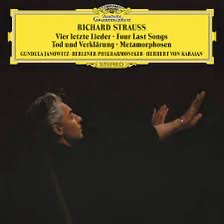
The one Strauss work I come back to time and again, though, and which means so much to me that it would certainly be on my fantasy Desert Island Discs list, is the Four Last Songs. It is staggering that this highly romantic piece was written in the ruined Germany of 1948 and it stands both as a lament for a lost culture and a defiant gesture against the prevailing musical direction of the time – the most beautiful of anomalies. Schwarzkopf’s version is rightly marketed as one of the “recordings of the century”, but Gundula Janowicz with Karajan and the Berlin Phil is the best of the three recordings I have.
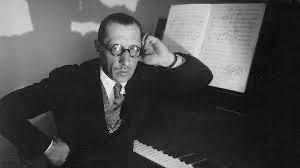
The last of the four 20th century giants I am considering together was also affected by the upheavals of the century, but, unlike the other three, was not tied to one country, but was, at various times of his life, a Russian, French and American citizen. Stravinsky was certainly an innovator, though it is his early ballets which were mostly responsible for this reputation. The Rite of Spring is my favourite and the Bernard Haitink recording I have is exhilarating. I also enjoyed the Symphony in C and The Rakes Progress (Gardiner’s excellent version) from his middle, so-called “neoclassical” period, after which he turned to Schoenbergian serialism about half a century after it was first introduced at the time when he himself was actually making some worthwhile innovations. I can’t comment on any of it because I have no recordings – anyway, the minimalists were soon to appear to rescue the world of music…..er….haven’t I already said that? Looks like this is where we came in.
It also looks like I’ve spent far too long on the letter S, so I’ll skip quickly through the Ts and Vs (no Us, like Qs). I spent a few very pleasant hours in the company of each of Tallis, Telemann and Vaughan Williams and considerably more in that of Vivaldi (lots of concerto sets), but there are two big names that I just cannot take seriously any more, if I ever did, and, of course, part of this whole exercise was to weed out the stuff I won’t be bothering with from here on in. Tchaikovsky is now just pure mush and bombast to me – only the 6thSymphony is ever likely to impinge on my consciousness again. Verdi, I will admit, can at times be a great tunesmith – unfortunately, he seems incapable of embedding those tunes into anything with a semblance of musical coherence as a whole. He should have stuck to the “greatest hits” approach. The two of them will be joining Brahms, Bruckner and Grieg in my junk folder.
So, I am now on to a composer I am extremely familiar with and have been throughout my life, but whose works I am already really enjoying becoming immersed in once again. I have multiple copies of his lengthy pieces, too. He comes alphabetically right near the end of my collection, so I can now start blogging some musical lists based on my listening journeys of the last three years, as well as re-considering what his works mean to me. As the man said, it ain’t over until……
In the meantime, I haven’t been finding that much on TV to enthuse myself, but will be back to it in my next blog anyway.
A few weeks back, I left my shortlist of the year’s best needing just one addition to bring it up to the magic number 10. I noted that Landscapers (Sky Atlantic) had “started promisingly” and that I had a couple of things I wanted to see over Christmas. As it happened, the thing I was most looking forward to, John Bridcut’s film of Schubert’s Winterreise, was postponed for next year, so I am left with just two candidates to consider, both of them based on notorious court cases, though taking very different approaches.
Landscapers had indeed started well and it just got better. It was a wonderful mixture of fantasy and reality, with the mechanics of film-making used to emphasise the former and archive news coverage of the real events in the end credits for the latter. In the end, the fantasy won out, with cinematic end titles for the final episode and no more news. It was brilliantly conceived and directed by Will Sharpe and contained outstanding central performances from Olivia Colman and David Thewlis – indeed Colman joins the others on my Bafta roster. I don’t buy the criticism that it was too sympathetic towards murderers – it was a speculative psychological study which was also a very unusual love story and the alienation effects served to undercut our identification with the characters anyway. It is another excellent addition to the shortlist.
A Very British Scandal (BBC1) also had two excellent central performances, from Claire Foy and Paul Bettany, but took a more literal approach to its subject – the scandalous 1963 divorce case involving the Duke and Duchess of Argyll. If it didn’t reach the heights of its predecessor, A Very English Scandal (which made my top ten three years ago) it was because it lacked the wicked humour which Russell T Davies brought to that script and it desperately needed it. Well worth watching, but not shortlist-worthy.
So, my shortlist IS my top 10 this year and is:
Can’t Get You Out of My Head (BBC i-Player)
Adam Curtis’ best since Pandora’s box.
Together (BBC2)
Lockdown according to Dennis Kelly and Sharon Horgan
Help (Channel 4)
Jack Thorne and Marc Munden’s shattering story of the victims of covid.
It’s a Sin (Channel 4)
Top of so many end-of-year lists and with justification
Time (BBC1)
Jimmy McGovern’s riveting prison drama
The Underground Railroad (Amazon)
Barry Jenkins’ fantastic journey through the horrors of slavery
Listening Through the Lens (BBC4)
Great documentary about a great documentarist, Christopher Nupen
The Outlaws (BBC1)
The best thing Stephen Merchant has done without his mate Ricky
Curb Your Enthusiasm (Sky Comedy)
In it’s eleventh season, but better and funnier than ever
I haven’t written a blog about TV since May, for reasons which I have explained in previous postings, but I haven’t stopped watching as much as I can, so a general catch-up is well overdue and this will probably turn into a sort of review of the year. There are some significant things included on the best-of-year lists which have already started appearing and which I have yet to catch up with – Mare of Easttown and Succession among them – but I have 18 shows I want to comment on and, who knows, a shortlist may begin to emerge from which I can choose a top ten at the end of this month. I will look at these items in pairs, as there are some felicitous comparisons to be made along the way.
Covid has not only restricted and altered the programme-making process – it has also become, unsurprisingly, the subject matter and plot driver of some excellent new contemporary drama. Two of our finest writers, Dennis Kelly and Jack Thorne, responded to the effects of the pandemic and the lockdown with fine one-off pieces. Kelly’s Together (BBC2, June) mined the comic as well as the dramatic possibilities of an estranged couple thrown together and trapped in each other’s company by the constraints of lockdown. Sharon Horgan and James MacAvoy were terrific, whether striking sparks off each other, or confiding in us, the audience. All the frustrations and, inevitably, the tragedies of time under lockdown were there but it was much more – an intimate study of a relationship and human psychology.
The tragic part of Together was the death of Horgan’s character’s mother, alone in a care home, seen through Horgan’s helpless reaction to it. Jack Thorne’s Help (Channel 4, September), on the other hand, took us into a care home at the height of the first wave and made us look directly at the desperation of the situation. Not that it was all grim – like Together, the main focus was on the interaction of two characters and it also involved two very fine actors: Jodie Comer and Stephen Graham. But it was the section between the second and third breaks which lives longest in the memory – a single-take sequence in which Comer’s inexperienced care home helper tries valiantly, but ultimately unsuccessfully, to save the life of a resident reaching the final moments of the disease, while at the same time attempting to get help on the phone and run the care home on her own. It is a quite stunning and gripping 20 minutes of drama and brilliantly directed by Marc Munden. Together and Help are easy picks for the shortlist.
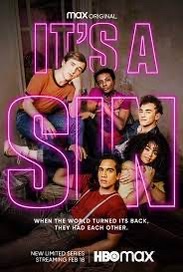
Two more of our very best writers gave us two of the best limited series of the year: Russell T. Davies’ It’sa Sin (Channel 4, February) and Jimmy McGovern’s Time (BBC1, June). Nobody but Davies could have dramatized the AIDS crisis of the 1980s in such a way – full of his trademark shifts from the acerbically witty to the devastatingly sad in the blink of an eye. Clearly a very personal project, it nevertheless hit a chord with its depiction of a helpless health service struggling to respond to an unprecedented threat. The final episode was extremely moving and also contained a stunning performance from Keeley Hawes – BAFTA will have a job on their hands to choose between her, Comer and Horgan next year. Fine acting was also at the heart of Time, from Stephen Graham (again) and Sean Bean, who seems to have undergone a wonderful late-career renaissance thanks to his collaborations with McGovern. Two more certainties for the growing shortlist.
Slavery and the history of racism have provided the background for a number of series, both fictional and factual, in the past few years. Watchmen and Lovecraft Country are two of the most prominent fictional ones, though they did not portray the actual experience of slavery directly. Barry Jenkins’ The Underground Railroad (Amazon, May) does do that, but in a way which is both horrifyingly real and symbolically magical. Most notably, the “railroad” itself, which in reality was a network of sympathisers who helped runaway slaves escape from the southern states, is also presented as a physical entity – literally a railroad running in tunnels. This fantasy element elevates the series from a howl against a historical injustice to a piece of masterly storytelling, though without losing sight of the history which underpins it at any point, which is quite an achievement. Another achievement is that the white characters are not the (understandably) cardboard cut-out villains of the earlier series, but fascinating character studies in their own right, most notably Ridgeway, played by Joel Egerton. On the factual side, the three-part Exterminate All the Brutes (Sky Documentaries, April) should have been an instructive companion piece, being based on a major book about the slave trade and historical racism in general. In parts, it was just that, but director Raoul Peck also introduced regular anachronistic fictionalisations which made little sense and interrupted the flow of the narrative. Whereas such fictionalisation was a strength of The Underground Railway and elevated it to greatness, in Exterminate All the Brutes it was a jarring distraction which fatally undermined the effect of the documentary. The former is an obvious inclusion in the shortlist – the latter doesn’t make it.
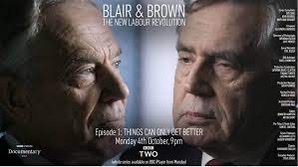
Staying with documentary, Steve Mc Queen and James Rogan’s Uprising (BBC1, July) actually was the perfect companion piece to last year’s Small Axe films, covering much of the same ground using archive footage and eyewitness interviews and emphasising what an excellent series the dramas were. The two things should have been transmitted at the same time (and probably will on future repeat), but on its own, Uprising was a very good and effective archive documentary. Similarly, Blair and Brown: the NewLabour Revolution (BBC2, October) had all the relevant archive footage and talking heads, including the two main protagonists. Brown came across as too buttoned-up to give the answers you wanted, while Blair seemed open and responsive, but that was how he always came across, even when he was lying through his teeth, so a big pinch of salt, please. Both series were very watchable and instructive, but neither sufficiently extraordinary in terms of documentary form to warrant shortlisting.
Turning to music, Asif Kapadia’s 1971: the Year Music Changed Everything (Apple TV, May) contained a great amount of wonderful archive material, great music (of course) and fascinating backstories, but ultimately collapsed under the weight of its own ambition. Firstly, it was way too long at 8 hour-long parts and repeated itself endlessly. Secondly, it utterly failed to convince me of the premise in its title. Maybe it was the year that music reflected everything, but that could be argued of many years. The only thing it changed was music itself, but the same stricture applies. And where was Chirpy, Chirpy, Cheep Cheep? Much more to my liking was a wonderful and somewhat unheralded BBC4 documentary on the work of the great music documentarist, Christopher Nupen, who certainly was somebody who changed everything, at least in the field of presenting classical music on television. Listening through the Lens (October) was the perfect title for this tribute to a film making genius and the tributes from the likes of David Attenborough and Melvyn Bragg, as well as generous extracts from his films made the case for that description fully. I loved it and am putting it on the shortlist.
Making connections between the remaining titles I want to talk about is getting tough, but The Outlaws (BBC1, October) and The Cleaner (BBC1, September) were series written by and starring Britain’s two tallest comedians. Stephen Merchant’s series was the best thing he has done without Ricky Gervais and succeeded at the tough trick of combining comedy with a thriller narrative. It had a gallery of great characters and was very well performed and created by all concerned. Greg Davies’ piece, though occasionally successful, was inconsistent. It struck me that he was trying to create something along the lines of Inside No.9, with macabre storylines and different guest stars each week. Of the two, only TheOutlaws makes the shortlist.
The next two series were things which I was eagerly looking forward to the return of, but which disappointed to the extent that I gave up on them half-way through. Fargo season 4 (Channel 4, May) was just too convoluted and sure of itself to engender any real engagement. The series has created its own style and cannot escape it even when it has taken it as far as it can, which I guess was bound to happen eventually. At least we had two wonderful seasons and one not bad one. Daisy Haggard’s Backto Life (BBC3, August), though, had only got to its second season before it found nowhere new to go.
I should also have given up on Your Honour (Sky Atlantic, March), but there was enough interesting material to keep me going despite the ludicrous coincidences we were expected to accept. In the end it was just ludicrous. Then American Rust (Sky Atlantic) started a few weeks ago with a similar plot device (an officer of the law is caught in a moral dilemma through personal involvement with a case), but there is, again, enough in the characters and dialogue to keep me going for the time being. I may yet give up on it as well, especially if there are many more shots of Jeff Daniels leaning on things.
My final pairing is two continuing and recently returned classics, still going strong and still drawing me in. Doctor Who: Flux (BBC1) was the best story from the Chibnall/Whitaker era and had the best single episode (Village of the Angels) since Peter Capaldi was alone in that tower. I’ve said it many times, but it is always at its best when dealing in multi-episode stories – though not, in this case, outstanding enough to make the shortlist. Curb Your Enthusiasm (Sky Comedy), on the other hand, is miraculously back to its very best – every episode has had me howling with laughter and that is enough to put it on the list.
So, my shortlist now looks like this:
Can’t Get You Out of my Head
Together
Help
It’s a Sin
Time
The Underground Railroad
Listening Through the Lens
The Outlaws
Curb Your Enthusiasm
So, we have 9 and there is some pretty good stuff there. I am confident there will be something between now and the end of the year to bump it up to 10 or beyond. Landscapers (Sky Atlantic) has started promisingly and I have a couple of other things to keep an eye on over Christmas.
Fifteen months ago, at the end of July last year, I wrote a blog about how I had been working my way through my classical CD collection on my regular drives to the Sussex coast to look after my elderly parents following my father’s fall, hospitalisation and rehabilitation. Not too long after he got home in the late summer, my father fell again and the cycle repeated itself, though at greater length this time. He was back home by late Autumn and in time for a restricted celebration of their 75th wedding anniversary in December. But in early February his third fall put him back in hospital and there would be no coming home this time. A care home was the only option and he was there until he passed away in August at the grand age of 96. All of this necessitated constant visits from myself, both to organise my father’s care and to look after my mother and to run their house and finances. I got to know the route intimately and observing the gradual seasonal changes to the countryside over the course of more than a year was a great solace. So of course, was the music. In my previous blog I described how I got through the composers beginning with A and B while travelling from A to B. Since then I have reached the end of the P section and further driving to the west country to take our daughter to her new college has offered added listening time, as has the return of football. So, here are some thoughts on composers and recordings in my collection from C to P.
Late summer 2020 brought the first changes to my drive since I began the regular route. Lockdown had eased, so there was more traffic about, plus the increase in agricultural vehicles on the country roads which that time of year brings. This gave me even more time to realise, as I had not fully done before, what a wonderful composer Chopin is: his second set of etudes (Op. 25), played by Pollini, are a delight and I prefer them to the more famous ones in the earlier dozen. The season also brought the renaissance glories of Desprez (or Josquin, though I have filed him under D) and Dufay – both composers of the first rank. I recently bought a bargain set of 34 CDs on Warner Classics called Josquin and the Franco-Flemish School, so I was able to revisit their world and that of a large number of their contemporaries, many new to me, this summer as well as last. It was good to have their tranquil company around the time of my father’s death.
My Desprez and Dufay collections are separated by just one disc of Dohnanyi’s lovely string quartets and then it was on to Dvorak. The DG Kubelik set I mentioned in my earlier blog gave me the opportunity to hear a full cycle of his symphonies for the first time (conducted by his best interpreter) and I was struck by how you can discern a definite progression by listening to them in order. Most composers of nine or more symphonies have their most outstanding works scattered amongst the set (think of Beethoven’s 3rd, 5th and 9th), but Dvorak’s just get steadily better. The earliest ones are very much influenced by Beethoven, but his own voice begins to emerge around the 6th and is fully formed by the 8th. But the best of Dvorak are his string quartets, particularly the “American”, which contains four equally striking and memorable movements. This got me thinking about the string quartet as a musical form, as it has become one of my very favourites and has proved a versatile platform for a good many composers from the 18th century to the present day. I had already enjoyed all of Beethoven’s remarkable quartets and Debussy’s single, but wonderful, attempt at the form and had Cesar Franck’s even better one about to come along a little further down the road. String quartets may prove a good subject for a separate blog one day and I’ll certainly be coming back to them several times before this one is out.
Koyaanisqatsi
By the time Autumn arrived, I had moved through E and F and was on to one of my largest composer collections (and certainly my largest by a living composer): Philip Glass. I have to admit, I was a bit daunted by the prospect of listening to so much of his music at one time, but I was amazed at how much I appreciated the variety of his output. The standard criticism of Glass is that his stuff “all sounds the same”, but I guess that is true of many great composers who establish their own distinctive sound (Mozart comes to mind). It’s just that with Glass, the variations are very subtle, but they are there and each piece has its own character. And there is such a wide range of forms – symphonies, concertos, quartets (brilliant ones!), operas, ballets, electronica, song cycles, solo piano, tone poems and, of course, all those wonderful film scores: the “qatsi” ones stand out because the music was an equal partner with the visuals in those films, but I think his score for Paul Schrader’s Mishima: a Life in Four Chapters is arguably the greatest film score of all in terms of its expressiveness and flexibility (I can feel another separate blog coming on) and it also supplied the themes for his finest string quartet. I have already blogged, a couple of years back, about his masterpiece Einstein on the Beach, and, thanks to ENO, had seen Akhnaten and Orphee on stage in the last few years. I’d not been to an opera since the first lockdown, but with Satyagraha re-opening the Coliseum recently, I couldn’t wait to get back and it was fantastic (both production and performance). One last thing about Philip Glass – it is wonderful music for driving to but is maybe just too good. Many times, I found myself going way too fast without realising I was doing it. The momentum of his music takes over and not just in the obvious pieces like The Grid from Koyaanisqasi, but throughout his oevre. Beware!
Satyagraha at ENO
Before winter 2020/1 set in and as the leaves fell on my journeys, I reached the end of G and, as with my previous negative re-assessments of most of Brahms and Bruckner (as described in last year’s blog), I determined that the works of Edvard Grieg are unlikely to be bothering me again. But winter brought Handel and Haydn to lighten the darker drives.
It struck me that Handel is probably the composer to whom one could most readily compare Glass, both in terms of the range of their respective outputs and, indeed, the musical construction of the pieces themselves. Handel’s music is littered with what I would (crudely) call “diddle-daddle, diddle-daddle” moments (think of the Arrival of the Queen of Sheba from Solomon), while Glass’ favourite equivalent would be “diddly-daddly, diddly-daddly” (I think real music experts refer to these as arpeggios, but I know what I‘m talking about, even if you don’t). Handel is also a key composer in the original instruments debate. I have two versions of The Messiah. I love and would not be without the Charles Mackerras recording on EMI, but that may be mainly for the presence of Janet Baker and I ultimately prefer Paul McCreesh’s version with the Gabrieli Consort on DG Archiv. And both Gardiner and Pinnock present marvellous recordings of the Fireworks and Water Music suites.
Haydn’s symphonies are really boring, I now realise. Only number 104 (104!) is any good and that is his last one. Part of the problem is that he rather overdoes it with the minuets, possibly the most tedious and predictable musical form of all and one which only really found its true level with The Wombles in the 1970s and their assertion that forgetting to be minuetting was letting the other minuetters down. His string quartets, on the other hand, are outstanding. There are lots of them and they are pretty much all excellent. Even minuets have a certain charm when played by a string quartet. I should also mention that, having used the term “Four Seasons” in my blog title and having not reached R or V yet, the only work called The (Four) Seasons I have listened to these past four seasons is the oratorio by Haydn.
But, before we say goodbye to H and winter, I should mention one particularly serendipitous moment while I was driving along listening to film music by Bernard Herrmann and a particularly severe downpour forced me to turn my wipers to maximum speed just as the Psycho Suite came on. Perfect!
I, J, K and L take up a mere 3 inches on my CD shelves, though it is only really J and L – I have no Is or Ks (not even Ives). I also really need more than one disc of each of Ligeti and Liszt, though one of Leoncavallo is perfectly adequate and you can guess the work. My 2-disc DG Archiv set of Orlando di Lassus was also not enough but has since been supplemented by a larger number of his works in the Josquin set I mentioned, allowing me a much greater appreciation of his glorious music.
Early spring brought me to another large collection and the composer who is probably my second favourite of all: Gustav Mahler. It isn’t that there are that many works – nine and a half symphonies, five orchestral song cycles and an early cantata – but they are big works and I have multiple copies of them all. The Kubelik and Haitink symphony cycles which I have are a great contrast, but are both very good, though the symphonic recording I treasure most is Horenstein’s 4th with the LPO on the budget Classics for Pleasure label. This is not so much because it is an outstanding performance (though it certainly is that) as because it was my introduction to Mahler at a college Music Club gathering 50 years ago this autumn. I borrowed the disc from a good friend for the Christmas holiday and never looked back. Recently I have been attempting to hear all the symphonies again in the concert hall and, before lockdown struck, had managed all but the 7th. A Proms performance of the 3rd by the Boston Symphony a few years back, together with one on the Berlin Phil’s digital platform, helped finally convince me that it is my favourite of his works (supplanting the 2nd). The way the final three movements fit together, from the gravity of “Oh, Mensch”, through the joy of “Bimm, Bamm” to the serenity and climactic affirmation of the gorgeous finale is just transformative. I have four recordings and loved listening to them all, especially on the longer journeys to the west country, which began for me (and my wife, Dejanka) when our daughter, Hanna, began college there at this particular time. Rating Mahler’s symphonies is a fairly futile exercise, though. I have looked at a number of lists online, some of them headed “from best to worst”, as though the term “worst” could possibly be applied to a Mahler symphony. They are all outstanding and my own attempts to put them in an order of preference failed miserably. I mean, how could I possibly put the first symphony last, as I ended up doing on every attempt? At the same time as I listened to his music, I read a biography of Mahler by Michael Kennedy, which had been sitting on my shelves for some years and which really enhanced the experience.
Before continuing with the Ms, which is another of those letters, like B and S, with a large number of major composers, I realised that I would need to buy a set of Mendelssohn string quartets if I was to continue my exploration of that form. And I’m very glad I did, because I had previously thought of him as a composer of bright and joyful music, but the quartets showed me that he also had an introspective side which I had not heard before.
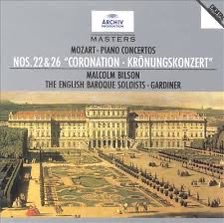
And, as spring moved into summer, I was happily accompanied by two of the all-time greatest: Claudio Monteverdi and Wolfgang “Amadeus” Mozart. My favourite Mozart symphony is undoubtedly the Prague (no.38), mainly because it has three gloriously memorable and perfectly balanced movements, which also means that, unlike all the others, it has NO minuet. Young wombles may have been told that “if you minuetto/allegretto you will live to be old”, but that sadly did not apply to Mr Minuetting Mozart himself. Or, to quote one of my favourite Tom Lehrer lines, “it’s a sobering thought that when Mozart was my age, he’d been dead for five years”. Even so, there is just such a wide variety of wonderful and inspiring stuff in Mozart’s catalogue, the very best of which, for me, are his piano concertos, especially when played on an 18th century piano by Malcolm Bilson accompanied by the English Baroque Soloists under Gardiner. The set of six string quartets, dedicated to Haydn, aren’t bad either.
By early May, I had reached Mozart’s choral works and enjoyed another of those serendipitous moments when I drove home in a totally euphoric state after Brentford’s win in the play-off final at Wembley. Not only was it one of the first games it had been possible to attend after lockdown, but our victory got us back to the top division for the first time in 74 years. And the piece I put into my car music system was Exsultate, Jubilate. Exult! Rejoice! I listened to it twice. It was a perfect moment.
Bees up!
Then it was on to Mozart’s operas. There has been plenty of debate about which of Mozart’s four great operas is the best and I certainly have my own favourite, which is the Magic Flute. The main reason is, of course, the music – it just has great number after great number, from start to finish. Don Giovanni also has its fair share of stunners, but the other two are nowhere near. I have three other reasons for favouring Zauberflote: its mythic setting; the fact that it is in German, which, for me, is the best language for opera; and the fact that it dispenses with recitative (which drives me spare) in favour of spoken dialogue. I was also reminded that I had the wonderful duet “Bei Mannern welche Liebe fuhlen” played at our wedding. I have three DVD/Blu-ray versions of the opera (including Bergman’s film) and two CD sets. Bohm is great, but Gardiner, once again, is best.
I was well into summer by the time I reached the end of M, which brought me to best of all Russian operas – Mussorgsky’s Boris Godunov. There were two versions (1869 and 1872) and the Gergiev set on Philips has both, so I got to enjoy it twice.
Michael and his Band
I’ve got a lot of CDs of Michael Nyman’s considerable output and listening to them all together emphasised the range and quality of his work, which basically falls into two categories – that written for the Michael Nyman Band and that written for more traditional ensembles like orchestras and string quartets. The numerous film scores can also be divided like that, though the division tends also to reflect his work with Peter Greenaway and the later soundtracks. Listening to much of it brought back memories of performances I attended in the nineties. Two in particular stand out: a Festival Hall premier of the Upside- Down Violin, during which a young boy in arab dress started dancing on his seat a few rows in front of me – his parents tried to stop him, but everybody said to let him carry on, as it was very much in the spirit of the occasion. Then there was a rainy summer evening in Greenwich Park with my wife, soon after we met. I’m a really big Nyman fan, even though he is a QPR supporter.
O and P included two 20th century stylists. Firstly Carl Orff, whose Schoolwork provided perfect driving music for many hours and a reminder of one of the most perfect choices of music for a film: Terrence Malick’s use of it in Badlands (1973), exploiting its simultaneously naïve and sinister qualities. I can also never listen to Carmina Burana without remembering a Prom performance I attended in the mid seventies: it was a hot and humid August night and the heavy lighting required for colour video in those days (it was being recorded for broadcast) made the Albert Hall a cauldron – so much so that the bass Thomas Allen fainted during his first solo and knocked over the cello section in falling backwards. Anyway, a replacement walked out soon after and had a quick word with conductor Andre Previn. The next day’s papers revealed he was a music student who had been in the audience and volunteered to sing because he knew the part. Alas, this was not the romantic start of a big career – he had his moment in the spotlight and then was never heard of again. Then, when I reached Arvo Part, I was able to supplement my listening with reading (as I previously had with Mahler), using a book of conversations with the composer which my wife kindly gave me for Christmas last year.
O and P also brought glorious music by two masters from either end of the Renaissance period: Ockeghem (also featured in my Josquin set) and the divine Palestrina. By another quirk of the alphabet, Palestrina was immediately followed by the opera about him by Pfitzner. For me, Palestrina is one of the two greatest Italian composers, together with Monteverdi. Another great Italian, Puccini, was to finish off the listening marathon I am describing here. I would rate him the greatest Italian composer since Vivaldi and my collection of his operas includes a number of performances by the greatest Italian opera singer of all – Luciano Pavarotti.
Anyway, I’m still driving and listening just as much, especially with football back and Premier League grounds to visit, but I will return to that in time and will then blog some music lists. But next time, and after a long absence, it will be back to TV.
This was a very strange TV year. It seemed to start so badly that I had barely any shortlisted programmes until the pandemic struck, at which point it looked as though it would be a total washout with production halted. But there were a number of excellent things already in the can, new forms of production were improvised and the summer easing of restrictions allowed the completion of some productions already underway.
In the end, there were plenty of things to fill the regular top 50 lists from the likes of The Guardian and Radio Times, while the poll I take part in myself, the BFI’s, produced a wide variety of nominations. While I noted and commended in this blog a fair number of the titles which filled these lists, my own shortlist of the things I regarded as the very best only crept above the magic number 10 in the final weeks of the year.
If, as I had expected, I had ended with 10 shortlisted titles, things would have been very easy, but ending with 11 puts me in a dilemma: do I eliminate just one title? ; do I list them all and claim that, while most top tens only go up to 10, mine goes up to 11? ; do I list them in order and have a joint 10th? Well, none of these – I am going to add one title which I greatly admired but (unaccountably) omitted to shortlist and give you a top dozen for 2020. This also enables me to add a second factual programme and restore some missing balance.
As always, I’ll list them in (rough) order of appearance through the year:
Star Trek: Picard (Amazon)
A welcome return for an old favourite in a new format, which did justice to all expectations.
Home, season 2 (Channel 4)
Moving and hilarious by turns, it walked several tightropes without a false step
Tales from the Loop (Amazon)
My best of the year – simply beautiful
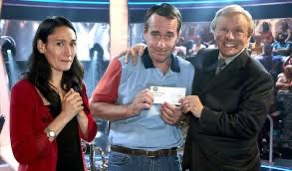
Quiz (ITV)
Another wonderfully entertaining three-parter from Stephen Frears
Normal People (BBC3/1)
The big hit of lockdown, which allowed many more than would otherwise have watched to appreciate the way it slowly drew us in and kept us entranced.
After Life season 2 (Netflix)
Ricky Gervais really hit his stride in this second season and produced ensemble comedy at its best, while remaining true to its more meditative side at the same time.
Isolation Stories (ITV)
The best of the short dramas employing improvised production techniques under lockdown conditions and commenting most effectively on the situation we found ourselves in.
I May Destroy You (BBC1)
The most strikingly original new drama of the year
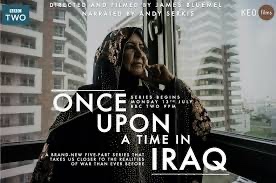
Once Upon a Time in Iraq (BBC2)
Riveting documentary series in which the testimonies to camera were the highlight
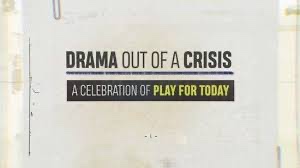
Play for Today: Drama Out of a Crisis (BBC4)
Brilliantly effective visual use of archive, employing every pixel of the HD screen to convey the full importance of the Play for Today strand on its 50th anniversary
The Crown: The Hereditary Principle (Netflix)
The standout episode of the best season so far
Small Axe (BBC1)
Significant aspects of black British history given immediacy and contemporary relevance by Steve McQueen’s storytelling and directorial skills
A lot of people watched a lot of TV this year and so it came under greater than usual critical scrutiny. The end-of-year lists I mentioned above reflect this, too, and, while there are certain things that recur in many of them, there is also a lot more divergence than usual. I find it strange that I have not been able to find four of my own choices on any other list, even those of 50 titles or more (apart from my own mention of two of them in the BFI poll). I’m particularly disappointed by the absence of my own personal favourite, Tales from the Loop, though I’m even more surprised not to find Picard on any of the lists I’ve seen.
But that’s what making lists is all about – there are plenty of things I have left out which others would champion, some of which would have been there if I was doing a list of as many as 50 or even 20 (MrsAmerica, Anthony, Des, Lovecraft Country), though my shortlisting system is intended to work as a kind of rigorous excellence filter and I tend to judge the overall quality of the TV year on the number I put on my shortlist. Added to which, even with as much time on our hands as we have had this year, it is still near impossible to have seen everything of interest – I have to admit that I didn’t see The Third Day (I intend to) or The Undoing (I don’t).
How much we will continue to be stuck indoors in the coming year and how much new production there will be is in the balance, but whatever happens, do have a very Happy New Year and, if you are stuck for finding something to watch, I hope my list helps.
Before TV became my career and even for some time after preserving its output (and therefore advocating for its quality) became my professional focus, the cinema was my first love and main passion. At the height of my obsession, in the seventies and eighties, I would visit a cinema three or four times a week and could not forsee a time at which such activity would not remain a regular part of my life. But nowadays, though I remain engaged with the world of films, I rarely watch any outside my own home. The change was gradual and came about for many reasons: here’s how and why it happened – and why I am inspired to write about it at this particular moment.
Though I had been a regular filmgoer since childhood, it was at University that I became interested in it as an art form rather than just an entertainment. I joined the University Film Society (OUFS) and was a regular visitor to the wonderful Moulin Rouge Cinema in Headington (now, alas, long gone) as well as the screens in the centre of the city. This was the era of Clockwork Orange, The Godfather, Death in Venice and the highly impactful (on me) first re-release of 2001: A Space Odyssey. Towards the end of my undergrad years, I started to take notice of European “art” cinema, which would later come to dominate my viewing.
During my time of training and early employment as a librarian in the mid to late 70s, new cinematic vistas opened. In both public and specialist libraries, evening shifts meant afternoons off in lieu and, being in central London, afforded plenty of opportunity to take in films both old and new. My regular destinations tended to be the repertory and arthouse theatres which proliferated at that time – The Electric (especially on Thursday afternoons for the Bergman double-bills), Everyman, Gate, Paris Pullman (where I caught up with the works of Werner Herzog and Hans-Jurgen Syberberg), Academy Oxford Street and, above all, the National Film Theatre. Like the true nerd and completist I was (and still am), I kept a diary of the films I saw and worked out what I still needed to see from the works of the directors I liked the best.
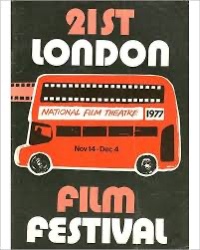
The month of November was particularly important to me at this time, because that’s when the London Film Festival was. I always ensured I had plenty of annual leave left, so that I could attend screenings in the daytime – this was the best way to make sure of getting tickets for the films I really wanted, which were likely to be over-subscribed for their evening showings. 1977 was a particularly memorable year – I vividly remember rushing downstairs to pick up my self-addressed envelope and ripping it open to find that I had tickets for everything I had asked for, including new films by Wenders (The American Friend) and Herzog (Stroszek), Wajda’s Man of Marble, Bertolucci’s 1900 (which turned out to be something of a disappointment) and, above all, Syberberg’s Hitler: A Film From Germany (which turned out to be something of a revelation). The day after the screening of Hitler, I attended a two-hour discussion with the director at the South Bank, which was a wonderful supplement to the film.
Throughout the seventies and eighties I gradually caught up with large swathes of the history of world cinema as well as keeping up with contemporary releases, something which would be much more difficult for somebody setting out to do the same today: not because of lack of availability – the home video market makes that easier than ever – but simply because of the scale of the task. At the same time, my professional responsibilities began to demand intensive television viewing, though I already had a pretty good grounding in the history of the medium, having been an avid viewer since the late fifties.
When I left the BBC and joined the BFI in 1988 I found myself in a somewhat awkward position – I was advocating for television in an organisation which was devoted to film and where outright hostility to TV was not uncommon. I’m not saying that this turned me against film – far from it – but it did make me question my previous devotion just at a time when the regular flow of masterpieces seemed to be slowing down. This of course was probably as much to do with me as with the respective qualities of film and TV at that time, but the shift in the balance of quality, both in terms of content and delivery systems, was not far away. The BFI has always strongly advocated for the importance of seeing films in a cinema – the mantra being that you can’t beat the quality of seeing the image on a large screen, in the dark and with a crowd of strangers. I have always gone along with the first two of these points but have never been keen on the crowd of strangers. I have always headed, whenever possible, for the front row of the auditorium for three reasons – the absence of anybody in front of me to spoil my view, the legroom and the fact that (especially in sparsely populated afternoon shows) the nearest people, who may be prone to chat, will likely be several rows back.
The biggest changes to the regularity of my cinemagoing came at the turn of the century. I married in 1997, our daughter was born in 1999 and the BFI moved me from central London to our Berkhamsted Conservation Centre in 2000, so I had a whole new lifestyle which could not easily accommodate my previous activities – I chose the films I saw in the cinema carefully, now. At the same time digital developments in television – particularly widescreen, then high definition, DVD (later Blu-ray) and home cinema systems with great sound – not only made watching films at home a better proposition but also started the process whereby television production began to approach and eventually surpass the aesthetic possibilities of cinema. It also reversed the previous complaint that films shown on TV were regularly subject to unacceptable alterations to their aspect ratios – in the era of widescreen television it has been archival TV which has been likely to suffer the most.
In the first decade of the new century, I still resolved to make sure I saw the films which I thought needed to be seen on the big screen at a cinema – new works by Terrence Malick for example. However, another problem arrived to make even this a difficulty. I first noticed it when I went to see Lord ofthe Rings: Return of the King and asked if there was going to be an interval. There wasn’t – and it was over three hours long! This was part of a trend and it came just as I was reaching that age when an enlarged prostate required more regular bathroom visits. I couldn’t even make it through TheTree of Life without a brief exit and, being the completist that I am (I have always stayed in my seat to the very end of the credits, often to the annoyance of cinema cleaning staff), this was not acceptable. Viewing at home, with pause and resume, was the answer.
I have still attended the occasional cinema screening in recent years, especially at the marvellous Rex cinema in Berkhamsted, or archival restorations to which I have been invited, but my main consumption is on Blu-ray and DVD, plus streaming services like Netflix and Amazon. The short timespan which now exists between theatrical and home video release makes it easy to keep up with contemporary work, while the growing market for restored classics has allowed me to supplement my collection, which embraces much of the history of cinema I first began to explore in the seventies. A quick count showed that I have around 500 films which I first saw in the cinema and retirement affords me the time to revisit them.
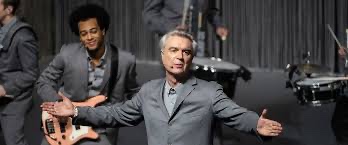
But the event which inspired this nostalgic trawl through my life as a film-goer was this year’s London Film Festival, which finished last Sunday. The peculiar circumstances of the year meant that much of the festival’s programme was to be made available on-line, so this event which I once cherished so much was now coming to me, rather than me having to go to it. I booked my tickets with as much anticipation as before, set up my large i-mac with surround sound, and logged in at the appropriate time – I even turned out the lights to make it as much like the LFF of old as possible. Everything was there, just like it always had been – the usual Festival showreel and trailers, followed by the film. I was even able to watch an on-line hour-long discussion with David Byrne the day after the festival screening of Spike Lee’s wonderful film version of his American Utopia show. For me it was the ultimate home cinema experience.
The BFI announced today that this year’s festival set a new record for attendance figures, including the on-line viewers. This is hardly surprising, but you must also remember that the number of films was considerably smaller than for most LFFs of recent years due to the pandemic’s disruption of production. But does this presage a change in approach, or will the festival be back to “business as usual” next year? Much will depend on the effect of the pandemic on the future shape of cinema exhibition in general, though it is likely that the widely predicted decline would actually be a boost to the BFI, which is committed to maintaining the cinema experience and may find itself offering a more unique service. A mixture of simultaneous theatrical and ticketed on-line exhibition for one-off screenings would seem to make economic sense to all concerned. I hope to be back again next year.
This time of the year we would usually be fully engaged with the start of the Autumn season, containing multiple new series as well as returning favourites. Alas, the pandemic has so disrupted production that we are likely to be in makeshift mode for some time. Nevertheless, the summer and early autumn have managed to provide a handful of worthwhile new offerings made before the lockdown struck, some maybe held back, others maybe brought forward to fill the yawning gaps in the schedules.
Any time is good to get something new from Jimmy McGovern, but it was particularly welcome in the middle of this arid summer. Anthony (BBC1) was clearly always intended for transmission in July anyway, as it was made to mark the 15th anniversary of the racist murder of Anthony Walker in Liverpool. Mc Govern has such a track record of tackling the city’s major traumas that it was a subject perfect for him, yet the BBC rightly emphasised that Anthony’s mother, Gee Walker, had expressly asked McGovern to do it in case it should be remarked in the light of the Black Lives Matter movement and the question of “white saviours” in fictionalised representations, that it should have been dramatized by a black writer.
Also pertinent in the light of the recent heightened debates about racism was Michaela Coel’s I May Destroy You (BBC1), though it was considerably more than that as well. I cannot but agree with all the commentators who hailed it as one of the most significant new dramas of the year, though I have to admit that I’m not completely sure why. This is entirely down to my own limited horizons as an ageing straight white man (with age being the most significant of those four descriptors), rather than any problem with the drama itself. I’m not saying it wasn’t aimed at me – like all great drama it was there to be appreciated by everybody – but rather that it was not within the limits of my full understanding in terms of the detail that makes it a masterpiece: the modern social, cultural and musical references and multiple other subtleties that escaped my comprehension. I do, however, have plenty of experience of judging drama as drama, even in those cases where it doesn’t make an immediate personal connection, and, in terms of its narrative drive I could see that this was obviously something outstanding. I particularly liked the fractured timeline approach, allowing some episodes to stand alone, and the way Coel’s character’s growing appreciation of how to create narrative structure in her own work impacted on her understanding and resolution of what had happened to her, even if it did involve presenting a number of possible endings. A definite for the shortlist.
At the other end of the spectrum, the return of There She Goes (BBC2) for a second season, provided me with something so close to my own personal experience, that I also question my ability to judge it objectively. At the time of the first season, I wrote a blog about this experience (Close to Home, November 14th, 2018) and the second season simply continued in precisely the same vein. Every episode, and particularly the flashback scenes in which Rosie’s disability becomes apparent, once again provided moments of intimate recognition. And Jessica Hynes and David Tennant were again exceptional. I won’t put it on the shortlist again, but it remains my personal favourite.
Documentaries are on much safer ground than dramas these days. The things that make an excellent documentary series have remained fairly constant of late and were all clearly on display in the outstanding four-part Once Upon a Time in Iraq (BBC2): strong subject matter; a balanced roster of the most interesting and articulate interviewees; a gripping narrative structure; and the most relevant archive footage. There is little more to say – it wasn’t ground-breaking, just extremely good programme-making, and it’s on the shortlist.
And if you were looking for a series which illustrated a historical period by dramatic reconstruction and which also worked as character-driven drama, then along came Mrs America (FX/BBC2), Dahvi Waller’s account of the struggles between feminists and a conservative women’s group over the ratification of the Equal Rights Amendment in the US in the 1970s. Its strengths were also traditional ones – a well-constructed script which gave equal weight to historical context as to character development, subtle touches which underscored both aspects, great attention to period detail and, above all, terrific performances, particularly from Cate Blanchett as the leader of the conservative faction. It was also refreshing to encounter such a series which is clearly not angling for a second season.
All the above were transmitted on the BBC, which has managed to balance its resources well in the extraordinary circumstances of the year. ITV’s most impressive drama offering of the period was Des, a dramatisation of the interrogation and trial of the serial killer Dennis Nilsen. It was clearly inspired by the success of a series like Mindhunter (Netflix), which showed that having such a criminal talk openly to investigators across a desk could be just as chilling, if not more so, than reconstructing his crimes. You need a charismatic actor for it to work well and David Tennant (who seems pretty ubiquitous this year) more than rose to the task.
Most of the above appeared during mid to late summer. The most interesting of the early autumn offerings are on subscription and streaming platforms and are ongoing at the time of writing, so I may well have to return to them later. And the most interesting of those is Lovecraft Country (HBO/Sky Atlantic), which counts Jordan Peele and J.J.Abrams amongst its executive producers, and does it ever show. A mixture of social comment on the history of racism and outrageous horror/fantasy with terrific effects, it never fails to startle, though its ultimate destination remains (so far) a mystery. Meanwhile, I Hate Suzie (Sky Atlantic) is superficially similar to I May Destroy You, and I have many of the same problems with it, though without the clear conviction this time that I am watching something of significance, but I will stick with it just in case.
I have, on several occasions, used this blog to sing the praises of Channel 4’s Utopia and to lament the fact that it was cancelled before completion (and, indeed, to hope that it may at some stage be continued). So, I was bound to be attracted to Gillian Flynn’s American re-make (Amazon), if only to check it out for comparison. Unsurprisingly, it is not a patch on the original (how could it possibly be?), but I’m certainly sticking with it for the duration, if only in the hope that the story will be completed.
The pandemic has, of course, thrown greater responsibility onto TV archives to fill the schedules. Most of this has involved straight repeats or compilations, but, in some instances, has inspired developments in the creative use of archival material. Louis Theroux: Life on the Edge (BBC2) was a series of four in which the documentary-maker looked back thematically at his career and reflected thoughtfully on the meaning of the shows he had made, while at the same time, catching up on-line with many of those whose lives he had explored in order to get their take as well. It was a simple idea, but very effectively and movingly executed. Preceding it on BBC2 on Sundays, was Harry Hill’s World of TV, a laugh-out-loud dissection of different TV genes – another simple idea beautifully delivered, thanks to what must have been exhaustive archival research. I particularly liked the sequences in which he played multiple examples of recurring tropes, such as the large number of highly respected crime dramas which have advanced their plots by having somebody enter a room and dramatically announce “so-and-so has regained consciousness”.
But, the most creative use of archive came along just a couple of nights ago with John Wyver’s 50thanniversary documentary about Play for Today, Drama Out of a Crisis (BBC4). The density of the high definition 16:9 screen was fully employed to cram into its 90-minute span as much material as this legendary strand deserved, all of it presented and framed in its original transmission ratio and selected to illustrate the points being made as effectively as possible. And, of course, the anniversary is also a great excuse for the BBC to transmit the best archival repeats of the lockdown, though they probably would have done so in “normal” circumstances anyway.