


An eel diving into a lake at the bottom of the ocean? A fish with a bulbous transparent forehead so that it can see upwards and backwards? You’ve got to be kidding me, right? No – just two of the many startling sights from the latest edition of Blue Planet II (BBC1, Sundays), delivered from the deepest blue ocean to our bonfire-night living rooms in close-up and glorious high-definition. Oh, and just for good measure, as well as showing us deep-sea creatures which looked like something out of Doctor Who or an advert for cooking with gas, this awe-inspiring hour of television hinted at the origins of life itself and the possibility of it existing elsewhere in our own solar system. This was the second in the series and the first was pretty spectacular, too – some of the shots of waves were as wonderful as those of the creatures under them and the surfing dolphins were brilliant.
Just as with Planet Earth II last year, and Life Story before that, we are getting the most spectacular new wildlife footage possible, shot using the latest equipment and techniques, the most significant of which is the use of small, resilient, remotely-controlled cameras. Digital technology allows the time and patience required to achieve the best shots, without the need to waste expensive film stock or the equally expensive time of the cameraman in the process.
The other thing which has changed is how natural history programmes and series are put together. The familiar, reassuring presence of Sir David Attenborough is the only remaining link with what has gone before. Just as the speed of light is the only constant 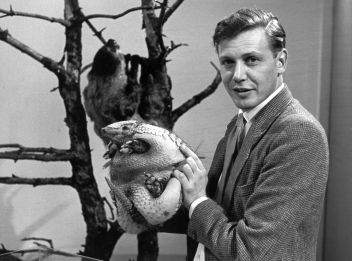 in an expanding universe, so the presence of Sir David is the one thing you can rely on in the changing universe of TV natural history. I had the enormous privilege of working with him on a talk he gave as part of our TV documentary season at the BFI two years ago, in which, using the clips we researched and selected, he traced the development of the techniques of natural history programming from the earliest, studio-bound primitivism of the early 1950s to the filming of the landmark series Life on Earth (BBC, 1979), nearly all of which he had led or been personally involved in. His wonderful talk can still be seen on the BFI website here.
Life on Earth was the high watermark of natural history series in terms of both the quality of its images and the scope of its ambition: to explain the evolution of species in 13 parts. He followed this with a succession of brilliant variations on the theme, all designed to explore aspects of the natural world in more detail and all containing the trademark word “life” in the title: The Trials of Life (1990), Life in the Freezer (1993), The Life of Birds (1998), The Private Life of Plants (1995) etc. Each one showcased even more spectacular advances in wildlife filming than its predecessor and, as widescreen and high-definition television systems arrived, so the familiar stories were re-told in higher quality, interspersed with whatever new animal behaviours had been found in the process.
Where, previously, footage had been sought to illustrate a chosen thesis, more recently it seems that each series is designed to showcase whatever spectacular footage has been obtained. Hence the “movie sequel” titling of series like Planet Earth II and Blue Planet II. Now into his 90s, but miraculously still as vital and engaged as ever, Attenborough’s contribution is confined to an introductory piece to camera in the first episode of a series and a concluding one at the end of the last, plus, of course, reading the narration, which he no longer writes, though he does insist on having the final say on its contents. The last major thing Attenborough did which had a proper thesis was The Rise of the Animals in 2013 and that was actually an updating of Life on Earth, using state-of-the-art high definition graphics and revealing the results of the latest dinosaur excavations, which the then 87-year-old presenter climbed up a Chinese mountain to investigate. After a long lifetime of intrepid and memorable location work, he has certainly earned his place of comfort in the narrator’s chair.
But there are also fewer words now. The key element of the natural history programme today is music and the building blocks of each programme are self-contained sequences, usually containing dramatic confrontations between species. These are clearly designed as much to stand alone on video sharing and social media platforms as to constitute part of a programme and they often look like music videos. And the composers have been recruited from the worlds of TV drama and the movies: firstly Murray Gold, whose dramatic scores are such an integral part of Doctor Who; and more recently the renowned and prolific Hans Zimmer, the most relevant of whose numerous credits are probably Gladiator (for the animal “battle” scenes) and The Lion King (obviously!).
The music certainly makes the sequences highly dramatic and, because the style is associated with fiction and conveys emotions through association, could even be accused of having an anthropomorphic effect. It can also be used to provide sound effects where they do not otherwise exist, such as underwater. Some fish look very frightening, but they don’t roar, though music can suggest that they may be doing something similarly menacing. The letters page of the current Radio Times is full of predictable complaints about the use of music in Blue Planet II, but, for me, it has contributed massively to some fantastic sequences: one thinks of the barnacle goslings leaping from the cliff in Life Story, grippingly scored by Murray Gold and embedded here (though only in part – the whole sequence lasts about 10 minutes and is well worth checking out); and, of course, the iguana hatchlings escaping the marauding snakes in Planet Earth II. And, for humour, the flamenco dancing spider in Life Story is hard to beat.
One other recent development is also worth noting – the ten-minute “making of” sections at the end of each programme, which provide transparency where there may previously have been distrust as to how the programme makers may be manipulating their footage (remember the polar bear cub?). But, if you look back at the clips selected by Sir David Attenborough for his talk at the BFI, you will find that the most significant milestones in the development of natural history programming were similarly up-front about how the filming was done. The evolution of natural history programming on TV is, after all, a great story in its own right.

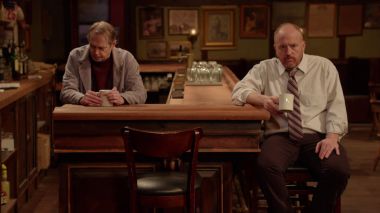 classic Horace and Pete, which was originally only downloadable from his website (which is how I bought it) and has never been released on disc.
 To be fair, the BBC are refunding money spent on purchases, so this must be an expensive mistake for them and one which has set back the aim of unlocking the archive. Which is such a shame, because there was some great stuff there and the promise of much more to come. For me, the collection of previously unreleased Dennis Potter plays was the main attraction – I had downloaded some of them and was planning on getting more when the axe fell. I’m not sure we will ever see them released on DVD or Blu-ray, but I can hope. The same goes for several recent series which were only ever available on the Store. Top of my list would be the first season of Stefan Golaszewski’s wonderful Mum – hopefully the imminent arrival of season 2 may prompt its release.
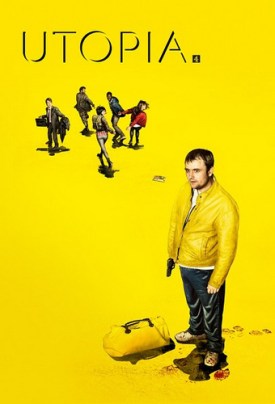 where I am being increasingly forced to source them. In recent months I have received deliveries from amazon.de (the second season of Channel 4’s Utopia), amazon.fr (Terrence Malick’s Voyage of Time, not released here at all – and I am currently awaiting a Blu-ray of Malick’s Song to Song from I know not where, but at double the price of the DVD version amazon.co.uk were offering) and, increasingly, from Australia (the second and third seasons of HBO’s visually splendid The Leftovers, plus Ken Burns’ The War – his Vietnam War seems only available on DVD outside the US, but, in that case, it’s OK because of the provenance of most of the footage – see my previous blog on this series). Could it be that we are being subtly nudged towards the use of streaming and subscription services by the absence of the best quality materials on disc? Certainly the BBC, as well as Channel 4, has failed to issue some of its best recent productions on Blu-ray in the UK. Hugo Blick’s The Honourable Woman was initially and for a long time only available on DVD and I bought it, only for the Blu-ray to subsequently appear, which was doubly frustrating!
 The Four Yorkshiremen sketch first appeared as the last item of the 6th edition of the second series of At Last the 1948 Show, written and performed by John Cleese, Graham Chapman, Tim Brooke-Taylor and Marty Feldman. The show featured sketches by members of the quartet, linked by a hostess – “the lovely” Aimi MacDonald. The final sketch of each show usually featured all four writer/performers. Which of them actually wrote the Four Yorkshiremen sketch was long a matter of dispute, though it seems that Tim came up with the original concept and he was given a credit of thanks for it on the recent Monty Python re-union shows.
 The thing that has made this sketch seem such a classic is the fact that it has been re-performed many times, with different casts, usually as part of live theatre shows, particularly charity galas. it’s first stage outings were as part of Monty Python Live shows, first at Drury Lane (recorded in audio only), then at the Hollywood Bowl, which was filmed. Strangely, Cleese was not involved in that performance – Eric Idle taking his part. Chapman played the same role as he did in the original, with Michael Palin filling in for Brooke-Taylor and Terry Jones for Feldman. And so began the association with Monty Python’s Flying Circus which persists to this day, and it is regularly referred to as a Python sketch. Other performances followed in such events as The Secret Policeman’s Ball and Comic Relief, as well as the most recent Python re-union shows at the O2 referred to earlier, though none have come close to rivalling the perfection of the original, probably because the need to declaim in a theatre ruins the essential rhythm of the piece. Guest performers have included Rowan Atkinson and a revival for Amnesty in
 2001 featuring Eddie Izzard, Harry Enfield, Vic Reeves and Alan Rickman was more of a parody than a performance. More recently, the Four Fundraisers sketch for Comic Relief starred Izzard, John Bishop, David Walliams and Davina McCall trying to outdo each other with their tales of the remarkable things they had done for charity (of course, the sketch is introduced with the Monty Python theme!). You can see them all on YouTube, together with countless amateur versions and even one in Hungarian! (hopefully not a misleading translation).
 of the International Federation of Television Archives I approached Sten and Lasse from SVT and asked them if they had any knowledge of this. “Oh, yes”, they replied, “we have them. We bring them out every Christmas for a laugh”. They promised to send me copies and confirmed that they had five shows, but when they arrived they turned out to be compilations of sketches from both series, edited together for international distribution, rather than original programmes. The Four Yorkshiremen sketch, however, was there and we showed it at the National Film Theatre. Shortly after that, Dick, Veronica Taylor and myself founded
 the BFI’s Missing, Believed Wiped campaign to search for lost British TV shows and At Last the 1948 Show has been one of the great successes. Copies of the shows have come back from private collectors, from overseas (ABC Australia) and from the archive of David Frost (who was Executive Producer). There are now only three of the 13 shows which are incomplete, and the search goes on for those.
 And the existence of the telerecordings allows a long-overdue re-evaluation of the show itself, which until now has been seen mainly as just a pre-cursor to Monty Python’s Flying Circus, but deserves recognition as a true classic in its own right. Python was more formally innovative and had the greater impact, but the 1948 Show is more consistently funny across its 13 editions. John Cleese, Tim Brooke-Taylor and Aimi MacDonald have all enthusiastically joined in the screenings of the recovered shows and Cleese notes in his autobiography, So, Anyway (Random House, 2014) that he was delighted and surprised at just how good the material was when he got to see it again. The 1948 Show also beat Python to the use of a well-known phrase now indelibly associated with the latter: the words “and now for something completely different” were first spoken by Aimi MacDonald in one of her links between the sketches.
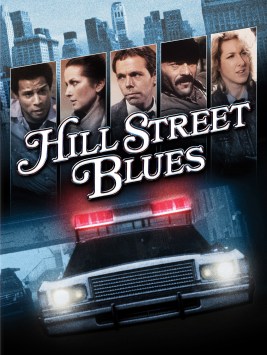 Now don’t get me wrong. I have happily followed many series primarily because of engagement with the characters. I never missed an episode of Hill Street Blues or NYPD Blue. These, though, could be relied upon to provide constantly engaging and occasionally startling narratives and, as dramas with contemporary settings, had scope for re-invention. And, although they had their high points, those series never failed to deliver, even when past their best – unlike, say, Homeland, another series I have watched throughout, despite several very rocky seasons until its more recent revival (I thought the last season, dealing with the Presidential transition, was the best since the brilliant first season – maybe even better than it).
 series as George R.R.Martin has written them. Much the same is happening on a smaller scale with Wolf Hall (and we already KNOW how that will end!). Most interestingly, The Leftovers adapted Tom Perrotta’s complete novel in its first season, with the novelist as co-screenwriter, and continued and completed the story this way in seasons 2 and 3, but without any further novels appearing.
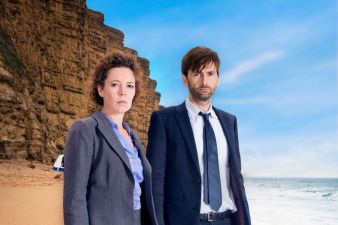 Exhibit A is Broadchurch, which I would remember as one of ITV’s great recent dramas if it had ended where it should have, after what became the first season. But a series which is both a major commercial and critical success is something TV cannot resist trying to replicate, and I was so disappointed by the way the second season stretched credibility in order to perpetuate itself, that I gave up on it. I made it all the way through the second season of The Fall (BBC2), which I thought was excellent until the final seconds of the final episode but the lack of a conclusive ending and the subsequent attempt to stretch it further so alienated me that I resolved to avoid the third season. Did anybody watch it? Was it any good? There have been some successes, though: Happy Valley came back just as strong for its second season and Peaky Blinders found the missing ingredient that Boardwalk Empire lacked.
 A new series by Ken Burns is always a major event and The Vietnam War (currently playing on Mondays on BBC4) is certainly the most significant thing he (together with his collaborator, Lynn Novick) has produced for quite some time. Any documentary series on that war was always going to attract criticism from various quarters, and, though the critical response has been overwhelmingly positive, the series does have its detractors. The tag-line “there is no single truth in war” indicates Burns and Novick’s approach, but will no doubt be regarded as a get-out clause by those with their own agendas on the subject. For me, it is one of the best things he has done and my sole regret is that the BBC is only giving us half of it – the so-called “international version”, with each episode reduced to 55 minutes – just as they did all those years back with The Civil War. The good news is that the full version will be available on DVD at the end of the month, though at a hefty price (I sense a stitch-up here).
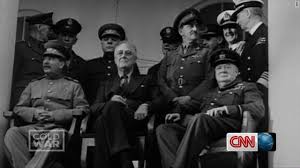 The first major widescreen historical documentary series, Jeremy Issacs’ Cold War (Turner/BBC, 1998) came as something of a shock. It wasn’t just that parts of the 4:3 images were being lost – it was that their very nature seemed to be changed. According to the shorthand of the medium, widescreen images were associated with the cinema, so factual material was being made to look fictional, it seemed to me. This had already been done in the cinema itself, in films like The Unbearable Lightness of Being (Philip Kaufman, 1988), but not in documentary. Indeed, it was the rapid growth of the “cinematic” documentary (designed for cinema release or festival showcasing in the first instance, but ultimately intended for TV or home video), which normalised the practice and made it ubiquitous.
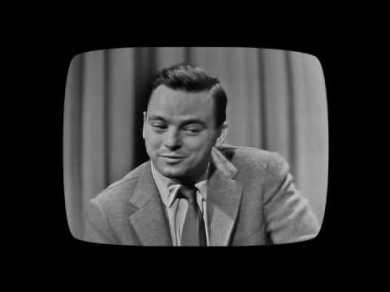 documentaries in terms of its use of TV archive material is James Lapine’s Six by Sondheim (HBO, 2013), in which a large number of interviews with the Broadway composer are intercut, all retaining their original ratios and framed in the shape of contemporary television sets, which conveys the impression of the subject’s consistent brilliance at different points in his career, without the need to signpost dates or provenance. Similarly, Andrew Jarecki’s The Jinx (HBO, 2015), uses TV archive material from the 1980s to the 2000s carefully framed within the high-definition 16:9 frame and often with “blurred” top and bottom edges to convey a constantly shifting time frame (including material from the brief hybrid 14:9 era, when that ratio was used as a compromise during the transition from 4:3 to 16:9).
 material. The use of period TV screens to showcase old footage is nothing new, but Burns makes dramatic use of it by filling the 16:9 screen to the very edges with the image of the 60s TV set, thus transforming your TV into one from the period, so that you experience the broadcast as it first happened.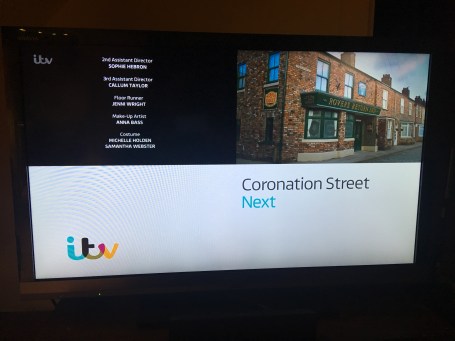
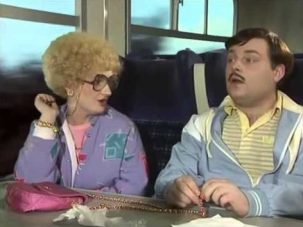 And it was mostly on the BBC that some shows (it seemed to me) started to fight back against this cultural vandalism. The Fast Show interrupted its end credit sequence with its trademark brief sketches, Tony Garnett’s The Cops used police radio chatter instead of a closing theme tune (difficult to talk over) and the medium-savvy Charlie Brooker directly challenged the BBC to interrupt his closing sequence on one of his “Wipe” shows (which they did, in good humour of course). Over on Channel 4, Chris Morris left the end credits off Jam entirely, replacing them with a web address where he had posted them (jamcredits.com – though you won’t find them there any more, just a commercial for how to build your own website).
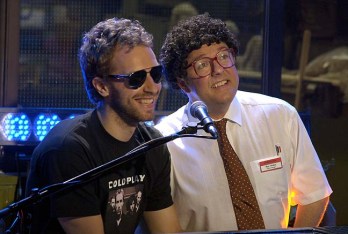 was that Chris Martin was such an egotist he even insisted on singing the closing song himself. But the joke went even further, because there was no voice over to spoil it. Was the joke that Martin even insisted on singing uninterrupted by continuity? And did Gervais need to negotiate this with the BBC for it to work? Whatever, it only works in the context of every other end credit sequence in the series being interrupted – in other words the joke only works “live”, which makes it really ephemeral!
 occupy more half the screen, while Channel 4 splits it in half and has clearly asked its suppliers to provide programmes with credits which only run on the left side of the frame, so they are designed for this form of presentation rather than lost in the squeeze. ITV and Sky still regularly squeeze the credits into a quarter of the screen, though, and, of course, they all continue to use voice over.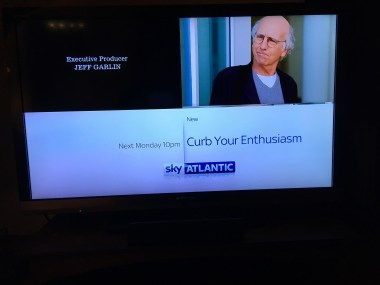
 TV for Keeps