

A few months back, I posted a blog in which I argued the merits of telling a story visually rather than verbally (Better Left Unsaid, 31st May) using examples of some recently transmitted programmes. Without in any way invalidating those arguments, a number of recent new series have prompted me to examine the other side of the same coin: effective drama and dramatic comedies which prioritise dialogue over visuals. Of course, for these to work well they still require subtle visual flair and directorial quality and they, too, need to avoid expository dialogue as much as possible.
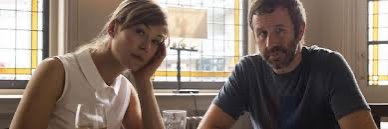
To start with the two most obviously “wordy” series: State of the Union (BBC2/BBC i-Player) was a series of 10 ten-minute two-handers, always set in the same pub as the two protagonists (played by Rosamund Pike and Chris O’Dowd) met up in advance of their regular weekly marriage counselling sessions. The credits for such a modest scenario were pretty striking – as well as the two excellent actors, the scripts were by Nick Hornby and the direction by Stephen Frears – which is why it worked so well. It was very much in the tradition of pieces like Hugo Blick and Rob Brydon’s Marion and Geoff (BBC: 2000-2003) or Alan Bennett’s Talking Heads (BBC: 1988, 1998). The details of the characters’ lives emerged gradually and as much by implication as by direct statement. This requires clever writing, great acting skills and subtle direction – Frears highlighted the more serious moments with the minutest of camera movements. Another outstanding two-hander, Louis Malle’s My Dinner with Andre (1981), is a valuable reference-point. Each episode included the week number (Week 1, Week 2 etc) in its title, so I watched them a week apart, not in twos, as they were transmitted, or by bingeing the whole 100 minutes on i-Player, as I’m sure many did, and I somehow think that was right. I imagine it will be back for another season and could well run and run.
Criminal (Netflix) has a larger cast but also a single set, in this case a police interrogation room, the adjoining surveillance room and the lift area/stairwell outside. It also has an interesting concept. There are four brief series, each made by a different country (UK, France, Spain and Germany) and each series (of 3) has a group of actors playing the police team across the three episodes and guest stars (like David Tennant)  playing the “criminals” being interrogated in each episode. Each investigation is a separate story, but there is a story arc across the three episodes involving the police characters. Unfortunately, the lack of back-story context or characterisation in the criminal stories is a hindrance, so there is no great tension in the interrogation scenes, compared to Line of Duty (or even 24 Hours in Police Custody). I haven’t watched every national version, so one of them may have cracked the format, but on the evidence I have seen (the UK and German series), I doubt it.
Far better are two more traditional dramas, both also dealing with crime and police procedures, which most certainly rely on scenes of interview and interrogation rather than action. Season two of David Fincher’s Mindhunter (Netflix) built well on the excellent first series and continued to rely for its effectiveness mainly on the tense “interview” scenes in which imprisoned serial killers (based on real-life murderers and including, this season, Charles Manson) are questioned by the specialist FBI officers, trying to find psychological insights to help solve ongoing crimes (also based on real  examples – most prominently in this season, the Atlanta child murders). What is discussed is grisly in the extreme and comes across far more shockingly for being dispassionately spoken about than it would do if recreated for the drama. The private lives of Bill Tench (Holt McCallany) and Wendy Carr (Anna Torv) impact strongly on the narrative and the way the characters’ private experiences are shown to inform their innovative behavioural research (and vice versa) reminded me of a previous series: Masters of Sex (Showtime, 2013-16).

ITV’s A Confession similarly located all its dramatic impetus in its dialogue, which was appropriate given that it was about what was and was not admissible as evidence and how following police procedures to the letter would not have achieved results. In this regard it was very similar to another ITV real-life police drama from earlier in the year: Manhunt. In the earlier piece, it was Martin Clunes playing the career copper who risked his position to follow his instinct. This time it is Martin Freeman, playing pretty much the same role – the Martins could have been interchangeable! It was an engaging, understated drama which kept the attention without setting the world on fire.
All of which, I guess, goes to show that you don’t necessarily need action sequences to produce an engaging drama, but the greatest pieces are likely to be those which find a balance between “action” and dialogue sequences, as long as the action is organic to the narrative and the dialogue is naturalistic rather than expository. Step forward, Top Boy 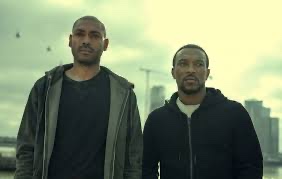 (Netflix). Having provided Channel 4 with two outstanding 4-part series in 2011 and 2013, Ronan Bennett’s Top Boy was then inexplicably dropped. But now, thanks to interest (and finance) from the rapper Drake, it is back on Netflix with a new 10-part season and the promise of more to come – and this is very good news. And the fact that the series has been so greatly expanded allows for many more back stories and for reflection on the circumstances the characters find themselves in – all of it highly pertinent to the recent rise in street crime and the headlines it has made.
It also provides a large number of roles for an astonishing roster of young black British acting talent – some of the most impressive being the very youngest ones: Keiyon Cook and Araloyin Oshunremi outstanding as Ats and Stefan. Ashley Walters’ Dushane remains the main focus, though Kane Robinson as Sully and Micheal Ward as Jamie 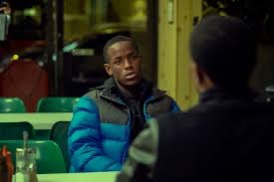 complete a trio of riveting protagonists. Writing and direction are top-notch throughout, as is the music – both the original score by Brian Eno and the rap music which provides both impetus and comment. A key theme is the tension between the main characters’ involvement in drug wars and their attempts to engage in “normal” personal lives and look after family members, as well as the inevitable impact of the gang scene on the youngest members of the community. In this respect, it echoes The Godfather films in its epic scope.
We certainly need to be grateful to Drake for bringing about such a vital revival. I just wish that something similar would happen to another wonderful series abandoned by Channel 4 after two seasons and one of my very favourites of the past decade: Utopia.
Top Boy is a definite for my shortlist, and I will add Mindhunter to the list as well.

 had a straggling beard – the classic image of a castaway. He falteringly dragged himself towards the camera, collapsed and looked up into the lens – we knew this was comedy and could hear the audience laughter, so we prepared ourselves for the traditional laugh line, which was surely about to be delivered. But all he said was……….”It’s”.
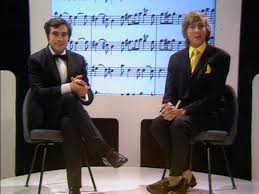 line of drawn pigs on a blackboard was crossed out. This became a running gag throughout the show, both in the sketches and the animations which interrupted them and (sometimes) linked them. A number of parodies of arts programmes made up the bulk of the show and the laughs began to flow (particularly, from me, at the unfortunate Arthur “Two Sheds” Jackson). At the end, we got an extended sketch which seemed to be on more familiar ground – a parody of World War II movies, in which the British were developing a killer joke, that would not have been out of place in the Goon Show.
 popular amongst students in the early 70s) but I did take part in the OUMPAS Silly Walk through the streets of Oxford. My walk was not particularly silly and could certainly have done with a government grant to develop it, but then it would have taken a lot of effort to be really silly over the distance involved. I bought all the long-playing records (the only way of re-experiencing the show at the time) and played them over and over, memorizing both the words and the inflections by osmosis. I can still give you all the cheeses from the Cheese Shop sketch, in the correct order.
 Argument Sketch was my favourite, because that’s what they had a clip of. Fortunately, it was, indeed, one of my very favourites, so I was able to eulogise without argument. The interview was just five minutes rather than the full half-hour.








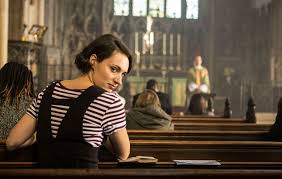
 (Sky Atlantic) and The Virtues (Channel 4), will indeed feature and very strongly so – both maintained the qualities I described to their respective ends and I think they are probably the two best drama series of the year so far. The Virtues provided an extended finale of even greater intensity than the episodes which led up to it, with the main plotlines leading to two simultaneous and harrowing confrontations with different, though unpredictable, outcomes (I won’t spoil it – do watch it if you haven’t already). And the extra information we were given during the end credit sequence of the final episode of Chernobyl was a devastating climax of its own – I’ve never seen that device used so effectively.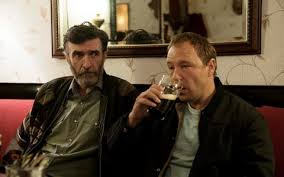
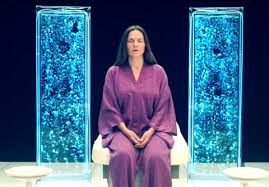 wired up to a mind-reading device in a futuristic scene reminiscent of Dennis Potter’s Cold Lazarus (BBC/Channel, 4 1996). And Anne Reid’s soliloquy about automated check-outs really hit a nerve – I always queue for the human-operated tills in my local Waitrose and refuse any offers to help me with the automated section – now I can say “didn’t you see Years and Years?” as well. If you look at it as political satire rather than drama, it has a much greater resonance.


 another seven years’ time. Each participant was asked to comment on the original premise of the series – that a person’s character and life path is set at the age of seven – which gave an air of things being wrapped up, at least in the event that there is to be no more. Hopefully this will turn out to be a “just in case” precaution, but I think Apted needs to work out a way of letting it go on without him, because it is too important to let go until the last possible moment. It certainly wouldn’t be the same without Apted’s skill as a film-maker and as an interviewer, but maybe there could be just a small-scale studio get-together every seven years when he’s no longer around.
 while the grave illness of Nick was also saddening, but otherwise it seemed to be business as usual, though with less to report. The series has mirrored my own life throughout (I was eleven when it started) and “less to report” is pretty much where I am now, too – that’s the main condition of retirement. Coming back every seven years has also worked particularly well with people of this vintage, especially as it only became clear that would happen gradually – with the impact of social media, it wouldn’t be the same for people of later generations, because their lives would be too obviously impacted by their fame. That has happened a little bit in the Up series, but not enough to affect its trajectory.
 overall impression very emotional and wistful. Bridcut has a tremendous capacity for filming people simply listening to music which speaks volumes without a word being uttered (he did much the same in his documentary on Herbert von Karajan a few years back). This is a documentary which speaks to me as directly as the Up series – I have most of the Baker recordings featured on my shelves and my years of discovering classical music coincided with Baker at her peak. It is one most definitely for the shortlist.
 Tory government?” was a highlight. There was also some great archival material, including Norman Tebbit’s rescue from the Brighton bomb which was broadcast live on BBC Breakfast Time and has, for a long time, remained un-repeated at his request. I remember watching it at the time and thinking what a striking piece of television it was – the stricken Tebbit, covered in dust and wearing only barely in-place pyjama bottoms, being slowly lowered from the rubble by many hands – a scene resembling Renaissance depictions of Christ’s descent from the cross. The series contained a number of such resonant sequences but, as a whole, contained very little which we didn’t know or which had not been covered in previous series.
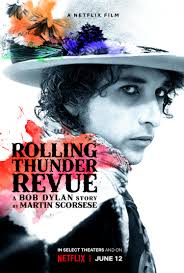 and probably less fun. Dylan himself is certainly in on the joke and it may well have been his idea. But what the hell, it captures a time and a mood and gives us some fantastic concert footage. It is often said in relation to drama documentaries that they aim to present a “higher truth” when they do not necessarily stick to verifiable facts, and I guess that also applies when what is ostensibly a documentary contains “mockumentary” elements. Whatever, I certainly enjoyed it, but I don’t think it is in the same league as the same director’s No Direction Home (PBS, 2005)
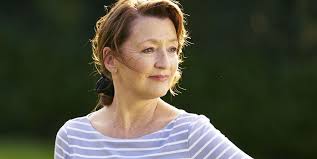
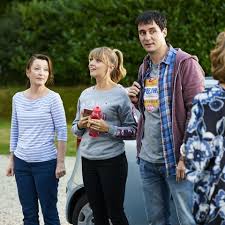 must admit that I love this show so much I have already watched every episode twice!). As it is actually about a group of people who find it almost impossible to articulate their feelings, it is no surprise that what is left unsaid is more important than what is spoken. I noted in my blog about the second season, back in April last year, that that it contained a number of extended contemplative scenes and found all the characters in a limbo where nothing happened. Well, the third season finds matters resolving at last and difficult conversations are had, but Golaszewski still finds plenty of time for awkward silences and contemplative moments. One big difference is that the season covers a week in the characters’ lives, rather than a year, much as the final season of Him and Her (BBC, 2010-13) took the characters out of their bedsit for the first time. The setting is still a house, though a much grander one, and the action of each day seemingly takes place in close to real time, as before.
 trying to hide the fact); Pauline’s divorce has come through (and her settlement is paying for the week in the grand house), but she is still clearly uncertain about where she is going, and is as obnoxious as ever and doesn’t fit with the group; and Maureen’s dementia seems to have relented somewhat, possibly now that she has discovered the joy of the i-pad.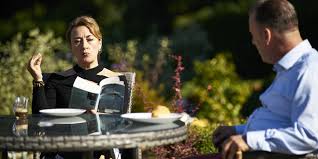


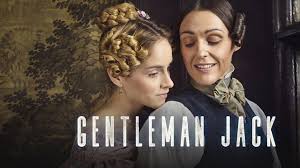 in her contemporary dramas, but give her a period piece and a sudden need to explain seems to take over. It certainly has in Gentleman Jack (BBC1, Sundays), which I’m afraid I have given up on. I should have known it wouldn’t be for me when the Radio Times described it as “roistering”, which is one of those buzz words which usually warns me off something (“caper” is another) – subtlety is what I prize most in drama.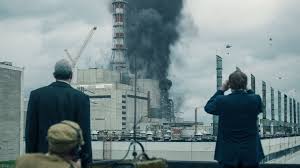
 involves lengthy explanations given by scientists to government figures, just as I imagine must have happened in reality, but there are also plenty of moments where the visuals alone tell the story. It’s extremely impressive. Interestingly, Chernobyl also featured in one of the most striking sequences in David Attenborough’s new series for Netflix, Our Planet, in which he showed how nature is now reclaiming the abandoned and still poisonous townscapes near to where the disaster happened.
 more character-driven moments, is reminiscent of Detectorists, on which Jones, previously better known for his dramatic roles, cut his sitcom teeth. Jones’ main character, Pete, is a similar ineffectual but decent everyman and, again, is living with a daughter from a failed marriage. He works as a coach driver in Bognor Regis, a town I am very familiar with from childhood holidays and one which, probably because of its “funny” name and association with the phrase “bugger Bognor”, referenced here, has often featured in sitcoms – it was the Steptoes’ regular holiday destination. I say “main” character, because Jones also plays Pete’s twin brother Barry, who has emigrated to Australia and is seen via skype, but returns to Bognor as the series progresses. While the taciturn Pete carries most of the bleak plotlines, Jones indulges himself in some knockabout comedy, too, through the character of Barry.
 that Rita’s story is happily resolved in the final episode and the main characters return to their ongoing lives, including Pete and Barry’s mother Joy (Marcia Warren) battling with dementia, daughter Kayla (Erin Kellyman) attempting to leave home and rejoin her mother in Birmingham and roadside burger-bar owner Fran (Claire Rushbrook) trying to get Pete’s affection, indicates that we will probably be set for a second season, which would be very welcome.
 Hythe, on the Kent coast. So far, so Rectify, except there is no doubt about Miri’s guilt, though there are some mysterious mitigating circumstances about the murder which emerge slowly as the series progresses (and I haven’t watched it all yet, so there may be revelations to come). And, yes, this too is a comedy, though a highly dramatic one and packed with a fine cast – Geraldine James particularly outstanding as Miri’s wayward mother and Adeel Akhtar as Miri’s neighbour, trying to cope with caring for an unstable and foul-tongued aunt.
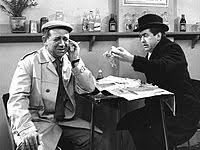
 Clement and La Frenais, Linehan and Matthews, and Barry Cryer. However, there is a glaring omission – even these luminaries have somehow managed to produce a top twenty sitcoms list containing nothing by the generally acknowledged masters of the genre – Galton and Simpson. This is not just an oversight – this is mind-bogglingly wrong.
 Comedy Lecture, Ben Elton made the case for the traditional sitcom, recorded in a television studio in front of a live audience, and argued that it is a classic genre which is nowadays looked down upon by devotees of newer forms of comedy, made on location without a laughter track. Now, I am probably one of those Elton is thinking about – most of my favourite TV of the past two decades (both British and American) has been half-hour shows which are ostensibly comedy, but which have a serious edge (sometimes a very serious edge). Some of them are made primarily for laughs, but some are not – some are closer to drama than comedy (and never mind the duration). Another thing that sets them apart is narrative development across episodes, whereas a traditional sitcom usually has self-contained episodes which could be shown in any order. There could certainly be a separate list of half-hour comedy-dramas, but it would contain mostly recent material. Perhaps that is one for the future, or perhaps some of the titles may belong on drama lists, but for the present I am going to include both traditional studio and modern single-camera sitcoms on my list, as did the Radio Times, because I can’t think of any better way to do it.





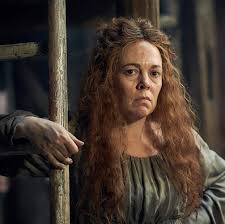 And it was great to see an uncharacteristically unsympathetic performance from (surely soon to be Dame) Olivia Colman, though it is not the only thing on my shortlisted programmes from the first quarter to contain such a thing, as you will discover. An aside on Les Miserables: I was, unfortunately, unable to avoid a spoiler broadcast on BBC2’s quiz Only Connect (of which I am a devotee) just a week before the final episode aired. This came in the form of a question in which the teams were asked to find the connection between four names, of which Inspector Javert was one – the answer being that they were all fictional characters who committed suicide. Don’t they check these things?
 campaign in the 2016 referendum. It contained eye-catching, though slightly caricatured portrayals of most of the well-known political figures involved in the debate, which is why Cumberbatch could convince so well as the unknown central figure. It was a timely reminder of how we got into the current mess, though the continuing coverage of the most recent political machinations has rendered it somewhat less remarkable.
 in its own right and well told using a classic mix of interviews and archive, but the subsequent revelations that they were part of a cruel and secretive psychological experiment leave you simultaneously shocked and intrigued by the contribution of the results to the nature vs nurture debate.
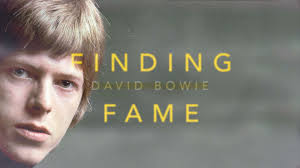 enough material for four hours of air time. Much better was David Bowie: Finding Fame (BBC2), the third part of Francis Whately’s outstanding trilogy about Bowie, this time looking at his rise to prominence and featuring excellent archival materials. It was a great watch and I am reluctant to leave it off the shortlist, but it is the trilogy that is the really impressive achievement, rather than this particular part.
 90s, that is not the case today. His decline and fall has been brilliantly chronicled in I’m Alan Partridge (BBC, 1997-2002) and Mid-Morning Matters (Sky Atlantic, 2012-16), plus a few occasional specials, but this latest development has stretched things too far in striving for familiar comic effects – he truly belongs on North Norfolk Digital, where the humour comes from subtle exchanges. By contrast, the final series of Sharon Horgan and Rob Delaney’s Catastrophe (Channel 4) was well judged and the ending was perfect, but the season as a whole was no advance on the previous ones, which still makes it pretty damn good, but, without the impact it made on its first appearance, not quite shortlist material any more.
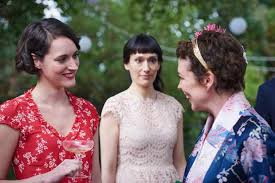
 Thomas and a marvellous scene in which Andrew Scott’s priest challenged Fleabag’s fourth-wall-breaking asides to the audience, which indicated that she had at last found somebody who understood her, but maybe even put us, the audience, in the same position for her as his God is for the priest. All that and even a variant on the classic fart-in-a-lift joke – wonderful writing. The supporting cast is magnificent, with Sian Clifford outstanding as Fleabag’s sister Claire and, of course, Olivia Colman as the villain of the piece.
 the Phoebe Waller-Bridge connection. Both are series in half hour episodes which mix a comedic approach with startling developments to exhilarating effect and both feature women in all the leading roles. So, here are my reasons why Fleabag is better than Killing Eve:
 TV for Keeps