

A few weeks ago, I was tagged to take part in one of those Facebook games where you have to create a cultural list over 10 days. It may be favourite books, it may be films or other things. In this case it was the TV programmes which “made me” – which I interpreted as being those with the greatest influence on my life, rather than my all-time top ten. I chose to take a chronological approach, spreading the choices fairly evenly across the decades, and explained my choice in each case. I am reproducing my posts below as I wrote them, partly because they make a reasonably coherent narrative, but mainly because there is so little currently on TV that I want to blog about, so I might as well re-cycle something I’ve already written. My first blog on this site, 11 months ago, was about last year’s “glorious summer” of great TV shows. This summer, by contrast, is a drought, both literally and televisually, so let me take you back through time instead…..
Day 1

It’s November 23rd 1963 and the 10-year-old me is really at a loose end. Somebody important was shot in America yesterday and all my favourite Friday night programmes, even Bootsie and Snudge, were cancelled! Things aren’t much better today, but there’s a new programme starting at teatime which looks intriguing, so I’ll give it a go. That new programme, Doctor Who, expanded my imagination like nothing on television had done before. There was mystery and menace in every dark corner of the monochrome screen. I was hooked for the rest of the sixties, through the Hartnell and Troughton years (I still think Troughton is the best Doctor, though Capaldi came close). I rather drifted away from it after that, but then it became a professional concern when, as the BBC’s TV Archivist, I became involved in the search for missing episodes in the 1980s (with some success, including some of the earliest dalek episodes). And, of course, I’ve been a fan since it was revived by Russell T.Davies earlier this century. It is one of three titles on my list first transmitted in 1963/4 which have been with me throughout my life and are still going strong. I will post about the second one tomorrow but leave the third (which is very dear to me) until the end of my list.
Day 2

Today’s choice is my TV equivalent of comfort food – a programme which I have watched (and occasionally fallen asleep in front of) most Saturday nights since I first caught the football bug in the mid-sixties (and that’s “soccer” to my American friends!). It’s a bug I have never shaken off – in fact, the infection becomes more severe with every passing year. Through it all, MOTD has been a constant – the familiar theme tune, the presenters (Kenneth, David, Jimmy, Des and Gary), the commentators (Motty), the pundits (Hansen, Shearer) the “goal of the month” competition. The quality of the coverage has developed, but the format stays much the same. It’s officially the longest running football programme in the world. My favourite period? – probably the seventies, when it was the closing part of the legendary BBC1 Saturday night schedule. My favourite edition? – has to be the one when the Bees led the show thanks to an FA Cup upset over Premier League opposition. I just can’t wait until we reach the Premier League (as we will) and feature every week!
Day 3

Today, “It’sssss…….” – the big one! The one programme which I would say “made me” more than any other. If I was doing this by importance rather than chronologically, this would be top. Just as so much of our language contains phrases and sayings that originate in Shakespeare, so barely a day goes by without my regular discourse containing something that can be traced back to Python, whether in conversation or commenting on Facebook. You may have noticed – maybe not. But it doesn’t stop there. My entire world outlook is influenced by this show – my general air of flippancy, of not taking anything too seriously, of always immediately looking for the funny side of any situation, the cheerful atheism, the always looking on the bright side. It hit me at exactly the right time, between reaching the end of my school days and going on to university. I was never one for going on street demos, but I did take part in a mass “silly walk” through the streets of Oxford. I had been a big TV comedy fan throughout the sixties, especially things like Not Only, But Also, but this was on a whole new level. At times, I laughed so much it was painful, and so much of it still gives that reaction. The first season was a revelation from the start, but the gradual development of the stream of consciousness style throughout that run is what made it so compelling. If I have a favourite sketch it may be the argument, which is pure poetry, as well as being one of the many Cleese/Palin highlights. So, time’s up….No it isn’t!
Day 4
So, it’s late 1973 and I am into the final year of my degree in Modern History – there are some wonderful lectures by the great historian AJP Taylor on the Second World War. But then a mammoth TV documentary series arrives which presents the same serious history in a way that is so much more compelling and direct than any book or lecture could be. I’d like to tell you that, in that moment, I resolved to spend a life’s career working in film and television archives, but it wouldn’t be true. Nevertheless, the seed was sown and after I had embarked on that course some five years later, I never lost any opportunity to cite TheWorld at War as an inspiration. It remains the beacon in terms of the use of archive material – research, selection, correct presentation and attribution – something which became a bit of a professional obsession to me, to the extent that I would bore my fellow Peabody jurors to tears over it in later years. It was the work of many fine historians, writers and producers, but the guiding hand was that of a TV hero of mine – Jeremy Isaacs, who ran the programme department of Thames TV, one of our major commercial broadcasters, as though it were a PSB and then invented the ethos of Channel 4. I was fortunate to be the organiser of a 75th birthday tribute to him at the National Film Theatre in 2007 and spent many fascinating hours with him selecting and editing the clips for that event. The pitch-perfect narration by Olivier, the haunting score by Carl Davis – everything is right about TheWorld at War.
Day 5

There had to be a Dennis Potter on my list. Yes, The Singing Detective is his masterpiece, but Pennies from Heaven is arguably the greater leap of imagination as to what could be done with a TV drama series and it does mean more to me personally. It was transmitted just a couple of weeks after I joined the BBC in 1978. I had immediately begun to take a closer interest than previously in the BBC’s output (after all, this was the material I was now handling every day) and a new Potter was a big event. I was mesmerised and immensely proud that I now worked for an organisation which could produce such a thing. I was pretty obsessed with exploring the art of film at the time, to the exclusion of most else, but here was a studio-based TV drama which could engage me, entertain me and make me think just as much, if not more, than the greatest cinema. The use of popular songs of the thirties, mimed by the actors to express the characters’ thoughts and hopes or as an ironic commentary on the narrative was revolutionary and never bettered. Thought for today: “Though things may not look bright, they’ll all turn out alright, if I keep painting the clouds with sunshine”.
Day 6

I’ll say it up front. For me, this is the greatest TV drama series of them all. Some people will tell you it is a film – made on 35mm by a film director, Edgar Reitz – and, indeed, I first saw it in a cinema. But it was co-produced by TV companies, WDR and SFB of (then) West Germany and is clearly designed for television presentation in 11 parts of irregular length – the shortest under an hour, the longest almost two and a half – and, in that respect, it anticipates by 30 years the sort of thing now being produced for streaming platforms. Reitz went on to make 2 sequel series, a prequel and some spin-offs, but none of them matched the ambition and historical sweep of the original. Telling the story of a village in the Hunsruck from 1918 to the early 1980s, it is basically German history in the turbulent 20th century in microcosm, seen through the eyes of a number of ordinary families. There are elements of soap opera about it, which is partly what makes it so effective. Who will survive the war? How much did ordinary Germans know (or care) about the crimes of the Nazis? How did technological advances like radio, telephones, motorways and TV affect their lives? The trivial is given the same attention as the momentous, and the weight of memory accumulates. Some characters are played by several actors, others by the same one through the whole series, but you get closely involved with them all.
Day 7

Having reached the period of my life when the assessment of the significance of television programmes was my professional concern, it becomes harder to isolate individual titles which had a particular effect on my attitudes, not because there are too few, but because there are too many. I choose The Royle Family because it pioneered the metamorphosis of the sitcom into the half-hour comedy/drama. It dispensed with the studio audience and the laughter track, even though it hardly ever left the single set – the front room of a Manchester terraced house – and relied on the brilliance of its writing and characterisation to capture you, to make you laugh, and sometimes to make you cry. Many of the programmes I most treasure from the last two decades owe it a debt – from Getting On and the work of Stefan Golaszewski to Fleabagand Detectorists. At a time when TV drama was reaching a new plateau by becoming cinematic, these programmes (and their US equivalents from Louie to One Mississippi), by virtue of their duration, expanded the dramatic and comedic possibilities of a purely televisual form. And, of course, the Royles constantly referenced TV itself because watching TV was what they were doing most of the time, just like those of us watching them. Post-modernism, my arse!
Day 8
Today’s choice is for my daughter Hanna as well as myself. One of the joys of having a daughter with learning disabilities is the extended childhood, with the result that I have been watching programmes for kids for much longer than most parents – not only that, but many of the same things again, again, again – so that I have come to appreciate how well-crafted and subtle the best of them are. I have reached the stage when I am keenly anticipating the next offering from that crazy genius Andrew Davenport, but my two favourites have to be Charlie and Lola and Peppa Pig. I chose Peppa because, whereas Charlie and Lola has wonderful visuals and music, Peppa has the better humour, which is firmly aimed at the kids but with the occasional wink towards the adult audience. It doesn’t moralise – just presents family and school life though animated animals. There’s even the occasional political satire, such as the school’s International Day, when Madame Gazelle (brilliant name) gets the children to dress up as different nationalities to promote peace and harmony, but they end up arguing over access to the sandpit. The voiceover artists include the Welsh contingent from Absolutely, Morwenna Banks and John Sparkes, plus the familiar tones of Brian Blessed, Andy Hamilton and others. And if I were to be asked which TV character I most identify with it would have to be Daddy Pig – a genial everyman constantly out of his depth and something of a British equivalent to Homer Simpson. I didn’t expect such a programme to become a big part of my life at this stage, but ultimately everybody loves jumping up and down in muddy puddles.
Day 9
So, there I was, six or seven years from the end of my career in television archiving/curation and drifting along happily towards retirement, doing much the same as I had for the last 25 years, when something wonderful happened. I was invited to join the Peabody Board of Jurors. Not only did this involve engaging with American TV in much, much greater depth than I had before, but also enhancing my critical approach in order to participate in the rigorous and exhilarating board discussions. It also coincided with an explosion of creativity in US output, both drama and documentary, driven by cable and online platforms. So, I got to see masses of marvellous programmes, many of which I either followed thereafter or caught up with in full, and The Leftovers has to be my favourite of them all. In the same way as another favourite recent drama, the French series Les Revenants, The Leftovers uses a supernatural event to explore questions of grief, love, relationships, spirituality and the search for meaning in a meaningless universe. It appeals to atheists like me and believers alike because there are no answers but lots of questions, asked in the most strikingly imaginative and dramatic way possible. Max Richter’s score is outstanding and the acting and direction uniformly brilliant. The ending, appropriately after three series, is overwhelming and open to multiple interpretation, but I choose to let the mystery be.
Day 10

This is the only thing I could have as my final choice. It reaches back to where I started (Seven Up was transmitted in 1964), but it justifies its place at the end of my chronology because it also represents the future – 63 Up is due to air next spring and I really can’t wait. To say this is a programme that “made” me doesn’t quite get it: it is me, just as it is countless others of my generation. Like a short-period comet, it returns every seven years and each return is more momentous than the last. I can find points of identification with every one of the participants, and they are only three years younger than me, so seeing their lives develop in parallel with my own and against the backdrop of the same social, political and technological changes, and regularly looking back on how they got to where they are, is an incredibly moving experience. Leaving seven years between each catch-up is a stroke of genius, because they can get back to normal lives away from the media spotlight (though their fame has impacted in some ways on some of them). We know there has been the first death among the group since the last visit, so it may start to get a little painful, but Michael Apted is the perfect intermediary – I wish him extreme longevity, so that he can go on making the series. I am very proud to have been part of the Peabody Board which gave the series an institutional award (the same year, coincidentally, that my first choice, DoctorWho, was similarly honoured). The more I think about it, the more I am convinced that this is British television’s greatest achievement.
So, there you have it – three dramas, two comedies, two docs, two children’s programmes and one sports show to sum up TV’s influence on my life.
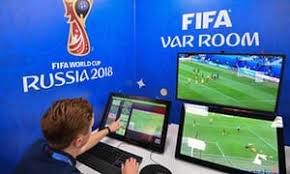
 made with television coverage in mind – the red and yellow cards for instance, which clarified refereeing decisions, or the simultaneous playing of final group games, introduced to avoid teams playing out boring draws which would see both go through, but which now provide some nail-biting coverage, particularly at this most recent tournament (the final group games involving Argentina, Germany and Japan were all riveting for different reasons).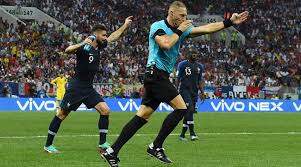
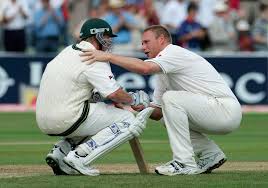 coverage on Channel 4 rose to the moment – unforgettable shots of Michael Vaughan and the England players celebrating, intercut with Andrew Flintoff’s sporting gesture to console Brett Lee, who had batted so well. None of that would be possible now – the umpire’s decision would be reviewed (and that particular decision was a debatable one – the pressure on the review team would have been enormous). Something has definitely been lost and the drama of the review does not compensate for it.

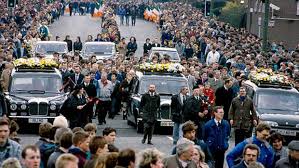 Engle’s The Funeral Murders (BBC2) aired back in March and was a harrowing description of two awful days in the history of the Troubles in Northern Ireland, told frankly, compassionately and impartially and with the benefit of 30 years of hindsight. Above all, it highlighted why the Irish border issue is not just one of the difficulties of the Brexit process but by far the most important issue. And last Friday, there was a splendid doc on the life and career of Olympic ice skater John Curry, The Ice King (BBC4), full of archival material and rare recordings of his work, though the fact that all the interviews seemed to be archival as well made it look a bit limited. The Funeral Murders is the one to make the shortlist.
 story well told – but ultimately maybe just a bit too conventional to be regarded as something special. On the other hand, Russell T.Davies’ A Very English Scandal (BBC1), a three-part dramatization of the Jeremy Thorpe scandal of the seventies, was very special indeed. Davies’ triumph was to make a light, comedic piece out of an episode which, while full of laughable incompetence and colourful characters, also contained some pretty dark elements, and he did it without trivialising those aspects in any way. One line summed up that approach for me – a Liberal Party bigwig regretting that the Thorpe scandal had hit the party just when it was beginning to gain some momentum through the likes of Cyril Smith and Clement Freud. Wicked stuff! And Hugh Grant, while playing the comedy as we knew he could, was a revelation in portraying the deeper complexities of Thorpe. The fact that the case hit the headlines again at the time of transmission, through the news
 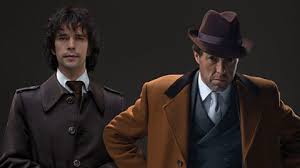 that the incompetent assassin Andrew Newton is still alive, when the police thought he was dead, only added to the sense of event television, as did the screening of Tom Bower’s edition of Panorama, scheduled for the night in 1979 when the expected guilty verdict should have been delivered, but shelved when it wasn’t. The inclusion of Peter Cook’s contemporary satire of the judge’s biased summing up during the end credits was a master stroke, too. A Very English Scandal is very much one for the shortlist.
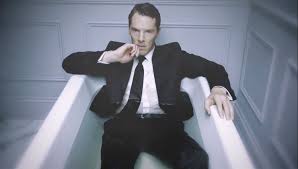 Melrose’s self-destructive character was the fault of his abusive father and negligent mother, there was nothing else to it. It rather reminded me of a previous lavish five-parter, also featuring a fine performance from Benedict Cumberbatch and also based on a series of highly-regarded novels, Parade’s End (BBC, 2012), which ultimately did not add up to the sum of its parts.
 science fiction, but it was in Stanley Kubrick’s 2001: A Space Odyssey, 50 years ago, that the implications of attempting to replicate human consciousness in machine form received its most brilliantly considered treatment. Put simply, the conundrum Kubrick and Arthur C. Clarke explored was that the greater the success in replicating human behaviour, the greater the likelihood that human failings – unreliability, vengefulness, the tendency towards violence – will emerge, and this has become a standard trope of the AI genre. The genre also offered thoughtful film makers the possibility of exploring what the essence of humanity is – it is often remarked that the computer HAL is the “most human” character in 2001 and the astronauts were presented as being efficient and emotionless to emphasise this. Having re-created human consciousness, the only way forward was the next stage in human evolution, presented at the end of the film.
 gets the best speech of the film (one of the best in all cinema) and we are left unsure whether Harrison Ford’s Deckard may be a replicant himself. For the actors involved, it meant a choice between playing their characters as they would a normal human being or using subtle indicators of their mechanical nature. A whole new acting skill developed, seen at its best in Stephen Spielberg’s AI: Artificial Intelligence (2001).
 though they are more dramatically significant, and I preferred the fractured narrative of season 1. One nice touch in season 2 was when a group of the characters arrived in the neighbouring Shogun World and the writer remarked on how some of the “western” storylines had been replicated there, reminding us of the classic westerns which had been adapted from Kurosawa’s samurai epics.

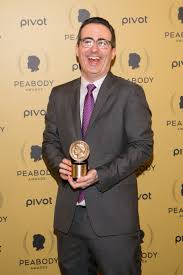 little point in criticising inclusions or fretting over exclusions – 16 highly-qualified and carefully chosen judges have already done that for us and have agreed unanimously on the outcome.
 young black man whose refusal to plea bargain over an alleged minor felony kept him in the “justice system” for three years, involving incarceration in New York’s notorious Rikers Island prison and several lengthy spells in solitary confinement, before his eventual release and exoneration preceded a tragic ending. With extensive forensic interviews and disturbing CCTV footage, the series grips and shocks over six episodes, but it is the nature of the injustices and abuses it uncovers rather than the style of storytelling which makes the greatest impact – and that is just as well, because the other series I am going to describe is such a perfect parody of the genre that it’s going to make it difficult to watch such things in future without thinking about it.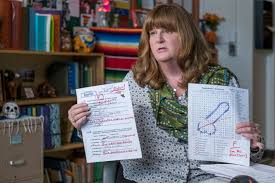

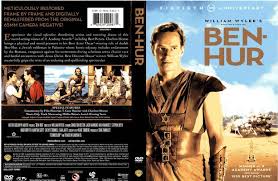
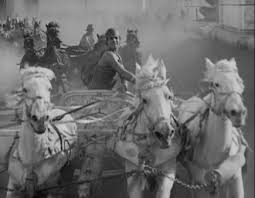 especially this version of it, so the fact that it was available on a set which was (and still is) on sale for under a tenner was an opportunity not to be missed. I would gladly have paid double for the silent version alone.
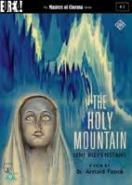 have bought the silent German bergfilm The Holy Mountain had the set not come with a bonus disc containing the excellent three-hour documentary The Wonderful, Horrible Life of Leni Riefenstahl (Ray Muller, 1993). It is there because Riefenstahl stars in The Holy Mountain, but otherwise has nothing to do with that film beyond the brief section on her acting career.
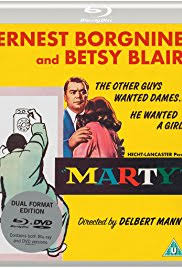 of Marty amongst this Eureka release’s special features which was the top selling point for me. It was transmitted as part of NBC’s Philco-Goodyear Television Playhouse, a strand which was the recipient of a 1953 Peabody Award for the general excellence of its productions, so it wasn’t only the film version which won prestigious awards. It had previously been available only on a US-standard Criterion set called The Golden Age of Television and some interviews from that set are included as well.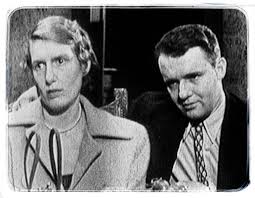
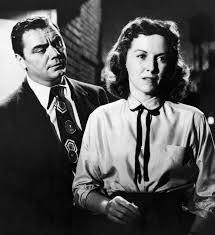


 attempt to merge Scandi-noir with the vogue for crime mysteries in enclosed communities.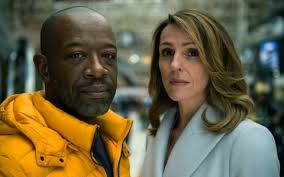
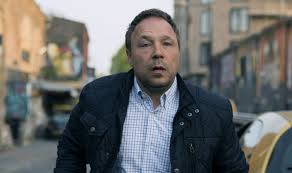 one great and a great one outstanding – and this is a great script. A great cast, too, also including fine work from Suranne Jones and Kerry Godliman, alongside Graham and the others, and a brief yet indelible cameo from Adrian Edmondson.
 Walter’s friend Bagpipes and Kellie Shirley as his wife Kirsty. This is an excellent role for Bailey – a wonderful stand-up but hitherto underused as a comic actor. Bailey and Elba are particularly good in their scenes together. The racial politics of the time are a constant presence and reference point, without becoming overwhelming.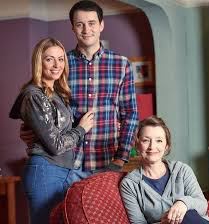

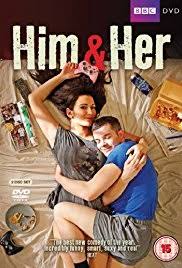
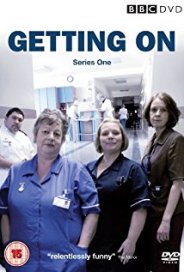
 unbearably difficult to leave his mum, both because of the loss of his father and his own domestic needs – meals and washing – which Kelly seems very unlikely to provide for him; Derek and Pauline waiting for the latter’s divorce to be finalised and hiding their own desperate insecurities behind their rather pathetic public personas; and Maureen and Reg, usually in the background, Maureen asleep and Reg seemingly waiting for the moment he will lose his wife as well, all the time tenderly checking that she is still alive, in between swearing and complaining about everything else.
 or doesn’t happen, we are going to miss it when it’s gone. It really seems superfluous to note that the acting performances are out-of-this-world wonderful, but, equally, it would be an oversight to write a blog about Mum without mentioning just how fantastic Lesley Manville and Peter Mullan are, as are all the cast (and a special mention for Karl Johnson as Reg this time round). So much goes unspoken, but you are in no doubt what the characters are thinking and feeling. One other point about the third series – it will be interesting to see how the episodes are titled. So far, each episode has had the name of a month as its title (each season covering a year in the characters’ lives), but all 12 have been used up now.
 watching John Cleese, Alison Steadman and Jason Watkins effortlessly investing substandard dialogue with the sort of comic potential it doesn’t deserve. The rest of the high-quality cast, including the aforementioned Joanna Scanlan and sitcom veteran Peter Egan, were largely wasted, though. And, unlike the other two shows, it was really trying to be funny.

 subtitled A Personal View by Kenneth Clark. Clark himself had become a well-known presenter of documentaries on art, especially painting, throughout the fifties and sixties, but this was the first time (of many more to come) that an expert presenter had fronted a prestige 13-part series and, though the aim was a comprehensive overview of his subject, that subject needed to be clearly defined (and clearly wasn’t).
 being that he may not be able to define it positively, but he can certainly recognise the opposite – and, where Clark begins his narrative with the Dark Ages and the survival of civilisation during an age of barbarian vandalism “by the skin of our teeth”, so Schama invokes the cultural destructiveness of ISIS to illustrate the fragility of civilisation (and at the same time tells the story of Khaled al-Asaad, the ultimate archivist, who preferred execution to revealing the whereabouts of Palmyra’s treasures). Then on to the opening titles – in which the title “Civilisation” first appears, with the final S formed as an addition from matter floating about the screen. The connection to the original series is unambiguously made.
 well as venturing well beyond Western Europe, establishes the difference in time as well as space. The second part brings even more points of comparison and difference – most obviously, there is a different presenter, Mary Beard, who will contribute two parts to the series, as will David Olusoga, while Schama returns for a further four. This has the desired effect of introducing more diverse voices and each part is clearly labelled as the personal view of the presenter. Whether this fragmentation helps the coherence of the series is another matter, as is the related decision to divide the narrative thematically rather than chronologically. Beard’s first foray contains more direct correctives to the original than seen so far, including a clip of Clark delivering the sort of “elitist” judgements here being disclaimed. Beard has clearly been included amongst the presenters to provide a much-needed feminist perspective, but she rather overstepped the brief in the widely derided sequence in which she told a story of a man who ejaculated on an ancient statue of Aphrodite and claimed this was rape because the statue had not consented! To me, the problem here was not so much the plain silliness of the assertion, inserted in a spirit of political correctness to make a connection with a current issue, but the lost opportunity it represented to explore ideas about the fine line between art and pornography. To be fair to Beard, she recovered from this low point to give us one of the better episodes – the one on religion and art (part 4: The Eye of Faith) – which she ended with her own take on the meaning of “civilisation” as an “act of faith”.
 audience this is aimed at. Those old enough to remember the original will (hopefully) have gone through a long process, aided by countless TV arts and history series, of gaining a greater perspective on world cultural history. Those who don’t remember it, or don’t even know about it, will understand that attitudes have changed and may wonder why the point is being emphasised at all.
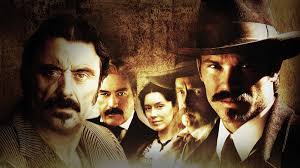
 children’s schedules (and my own viewing) when I first started watching TV in the late 1950s. ITV had just begun and imported a large number of American titles, with the BBC following suit to compete. My particular favourites were The Lone Ranger (ABC, 1949-57), Wagon Train (NBC, 1957-62), Maverick (ABC, 1957-62), Bonanza (NBC, 1959-73) and, above all, Rawhide (CBS, 1959-65). However, the genre all but disappeared from TV (and, indeed, the cinema) from the late sixties onwards. There were many reasons for this – socio-political, cultural and economic – though there were the occasional revivals in both cinema (mostly thanks to former TV cowboy Clint Eastwood) and TV (1989’s Lonesome Dove), but then nothing of real impact until….
 for so much of the f-ing and c-ing in the dialogue, but one which belonged to the real-life individual on whom the character is based. Indeed, most of the characters in Deadwood are based on the town’s original inhabitants and the narrative is closely tied to the historical reality and to examining the development of social, political and economic structures which emerged from the anarchy of the pioneering west; and within this narrative, Milch and his terrific cast create characters who have both a historic and contemporary resonance, which is why it works so well.
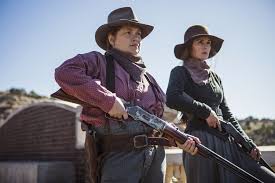 activities of the mineral pioneers, through the importance of the press in the development of the west and its mythology to the depiction of lesbian relationships. However, having watched it immediately after finishing Deadwood, its differences are more striking: it has much more in the way of open spaces, whereas Deadwood is almost completely confined to the town, which gives it a claustrophobic feel (rather like that of NYPD Blue); it also has more in the way of traditional western tropes (the “cowardly” sheriff redeemed at the end; the mysterious stranger who acts as a mentor to a young boy, before riding off into the sunset; a climactic shootout worthy of Sam Peckinpah) despite the “twist” that it features a large number of female protagonists; basically it looks like an extended movie rather than a TV series (shot in a 2.39:1 ratio; complete at just over 7 hours, or less than twice the running time of Heaven’s Gate). It is also mightily impressive and enjoyable and a significant addition to the western canon on both film and TV.
 TV for Keeps